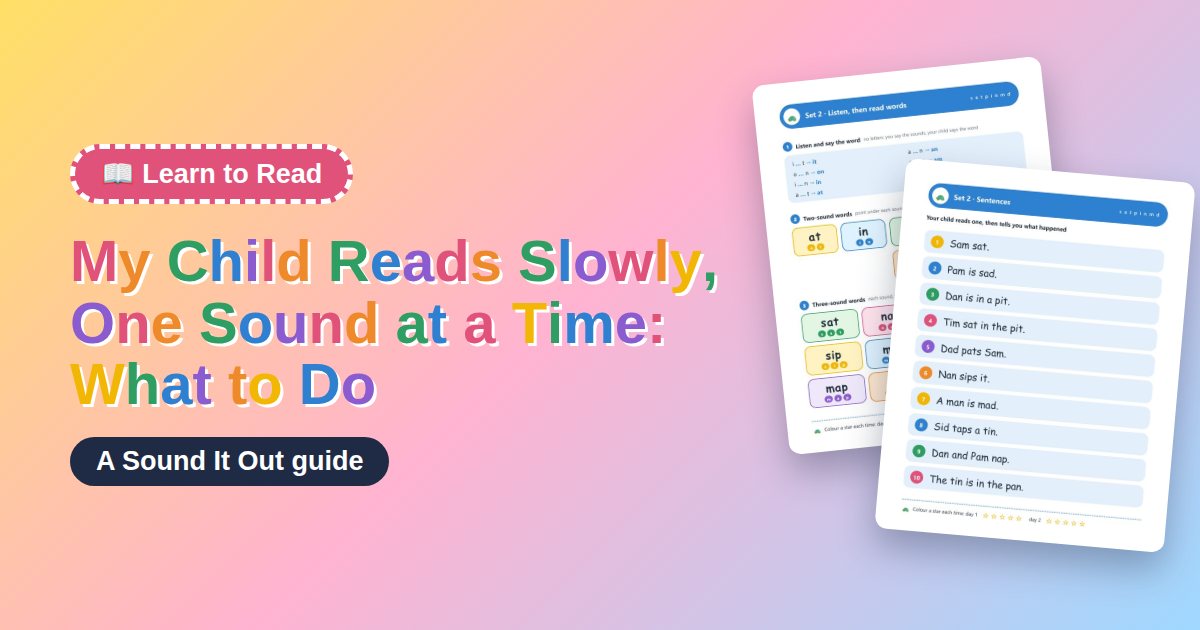
Slow, sound-by-sound reading is normal in early reading and usually means your child has not yet built word patterns into memory. The fix is not to rush them. Read the same short words and books many times, practice common letter patterns like -at, -an, -ig until they are instant, and let speed grow naturally as recognition grows stronger.
1Why does my child read one sound at a time?
Many children go through a stage where they read every word sound by sound, like c-a-t instead of cat. This is called slow decoding. It happens because your child is still turning each letter into a sound in their head before blending it. This is a normal part of learning to read, not a sign that something is wrong.
The most common cause is simple: your child has not yet seen the same words enough times for them to become automatic. Reading speed comes from practice, not from trying harder. A child who reads 'sun' slowly today may read it instantly next week after seeing it ten more times. Material that is too hard also slows reading down, because too many words need sounding out at once.
2What your child needs to know first, and a one-minute check
Before working on speed, check that your child can do two things: name the sound of each letter quickly, without stopping to think, and blend two sounds together, like /s/ and /u/ into 'su'. If either of these is shaky, work on that first. Speed cannot build on a shaky foundation.
Here is a one-minute check. Write five simple words on cards: cat, dog, sun, hop, bed. Show each card and ask your child to read it. If they name every letter sound correctly but take three seconds or more per word, they are ready for the steps below. If they cannot sound out the words at all yet, practice blending sounds first before working on speed.
3Step 1: Build instant letter sound recall
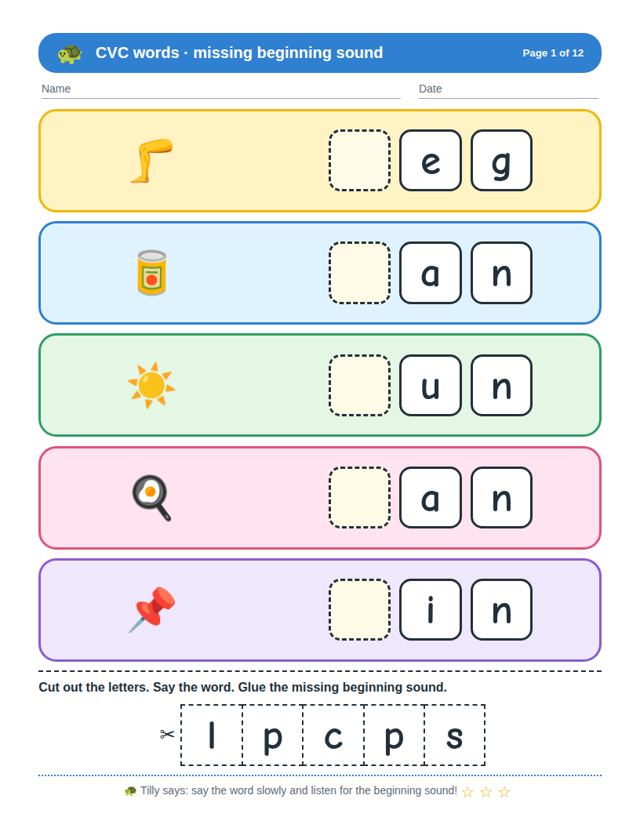
Say to your child: 'I will show you a letter. Say its sound as fast as you can.' Use letter cards for m, a, t, s, p, i, n, o. Flip through them quickly, aiming for less than one second per letter. Do this for two minutes a day. The goal is for the sound to come out before your child has time to think about it.
Mix in a few letters your child already knows well with one or two that are still new, such as adding the new letter e to a pile of known letters m, a, t, s. This keeps practice short and successful instead of frustrating. Praise speed, not just correctness: say 'Yes, and fast!' when your child answers quickly.
4Step 2: Practice the same word family until it is automatic
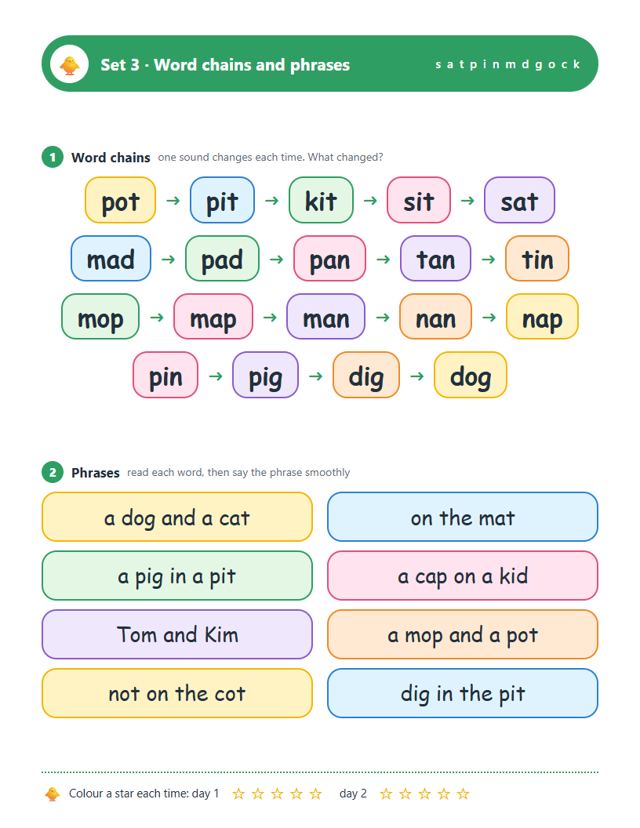
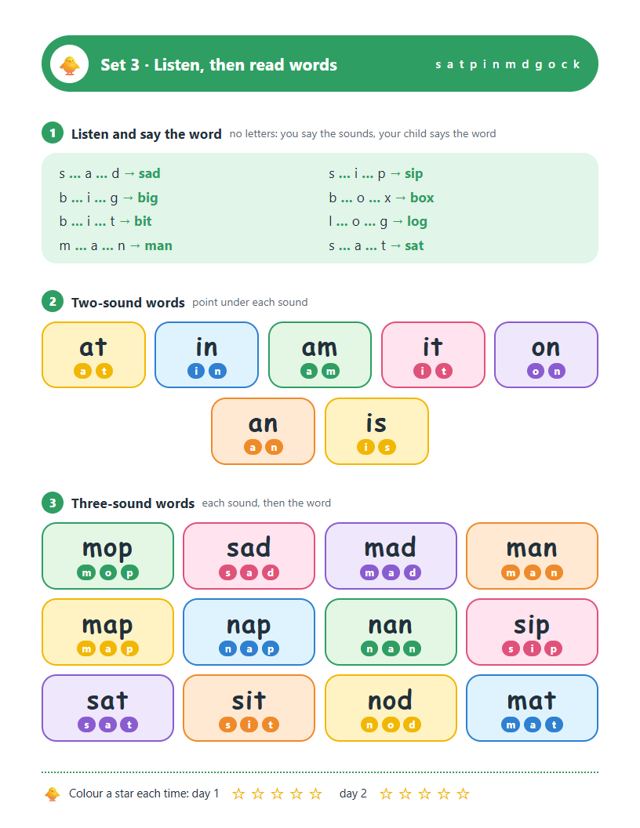
Pick one word family, such as -at. Write these words on a list: cat, hat, mat, sat, bat, rat. Say to your child: 'These words all end the same way. Once you know -at, you already know six words.' Read the list together once, pointing to each word. Then have your child read the list alone, three times in a row, once a day for several days.
Watch the reading get faster across the week. On day one, your child may take three seconds per word. By day four or five with the same list, most children read each word in under a second. Once -at is fast and easy, move to a new family such as -an (can, fan, man, pan, ran, van) and repeat the same routine.
📖Practice this in the free reading appReading games your child can play on a phone, tablet or computer. Every word can be sounded out. No sign-up.Open the app5Step 3: Reread the same short book several times
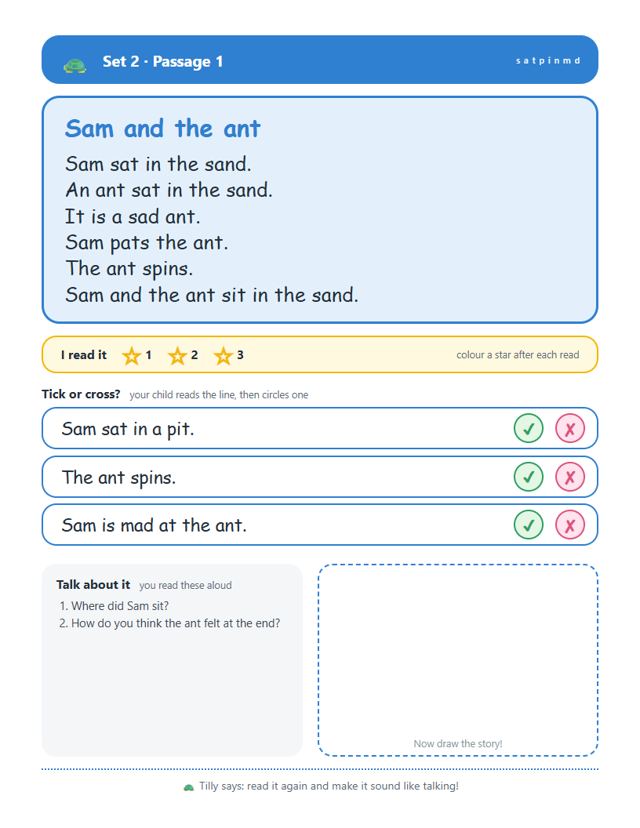
Choose a short book or a page with five to eight sentences that your child can already sound out, even slowly. Read it together once, helping with any hard words. Say: 'Let's read this page again, and try to go a little smoother this time.' Read the exact same page two more times that day. Rereading the same text is one of the most reliable ways to build reading speed.
Keep the same book or page for three or four days in a row before moving to a new one. Many children go from choppy, word-by-word reading on day one to smooth reading by day three, on that same page. This works because the words repeat, so your child's brain stores them instead of sounding them out again each time.
6Step 4: Time short word lists for fun, not pressure
Once your child can read a list of ten words such as sit, pig, log, run, bag, net, cup, hot, fan, rib, make it a short game. Say: 'Let's see how many you can read in thirty seconds. Ready, set, go.' Count how many words they read correctly, not just how fast they went. Write the number down.
Try the same list again the next day and compare the number. Celebrate any improvement, even one more word. Keep the tone light and playful, like a game you are both trying to beat, not a test. If your child gets anxious about timing, drop the stopwatch and just track progress by how smooth the reading sounds instead.
7What to do when slow reading does not improve
The most common problem is practicing with words or books that are still too hard. If your child has to stop and sound out most words on a page, the page is above their level. Drop down to an easier book or a shorter word list, one where they already know at least eight or nine words out of ten, and build speed there first.
A second problem is a child who starts guessing at words to seem fast, saying 'dog' for 'dig' without checking the letters. If this happens, slow back down on purpose. Say: 'Let's check each letter before we say the word.' Speed only counts when the word is read correctly. A third problem is tiredness: if practice happens at the end of a long day, try moving it earlier instead.
8How much practice a child needs, and what a normal week looks like
Ten to fifteen minutes a day works better than one long session once a week. Short, daily practice is what turns slow decoding into fast, automatic reading. Spread the time across a few activities: two minutes of letter sound flashcards, five minutes reading a word family list, and five to eight minutes rereading a familiar book or page.
A normal week might look like this: Monday and Tuesday, read a new word family list slowly and correct any mistakes. Wednesday and Thursday, read the same list again and time it for fun. Friday, reread a short book from earlier in the week and notice how much smoother it sounds compared to the first time. Weekends can be a break or light review.
9Signs your child is ready to move on, and what comes next
Your child is ready to move faster when they read familiar words without sounding them out loud, when their voice starts to sound smooth instead of choppy, and when they can read a known page at roughly the speed of normal talking. Another sign is that your child starts noticing word patterns on their own, such as saying 'that's like cat' when they see 'hat'.
Once reading sounds smooth and automatic on familiar material, move to slightly longer sentences and new word families, and start introducing some sight words that do not follow phonics rules, such as said, was, and they. Keep rereading new material a few times each, the same way, since this habit keeps working at every reading level.
Quick tips
- ⭐Praise accuracy first and speed second, since fast but wrong reading does not help.
- 🎈Keep practice sessions short, around ten to fifteen minutes, so your child stays willing to try.
- 🌈Reread the same short book or list several times before moving to a new one.
- ✏️Use a calm, even voice when timing or playing speed games so your child does not feel rushed.
- 🎯Point to words as your child reads them to help their eyes track smoothly across the page.
- 💡Choose books and lists slightly below your child's hardest level so speed can build without frustration.
- 🧩Celebrate small gains, like reading a word half a second faster, instead of comparing to other children.
 📖 Learn to ReadMy Child Knows Sounds but Cannot Blend: What to Do
 ➕ Addition and SubtractionMy Child Does Not Understand Subtraction: What to Do
 👀 Sight WordsWhat Is a Sight Word?