Home › Guides › Learn to Read
Home › Guides › Learn to Read
Many children can sound out single words but struggle once words are joined into a sentence. This usually happens because decoding each word still takes effort, leaving little attention for meaning or flow. What helps is building faster word recognition, reading short, simple sentences again and again, and asking what the sentence meant. Children differ, and this skill grows with steady, short practice.
Reading single words and reading sentences use different skills. A child first learns to sound out a word, letter by letter or chunk by chunk, until the word comes together. Putting several words in a row adds a new job. The reader must hold the first words in mind while decoding the next one, and notice how they connect into one idea. This takes more attention than reading one word alone.
This gap is common in kindergarten and first grade. A child may read “cat,” “sat,” and “mat” easily on flashcards, but freeze or lose the thread on “The cat sat on the mat.” Children differ in how long this stage lasts, and it does not mean a child is behind or that something is wrong.
Before sentences make sense, a child needs to decode most short words without a long pause. This means sounding out words like cat, dog, sun, hop, and big fairly smoothly, most of the time without help. A child also needs to know a small set of common words by sight, such as the, is, was, and said. These words appear in almost every sentence.
To check, write a short sentence of three or four words, such as “The cat ran.” or “I can hop.” Ask your child to read it. If they sound out each word correctly but cannot say what the sentence means, that points to sentence reading as the next step. The same is true if they read word by word with long pauses between each word.
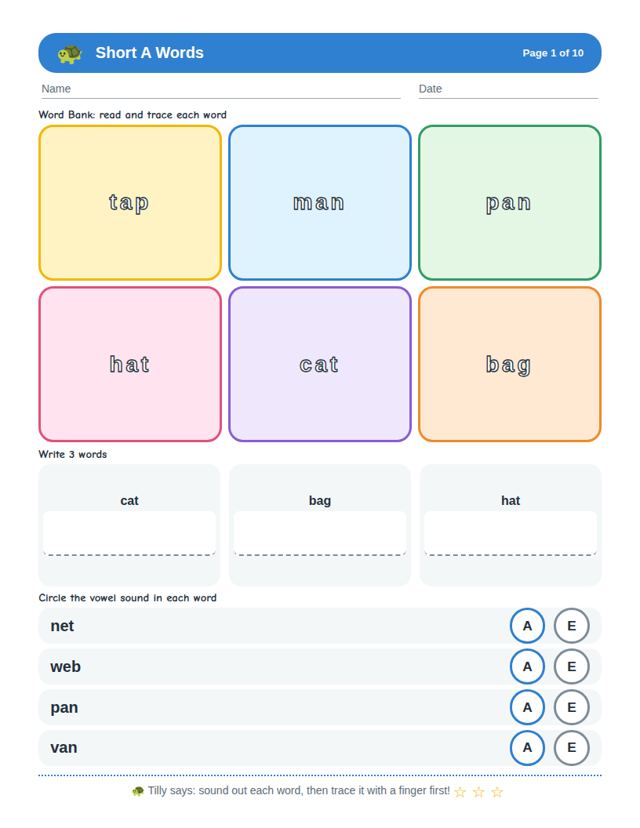
Pick ten words your child already knows how to sound out, such as cat, hop, big, the, and is. Show each word on its own card and ask, “What word?” The goal is for your child to say the word within a second or two, without sounding it out each time.
Practice this for a few minutes most days. Mix in new short words like sun, mad, and run once the first set feels fast. When word reading takes little effort, there is more attention left over for putting words together into a sentence.
Write or find sentences made almost entirely of words your child already knows. Good examples are “The cat sat on the mat.” and “I can hop and run.” Read the sentence together once to work it out, slowly and carefully, pointing to each word.
Read it a second time to make it smoother, with fewer pauses. Read it a third time to sound like talking, the way you would say it out loud to a friend. This three times pattern helps your child move from decoding to reading with meaning.
 Practice this in the free reading appReading games your child can play on a phone, tablet or computer. Every word can be sounded out. No sign-up.Open the app
Have your child use a finger or a pointer to touch each word while reading a sentence. This keeps the eyes moving in order and stops skipping or rereading the same word. Say, “Touch each word as you say it,” and model it yourself first on an easy sentence.
Teach a short pause at a period, like a small breath, before starting the next sentence. Say, “Stop and breathe at the dot, then go on.” This helps your child notice that a sentence is a complete thought, not just a row of separate words.
After your child reads a sentence, ask a simple question about it. For “The cat sat on the mat,” ask “What did the cat do?” or “Where did the cat sit?” This checks that reading is connecting to meaning, not just producing sounds.
If your child cannot answer, read the sentence again together and point to the words that answer the question. Do this after every short sentence for several days, so checking for meaning becomes a normal part of reading.
Some children keep reading word by word with no change, even after practice. If your child still points at each word separately with a flat voice, go back to easier sentences made only of words they know by heart. Read the same three or four sentences for several days until they feel easy.
Other children read quickly but cannot say what a sentence meant. Here, slow down on purpose: read one sentence, stop, and talk about it before moving to the next one. If your child often loses the place or skips words, point to each word yourself while they read, until they can take over the pointing.
A few minutes a day of sentence reading is enough for many children, done when your child is alert and not tired. A normal week might include flashcard practice on most days, and two or three short sentences read together each time, using the three times pattern.
Keep sessions short and end while your child still wants more. Never time the reading or ask for faster, since the goal is smooth, meaningful reading, not speed. Children differ in how many sessions they need before sentences feel comfortable.
Your child is ready for more when they can read a short, simple sentence smoothly on the third try. They should also be able to answer a question about what it said, most of the time. This shows that decoding and meaning are working together.
The next step is two or three short sentences read one after another, followed by a very short page from an early reader. Keep choosing text with mostly known words, so your child can focus on meaning rather than struggling to sound out every word.
 Choose sentences made almost entirely of words your child already knows by sight or can sound out easily.
 Point to each word as you read together so your child's eyes move in order.
 Ask one simple question after every sentence to check for meaning.
 Keep practice short, a few minutes at a time, and stop while it still feels easy.
 Never ask your child to read faster, since speed is not the goal.
 Read the same short sentence three times: to work it out, to make it smooth, and to sound like talking.
 Celebrate smooth, meaningful reading, not just correct words.
 Word ChainsOne sound changes each time: map, mad, mud. Your child spots what changed and reads the new word.Play freeRead a SentenceOne short sentence at a time, built only from words your child can sound out.Play free
 Listen and Say the WordYou say the sounds slowly, your child says the whole word. No letters to look at, so it trains the ear first.Play free
Short a words worksheets, CVC word family practice.
Get the free pages FREE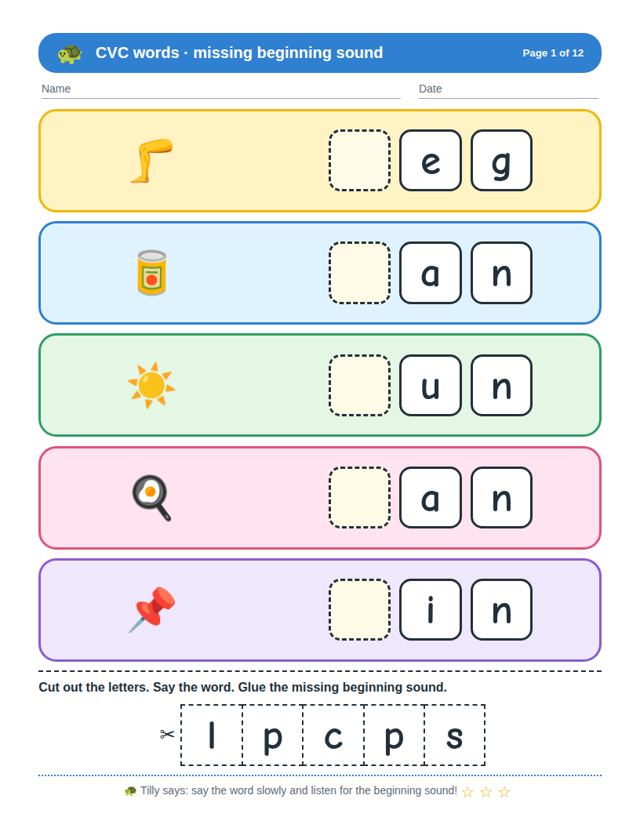
CVC cut and paste worksheets for beginning, middle and ending sounds.
Get the free pages $3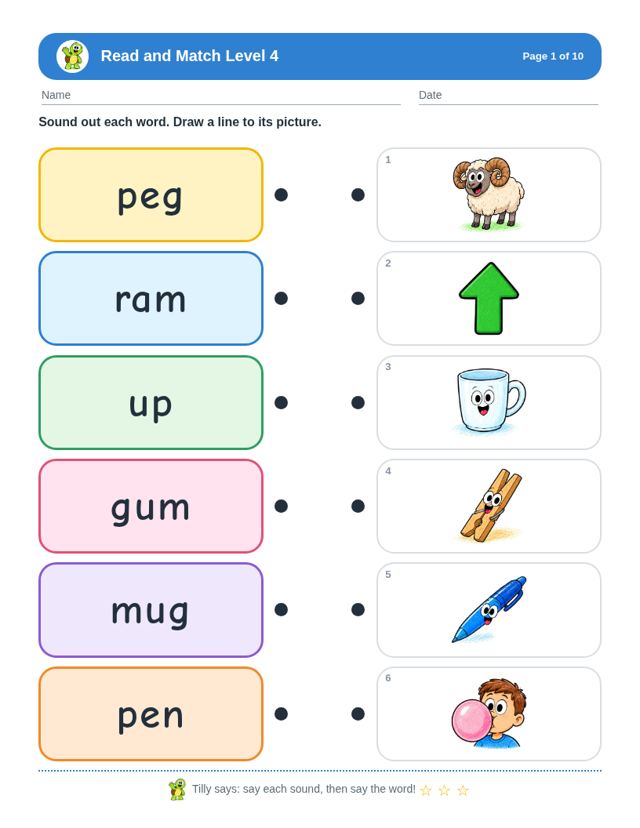
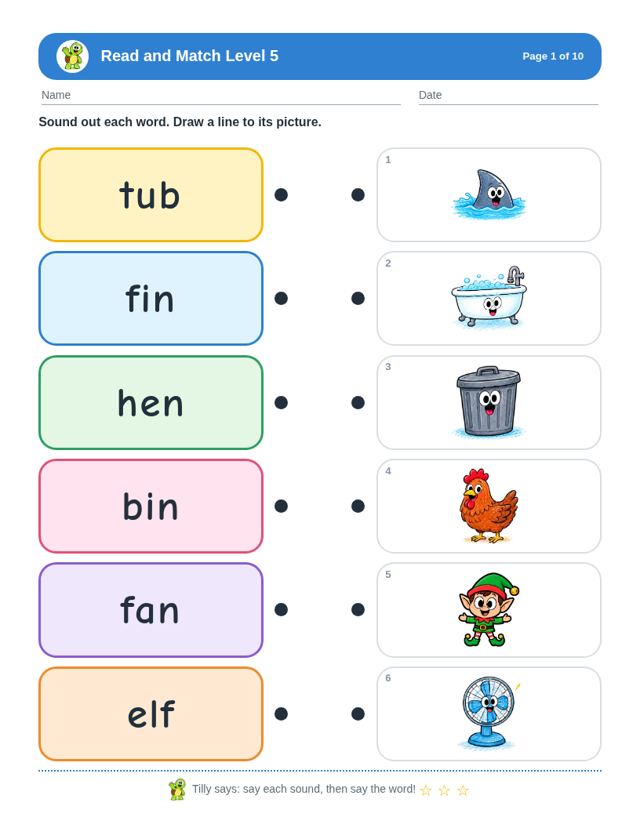
All 5 read and match level worksheet packs in one download.
See inside $3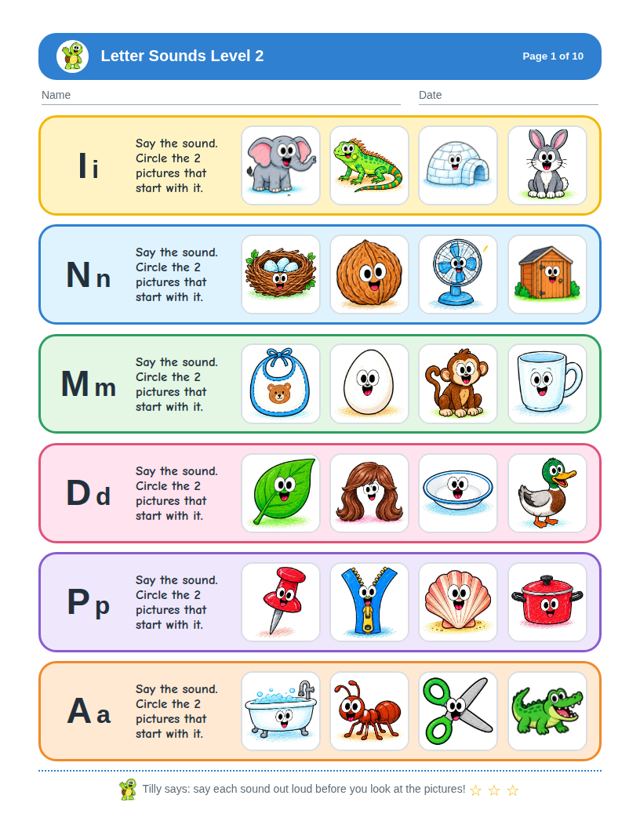
All 7 letter sounds level worksheet packs in one download.
See insideReading a sentence asks for two things at once: sounding out each word and holding onto the words that came before it to build meaning. If decoding still takes a lot of effort, there is little attention left for connecting the words. This is common and usually improves with short, steady practice on easy sentences.
Children differ, and there is no set number of days or weeks. Many children move ahead once word reading feels automatic and they have practiced easy sentences several times a week. Watch for smooth reading and understanding, not a calendar date, as the real sign of progress.
Point out skipped words gently, by pointing to the word and asking your child to go back and read it. Avoid interrupting mid sentence for small errors that do not change the meaning, since too many stops can make reading feel frustrating instead of smooth.
This usually means decoding still takes most of the effort. Go back to shorter, easier sentences made of words your child already knows well. Use the three times pattern so the third reading sounds like talking, not like a list of separate words.
A small set of common words helps, such as the, is, was, and said, but your child does not need a large list first. Short sentences built mostly from words they can already sound out are enough to begin practicing sentences now.
 Learn to ReadMy Child Confuses Words Like Was and Saw: What to DoLearn why your child mixes up similar words like was and saw, and the exact steps to teach letter-by-letter checking instead of guessing.Read the guide
 Learn to ReadMy Child Cannot Hear the First Sound in a WordWhy your child cannot hear the first sound in a word, and four short daily steps that build this early listening skill.Read the guide
 Learn to ReadMy Child Knows Sounds but Cannot Blend: What to DoYour child knows the letter sounds but cannot blend them into words. Here is why this happens and exactly what to do this week.Read the guide
“Reads slowly, one word at a time, or sounds out every word”
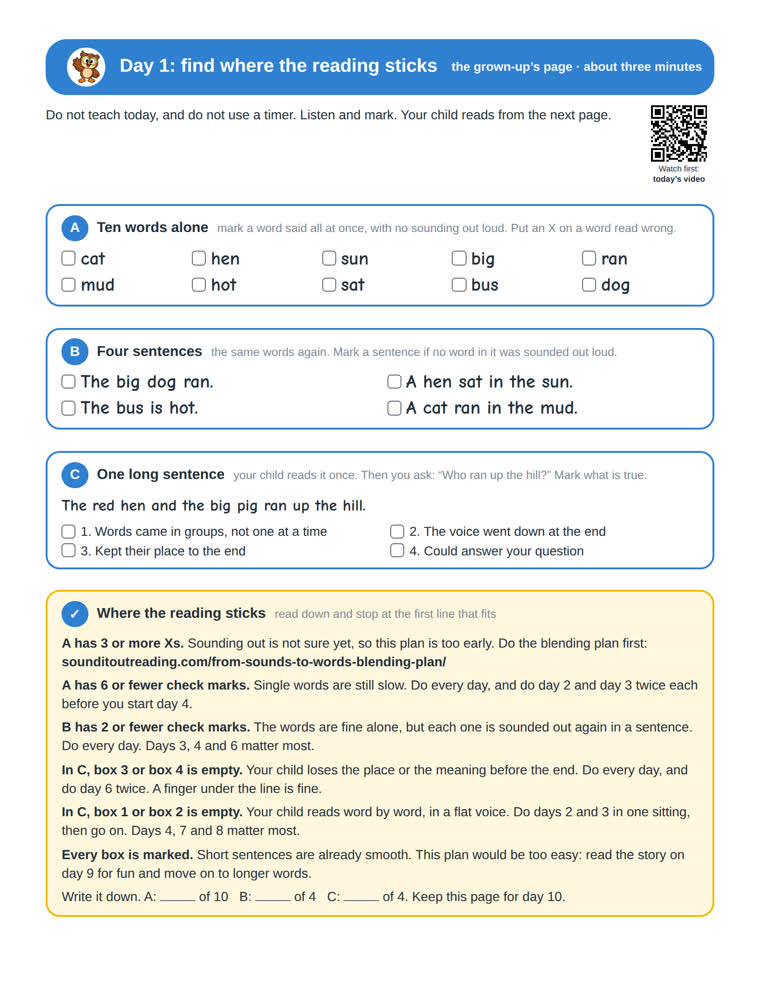
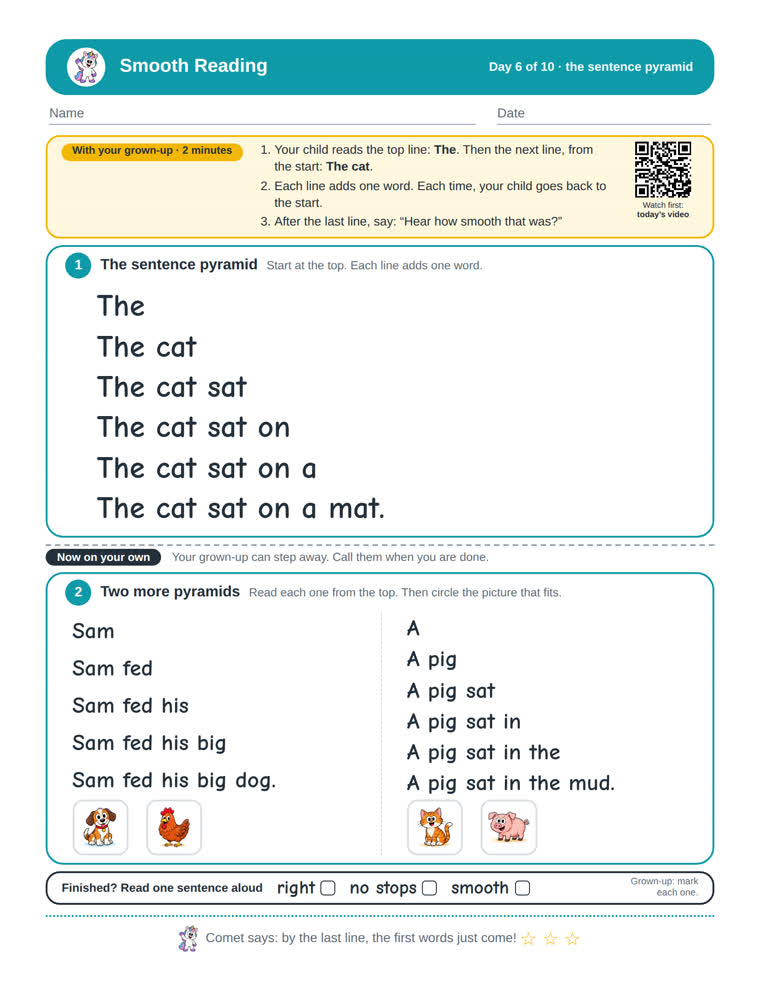
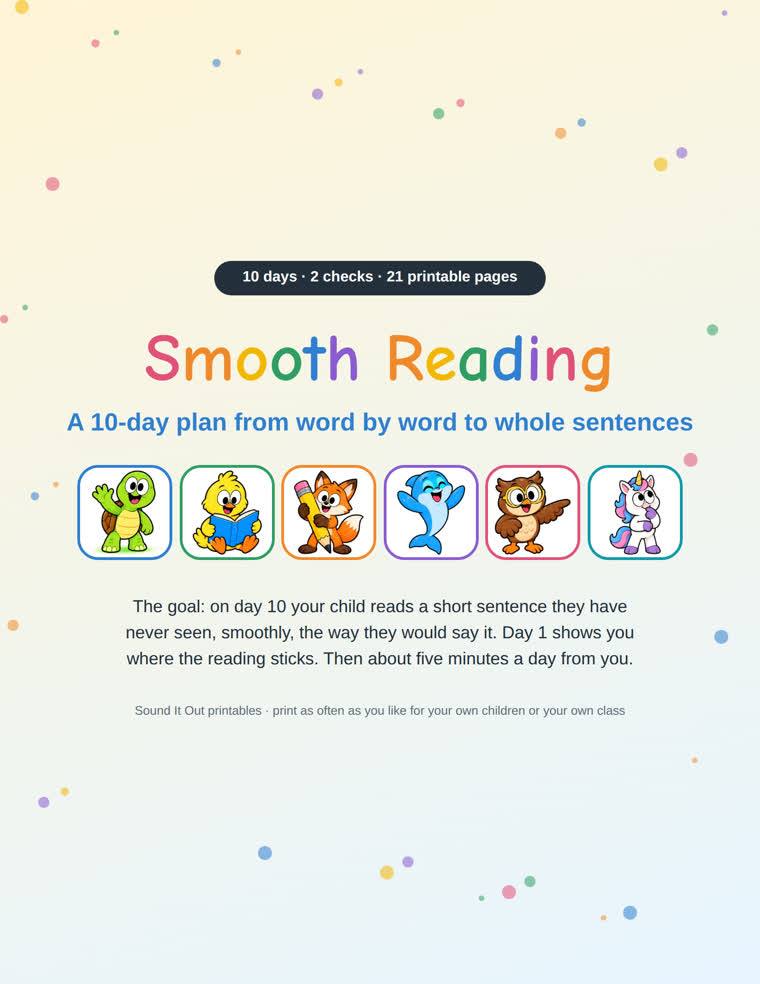
Smooth Reading is a full 10-day plan, with a short video that shows you every step. The goal: on day 10 your child reads a short sentence they have never seen, smoothly, the way they would say it. It is the goal, not a promise.