
Home › Guides › Learn to Read
Home › Guides › Learn to Read
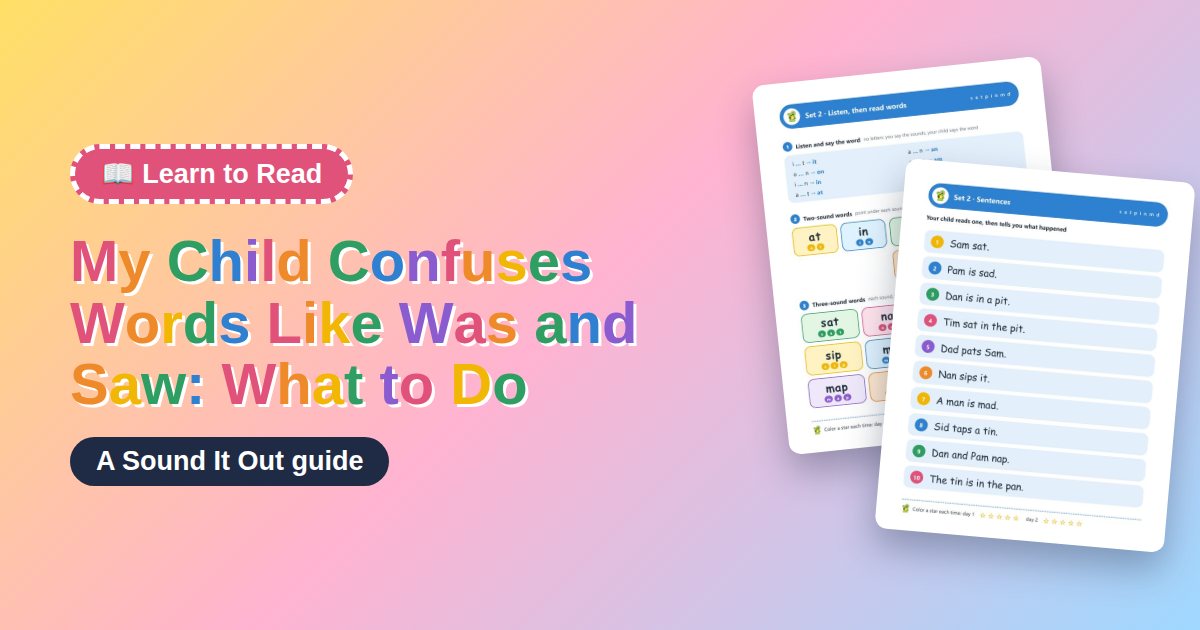
This happens when your child reads by the shape of a word instead of checking each letter in order. Words such as was and saw share the same letters in a different order, so guessing mixes them up. Teach your child to cover the word, reveal one letter at a time from left to right, and say the sound for each letter before blending. This stops the guessing habit and clears up the mix-up with steady practice.
Many parents notice their child reads “saw” correctly one page and then calls the next “was” the same word, or the other way around. This happens because the child looks at the shape of the word and the first letter, then guesses. The child is not checking every letter in order. Was and saw use the exact same letters, s, a, w, just in a different order. A quick glance can trick a child into picking the wrong word.
This mix-up is common and does not mean something is wrong. Many children do this with any pair of words that share letters, not just was and saw. Memorizing the words harder does not help. What helps is to slow down and check each letter from left to right every single time, instead of guessing from memory or shape.
Before working on was and saw, your child needs to know the sounds for s, a, and w on their own. Your child also needs to blend two or three sounds into a word, such as sat, tap, or pan. If your child cannot yet tell you the sound for w by itself, teach that sound first using words like win, wet, wag, and web.
To check, point to the letter s by itself and ask “what sound?” Do the same for a and w. Then write was and saw on two separate cards. Cover each word and ask your child to tell you the first letter they see. If they can name each letter sound alone but still mix up the whole word, they are ready for the steps below.
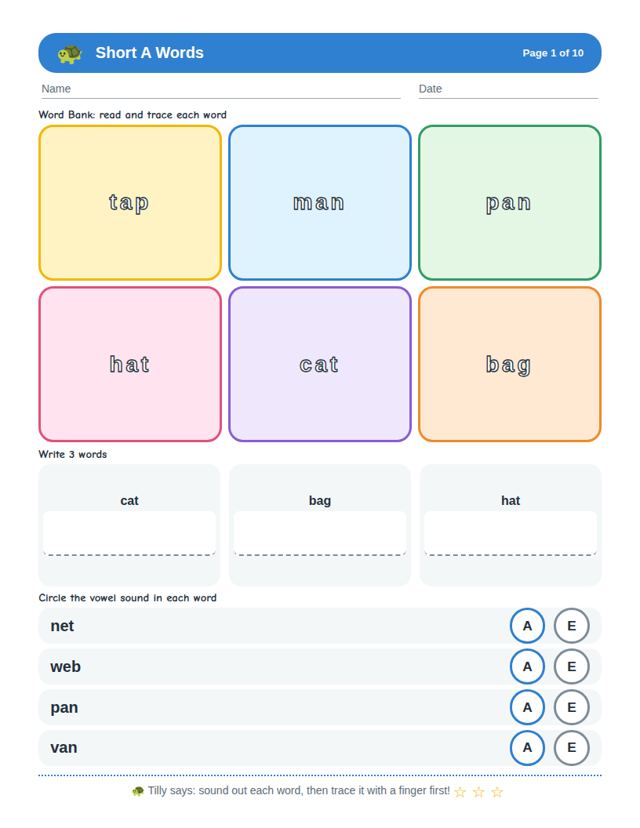
Start with saw. Point to each letter and say the sounds: s says “sss,” and a-w together say “aw.” Blend them slowly. Hold the s sound until the aw sound starts, with no gap. Then practice the same aw sound in other words: paw, jaw, claw, raw, draw, straw. This shows your child that aw always makes the same sound, no matter which word it is in.
Now say was. Say the whole word slowly and count the sounds with your child: “w,” “u,” “z,” three sounds. Match each sound to its letter: w for the w sound, a for the u sound, s for the z sound. Tell your child that a and s are saying something different here. This one part is worth learning by heart, not sounding out like saw.
Write was and saw on two cards, one at a time, not side by side yet. Cover each word with an index card. Say, “Cover the word. Move your finger to show the first letter. Say its sound. Now slide to the next letter. Say its sound.” Do this for every letter before blending the whole word out loud.
Practice this same cover-and-reveal method with other pairs that share the same letters in a different order. Try pat and tap, net and ten, tip and pit, mad and dam, won and now. Each time, remind your child, “Touch every letter. Look again.” This builds the habit of checking the whole word instead of guessing from the first letter or the shape.
 Practice this in the free reading appReading games your child can play on a phone, tablet or computer. Every word can be sounded out. No sign-up.Open the app
Give your child three letter tiles or cards: w, a, s. Ask them to build the word was and read it. Then ask them to move the letters around to build saw and read that word too. Ask, “What letter did we start with this time?” Point out that was starts with w and saw starts with s.
Repeat this building activity with other confusable pairs: pat and tap, tip and pit, mad and dam. Building the words with their own hands, then rereading them, helps your child feel the difference between the two words instead of just looking at them. Keep sessions short, just a few pairs at a time.
Once your child can build and read was and saw separately, put them into short sentences. Two to try are “I saw a cat” and “It was a big dog”. In each sentence, point to was or saw. Ask your child to check the letters before reading the rest of the sentence.
Read each sentence three times. The first time, your child works out each word slowly. The second time, they read it more smoothly. The third time, they read it so it sounds like talking. Never rush this step or ask your child to read faster, since speed is not the goal here.
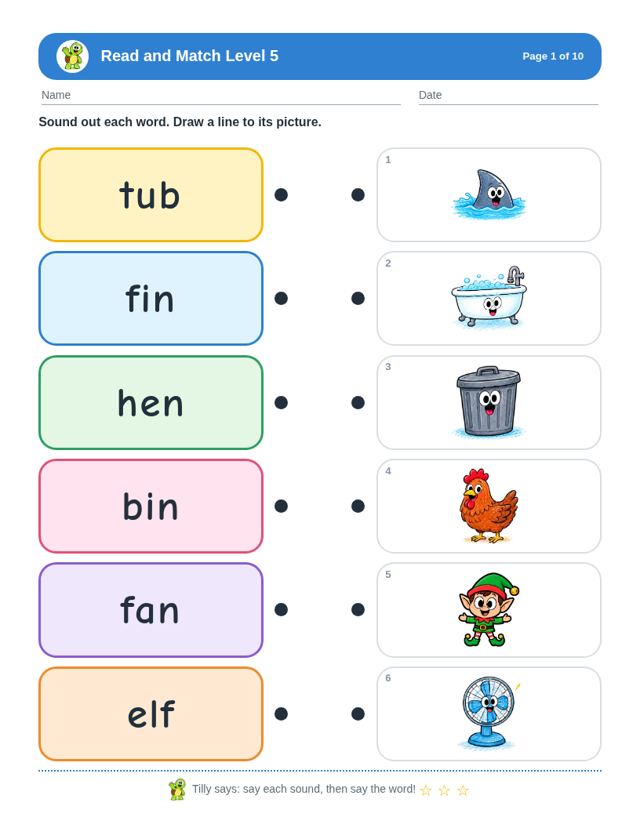
Your child may still guess the second word because they assume it matches the first one they saw. If so, cover both words completely. Show them one at a time, on separate cards, in a different order each time. Do not let your child see both words together until they can read each one correctly alone.
If your child reads only the first letter and then guesses the rest of the word, go back to the cover-and-reveal method in step 2. Slow down even more, and hold your child’s finger under each letter so they cannot skip ahead.
If your child does well with letter tiles but still mixes up the words while reading a book or worksheet, they are reading too fast. Slow the whole sentence down, point under every word, and remind them, “Touch every letter. Look again,” before they say any word.
Practice this for a few minutes each day, not longer. Short, frequent practice works better than one long session. Mix review of pairs your child already knows with one new pair, so the work never feels too hard or too easy.
A normal week might look like this: Monday and Tuesday, practice was and saw with cover-and-reveal and letter tiles. Wednesday, read sentences with both words. Thursday, add a new pair such as pat and tap. Friday, mix all the pairs together in a short review.
Your child is ready to move on when they touch or point to each letter without being reminded. They should also read was and saw correctly in a new sentence they have not seen before. Ask them to explain the difference out loud, such as “saw starts with s, was starts with w”. If they can say this, they understand it, not just memorized it.
Once this pair is solid, move on to other words that share the same letters in a different order. Try net and ten, or tip and pit. Keep using the cover-and-reveal method for any new confusable pair, since it works the same way no matter which letters are involved.
 Always cover the word before your child reads it, so they cannot guess from the shape.
 Point under each letter from left to right every single time, even once your child knows the word well.
 Practice was and saw on separate days before mixing them together.
 Say “Look again. Touch every letter” instead of telling your child the word.
 Keep practice sessions short, just a few minutes, several times a week.
 Never ask your child to read faster, since speed is not the goal.
 Mark the parts of was that do not follow regular letter sounds, and sound out saw normally.
 Word ChainsOne sound changes each time: map, mad, mud. Your child spots what changed and reads the new word.Play free
 Listen and Say the WordYou say the sounds slowly, your child says the whole word. No letters to look at, so it trains the ear first.Play freeBuild the WordYour child hears a word and taps the letter tiles in the right order to build it.Play free
Short a words worksheets, CVC word family practice.
Get the free pages FREE
CVC cut and paste worksheets for beginning, middle and ending sounds.
Get the free pages $3
All 5 read and match level worksheet packs in one download.
See inside $3
All 7 letter sounds level worksheet packs in one download.
See insideWas and saw use the exact same letters in a different order, so a quick glance can trick your child into picking the wrong one. Words with very different letters, like cat and dog, do not cause this kind of mix-up, because there is no shared shape to confuse.
Was is a common word that does not fully follow regular letter sounds, so one part of it is worth learning by heart. But it still has letters that match sounds, so it should be sounded out and checked letter by letter, not learned as one whole shape.
Flashcards are easier because there is only one word to check. In a book, your child may be reading faster or relying on earlier pages. Slow down the whole sentence, point under every word, and ask your child to check each letter before saying the word.
No. Telling your child the word teaches guessing, not reading. Instead, say “Look again. Touch every letter,” and wait. This takes longer at first but builds the habit of checking the word, which helps with every new word your child meets later.
Many children confuse a few word pairs while learning to read, and this clears up with steady, slow practice. If your child is seven or older and still mixes up many similar words often, or struggles with several different reading skills, tell their teacher.
 Learn to ReadMy Child Can Read Words but Not Sentences: What to DoLearn why your child reads single words but struggles with full sentences, and the exact steps to build smooth, meaningful sentence reading.Read the guide
 Learn to ReadMy Child Cannot Hear the First Sound in a WordWhy your child cannot hear the first sound in a word, and four short daily steps that build this early listening skill.Read the guide
 Learn to ReadMy Child Knows Sounds but Cannot Blend: What to DoYour child knows the letter sounds but cannot blend them into words. Here is why this happens and exactly what to do this week.Read the guide
“Behind in reading” can mean ten different things, and each one needs different help. Check off what is true for your child. You will see the one thing to work on first, and what can wait.