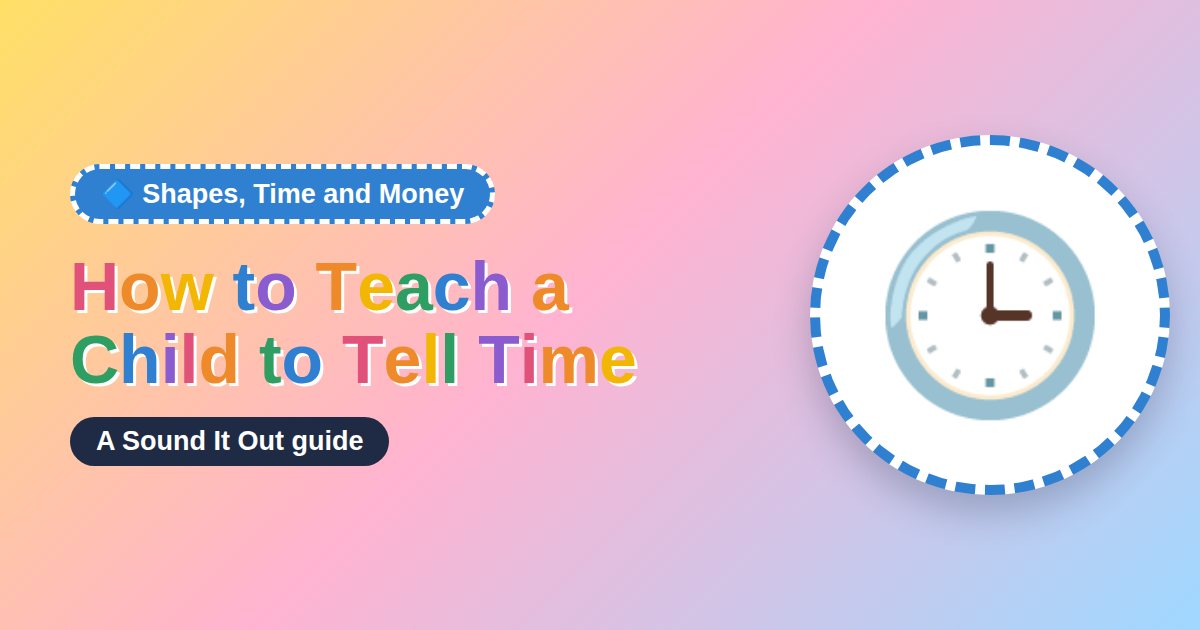
Start with the hour hand and whole hours, like 3 o'clock, before adding minutes. Use a clock with clear numbers and two different looking hands. Teach the hour hand first, then half past, then quarter hours, then minutes. Most children learn whole hours in kindergarten and minutes in first or second grade.
Start with Whole Hours
Begin by teaching your child that the short hand shows the hour. Practice reading clocks that show exact hours, like 1 o'clock or 7 o'clock, where the long hand points straight up at the 12. This builds confidence before minutes are added.
Use a real clock or a paper clock with movable hands so your child can set the time, not just read it.
Add Half Past and Quarter Hours
Once whole hours feel easy, teach half past the hour, when the minute hand points to the 6. Then move to quarter past and quarter to, when the minute hand points to the 3 or the 9. Keep connecting the hand position to a number your child already knows.
Teach Minutes Last
Minutes are the hardest part because the numbers on a clock face do not match the minutes directly, like the 2 meaning 10 minutes. Count around the clock face by fives with your child, pointing to each number, before asking them to read minutes alone.
This step usually comes in first or second grade, after whole hours and half hours feel solid.
Connect Clock Time to Daily Life
Point out the time on a real clock during daily routines, like lunch time, bedtime, or a favorite show. This helps your child see why telling time matters, not just as a worksheet task.
Use Both Analog and Digital Clocks
Teach analog clocks with hands first, since they show the passing of time visually. Once that is solid, compare the same time on a digital clock so your child can connect both forms.
Quick tips
- Use a clock with a plain face, without extra numbers or decorations, when starting out.
- Practice setting the clock to a time you say out loud, not only reading times.
- Link half past and quarter hours to a pizza or pie cut into parts.
- Review counting by fives, since minute marks go up by five.
- Keep practice short, five to ten minutes, several times a week.
 ➕ Addition and SubtractionMy Child Does Not Understand Subtraction: What to Do
 👀 Sight WordsWhat Is a Sight Word?
 ✏️ Alphabet and HandwritingHow to Teach a Child to Hold a Pencil