
Home › Guides › Numbers and Counting
Home › Guides › Numbers and Counting
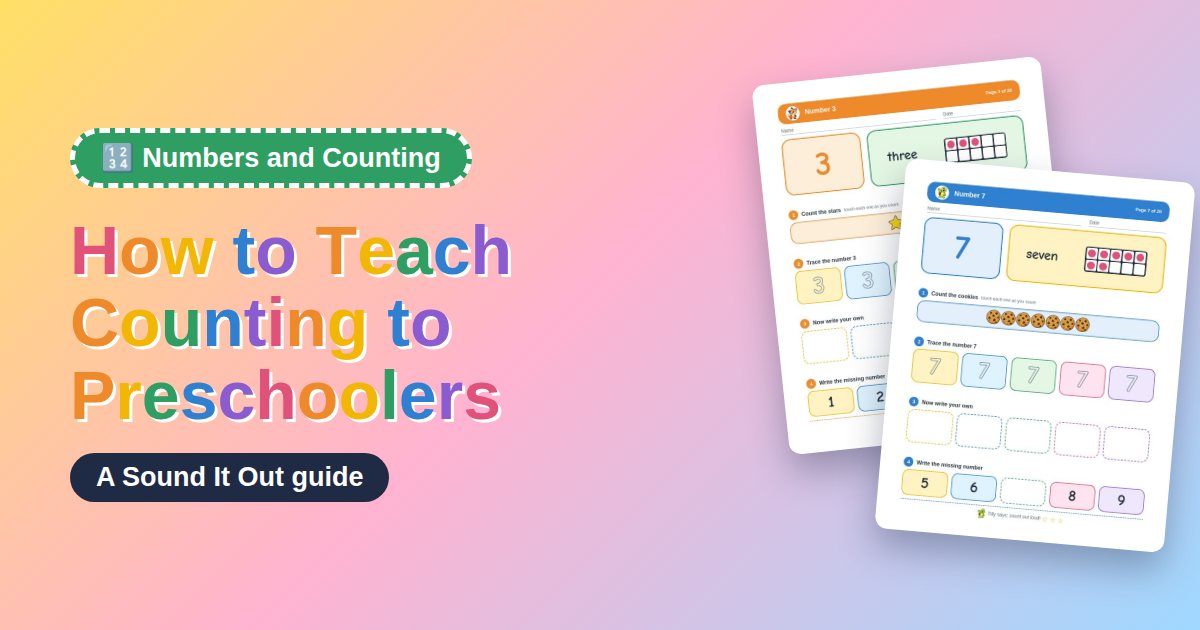
Teach counting with real things first. Touch each thing once while saying one number, and show that the last number you say tells how many there are. Start with groups up to 5, then 10. Count every day: stairs, spoons, toys. Numbers on paper come after counting real things is easy.
Many young children can say one, two, three up to ten without counting. Counting means saying one number for each thing, and knowing that the last number tells how many.
Research on early math shows that these counting ideas are worth teaching on purpose.
Line up five toys. Touch each one as you say a number. Then ask: how many? Your child should say five without counting again.
If your child counts a toy twice or skips one, move the toys to one side as they are counted.
Count steps, crackers, socks and cars. Counting in daily life is practice that takes no extra time.
Ask how many, and later: if you have three and get one more, how many now?
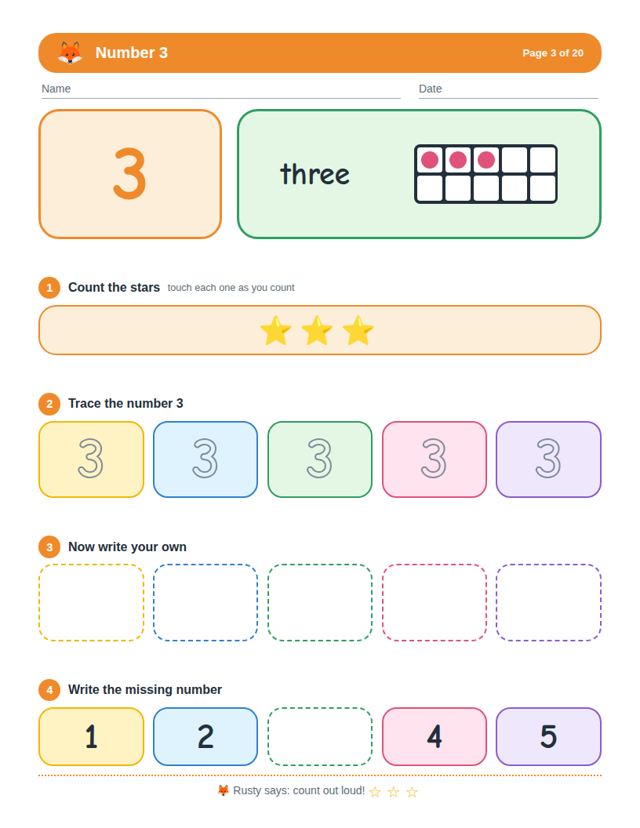
When counting real things is easy, show the written numbers. Match a number card to a group of toys.
Counting worksheets work best after counting real things, not before.
 Print free practice pagesFree pages from our packs, in color and in black and white.See the free pages
 Count real things before worksheets.
 Touch each thing once.
 Ask how many at the end.
 Start with up to 5, then 10.
 Count every day in normal life.
Number tracing and counting worksheets with ten frames.
Get the free pages FREE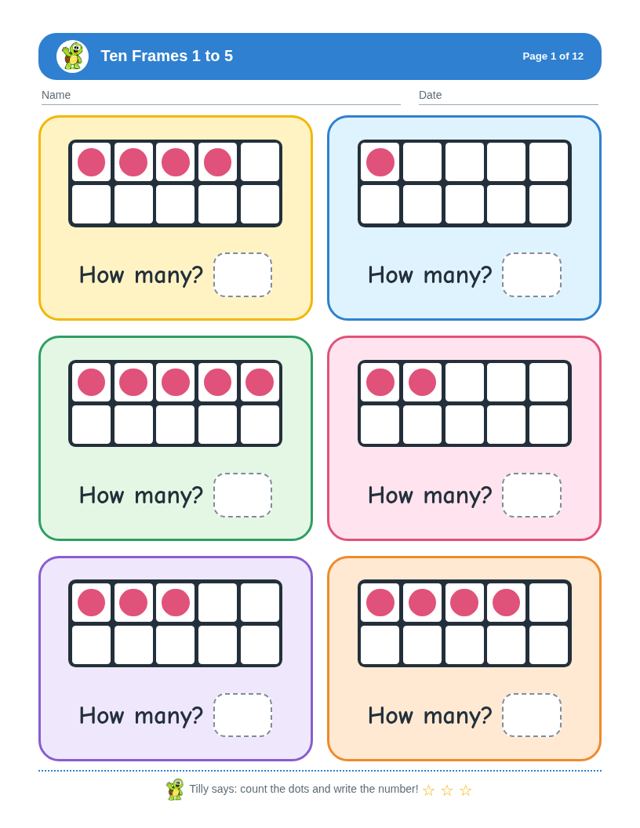
Ten frame worksheets, counting 1 to 5.
Get the free pages $3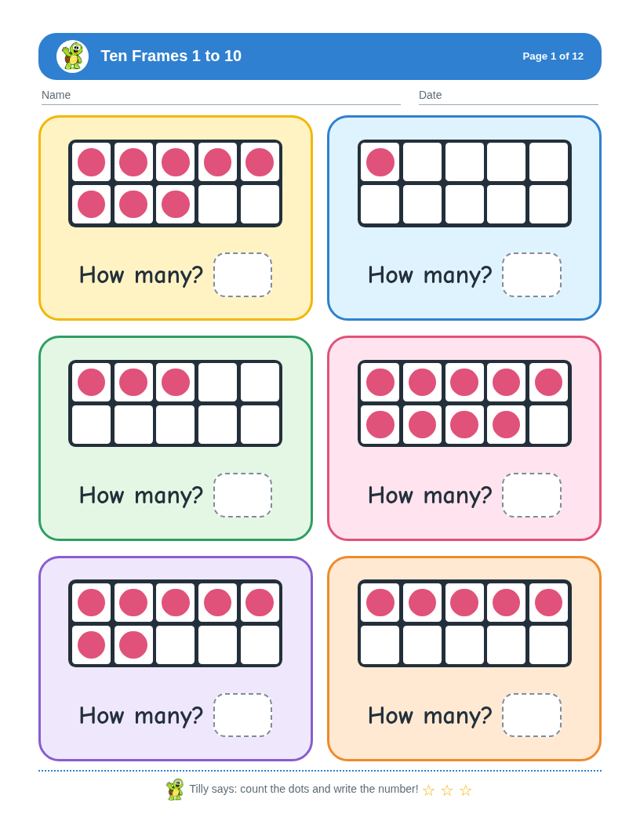
4 ten frames worksheet packs in one download.
See inside FREE Math Path · Level 1
Ten frame worksheets, counting 1 to 5.
See insideMany 4-year-olds count small groups up to 5 or 10. By the end of kindergarten, many US schools expect children to count to 100 by ones and by tens.
Saying numbers in order and counting things are different skills. Practice one touch, one number with real things.
Yes. Fingers are always there and help a child see small numbers.
When counting is easy. Adding starts with real things: three cars and one more.
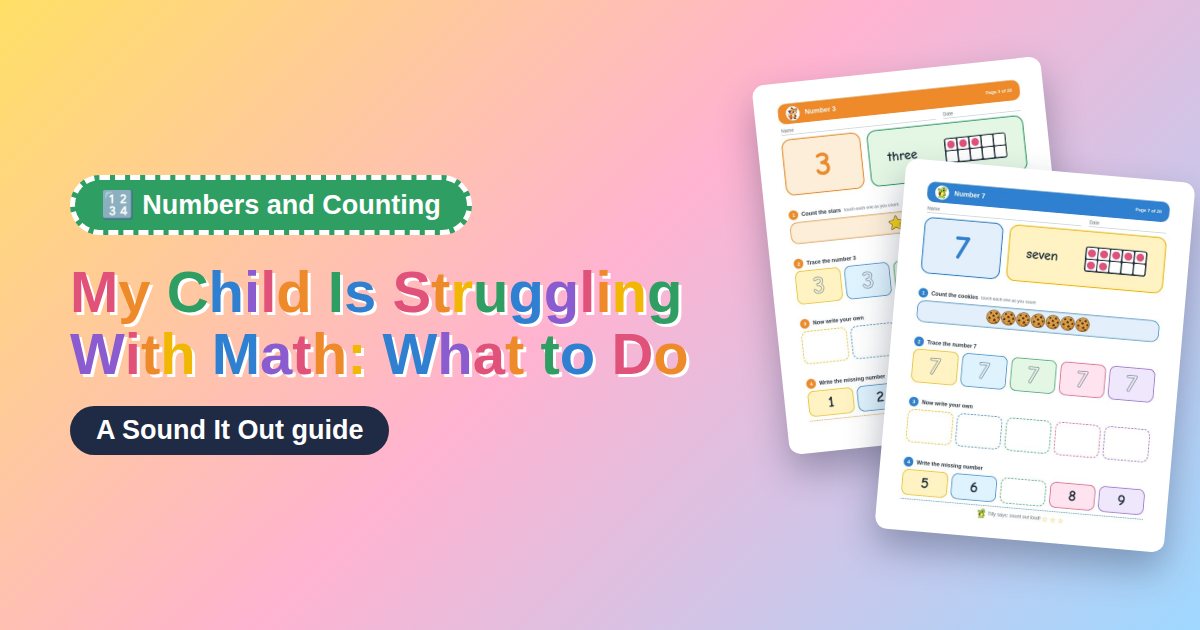 Numbers and CountingMy Child Is Struggling With Math: What to DoYour child is struggling with math: counting, adding or taking away. Find the step that is shaky, use real things first, and practice a little daily.Read the guide
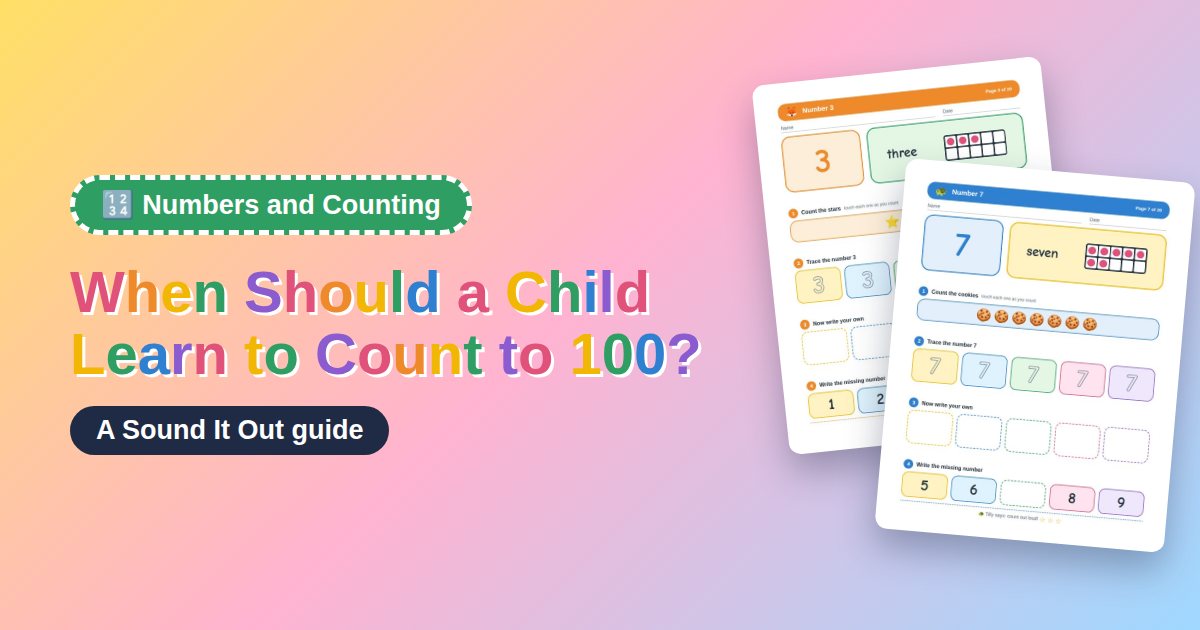 Numbers and CountingWhen Can Kids Count to 100? What Age, and How to HelpWhen can kids count to 100? Most learn by the end of kindergarten, around age 5 or 6. What to practice first, and four steps to help at home.Read the guide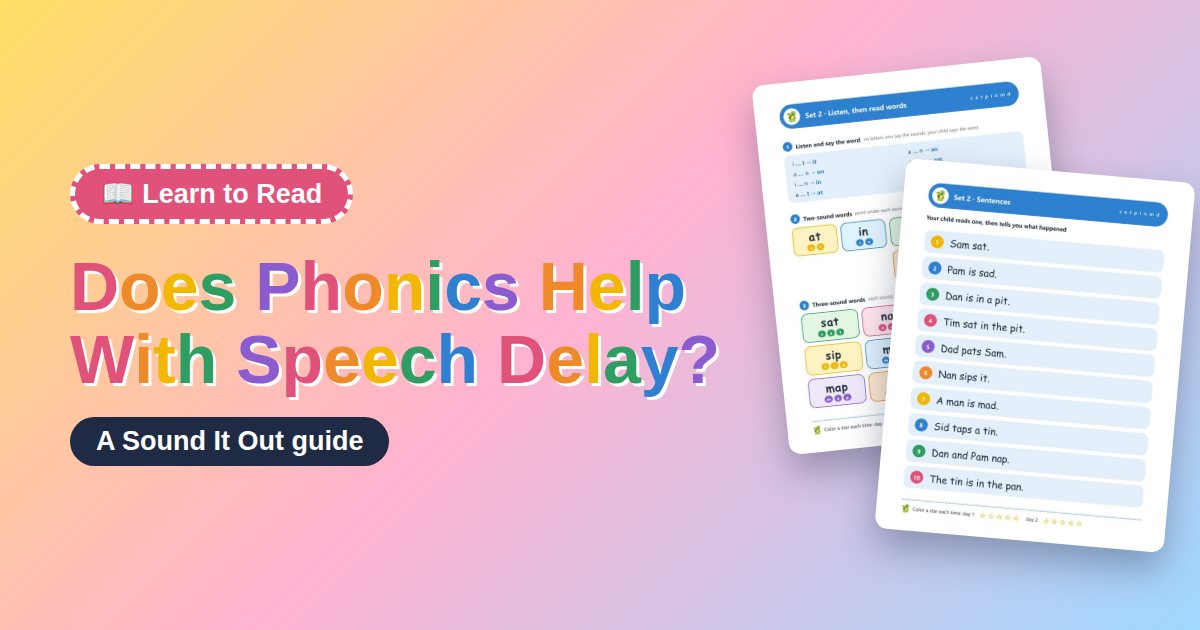
 Learn to ReadDoes Phonics Help With Speech Delay?Does phonics help with speech delay? What reading practice can and cannot do for a child who talks late, and why to see a speech-language pathologist.Read the guide
The packs on this site are free. The One Sheet goes further: one sheet a day, made for your child from what you tell us happened.
See The One Sheet · $9.99 a month
Or try the 10-day plan: Count It Up, $19 one timeOr do the free 3-minute check first