
Home › Guides › Numbers and Counting
Home › Guides › Numbers and Counting
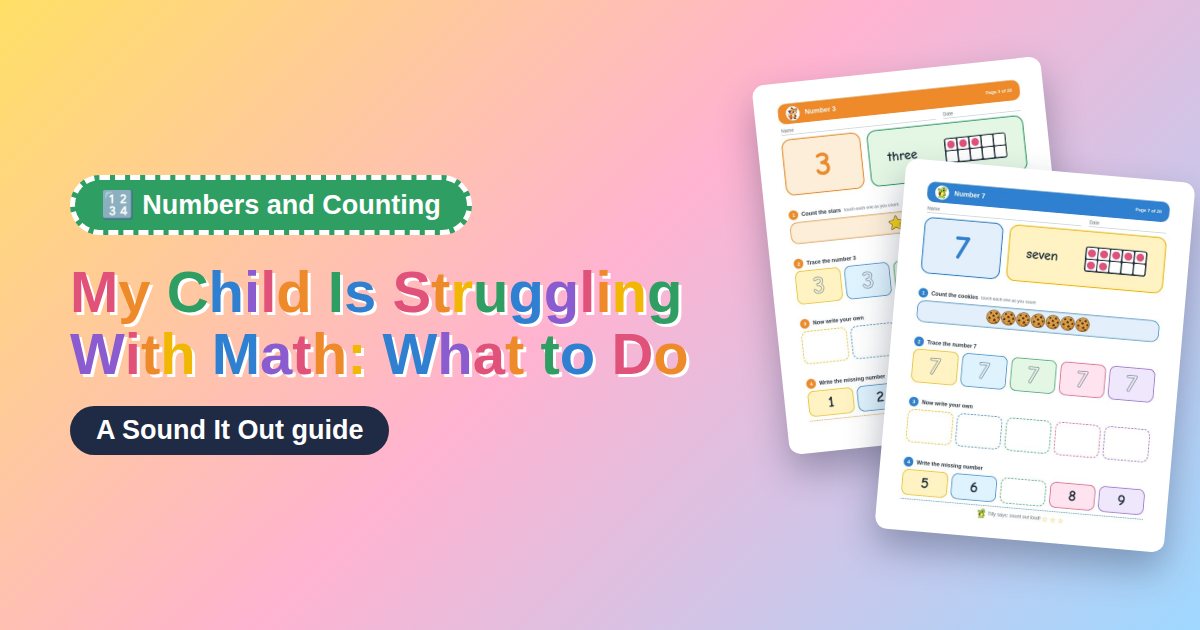
Early math is built in steps too: counting, knowing what a number means, comparing amounts, then adding and taking away. A child who struggles with adding is often shaky on an earlier step, such as counting objects one by one. Go back to that step, use real things like blocks or coins first, then pictures, then numbers, and practice for a few minutes every day.
A U.S. Department of Education guide on teaching math to young children recommends teaching number and operations step by step, following the order in which children usually learn them.
First counting in order, then counting objects one by one, then knowing that the last number tells how many, then comparing which group has more, then adding and taking away.
Put seven blocks on the table and ask how many. Watch: does your child touch each block once, and say one number for each? Ask which of two groups has more.
If counting objects is shaky, adding will be too. Practice the earlier step first.
Use blocks, buttons or snacks. Make a group of 3 and a group of 2, push them together and count all of them. That is adding.
Once real things are easy, use pictures of things, then numbers alone. Moving too fast to numbers is a common reason math feels hard.
Talk math in daily life: count the stairs, the plates, the cars. Ask how many more we need. The same guide recommends this kind of everyday math talk.
Practice a few minutes a day. If your child still struggles after steady practice, ask the teacher what the school sees.
 Print free practice pagesFree pages from our packs, in color and in black and white.See the free pages
 Check counting objects one by one first.
 Use real things before pictures, and pictures before numbers.
 Count everyday things out loud together.
 Practice a few minutes a day.
 Ask the teacher if it stays hard.
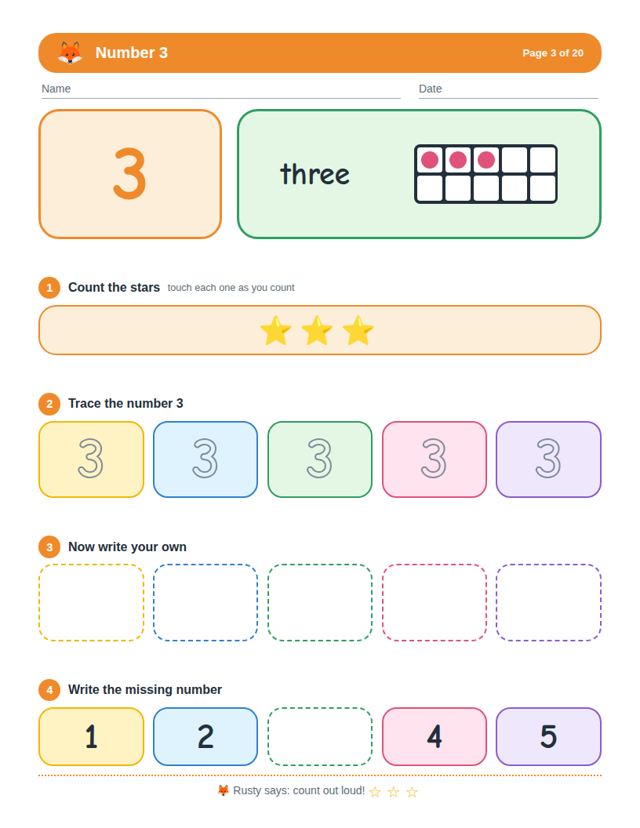
Number tracing and counting worksheets with ten frames.
Get the free pages FREE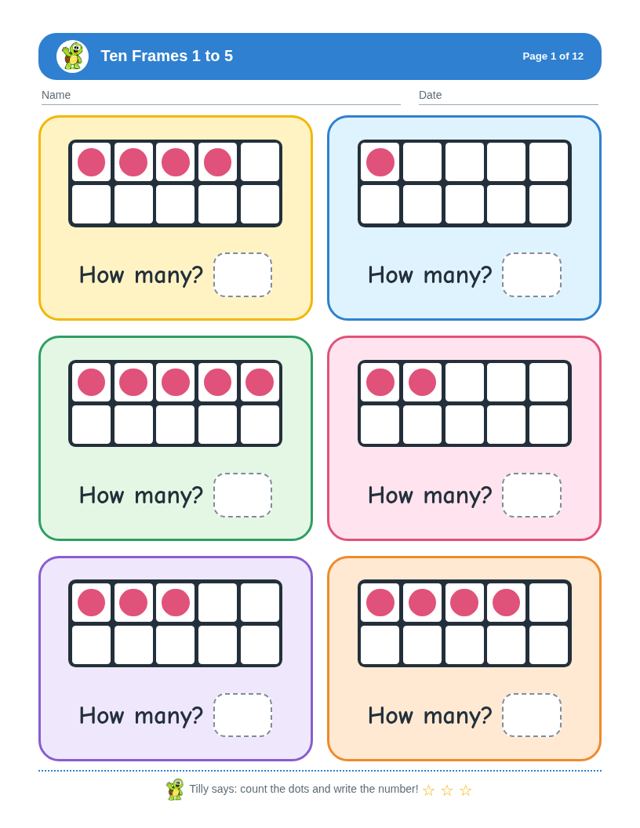
Ten frame worksheets, counting 1 to 5.
Get the free pages $3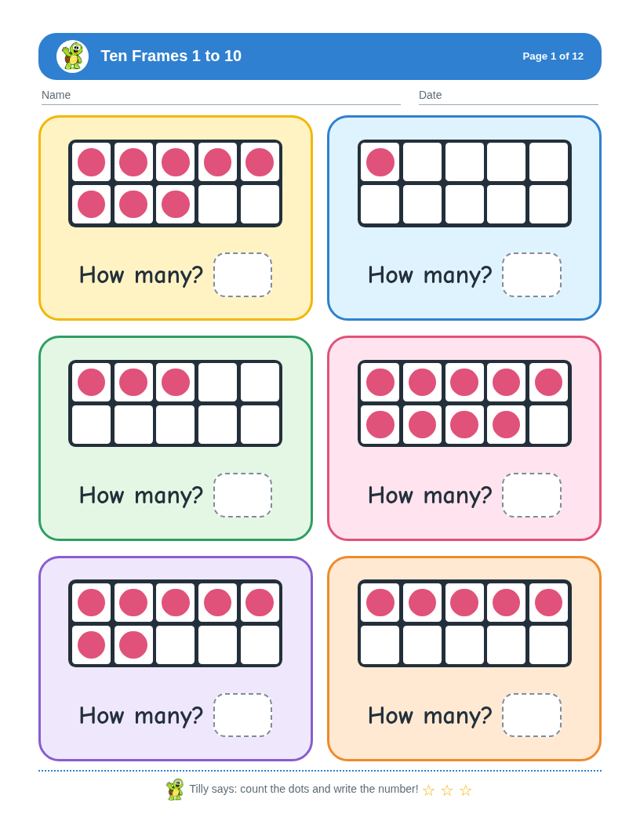
4 ten frames worksheet packs in one download.
See inside FREE Math Path · Level 1
Ten frame worksheets, counting 1 to 5.
See insideSaying numbers in order is different from knowing how many things there are. Practice counting objects one by one, and that the last number tells how many.
Yes, at first. Fingers are real things to count. Over time, many children start to remember small sums.
If your child still cannot count small groups of objects reliably after steady practice, talk to the teacher.
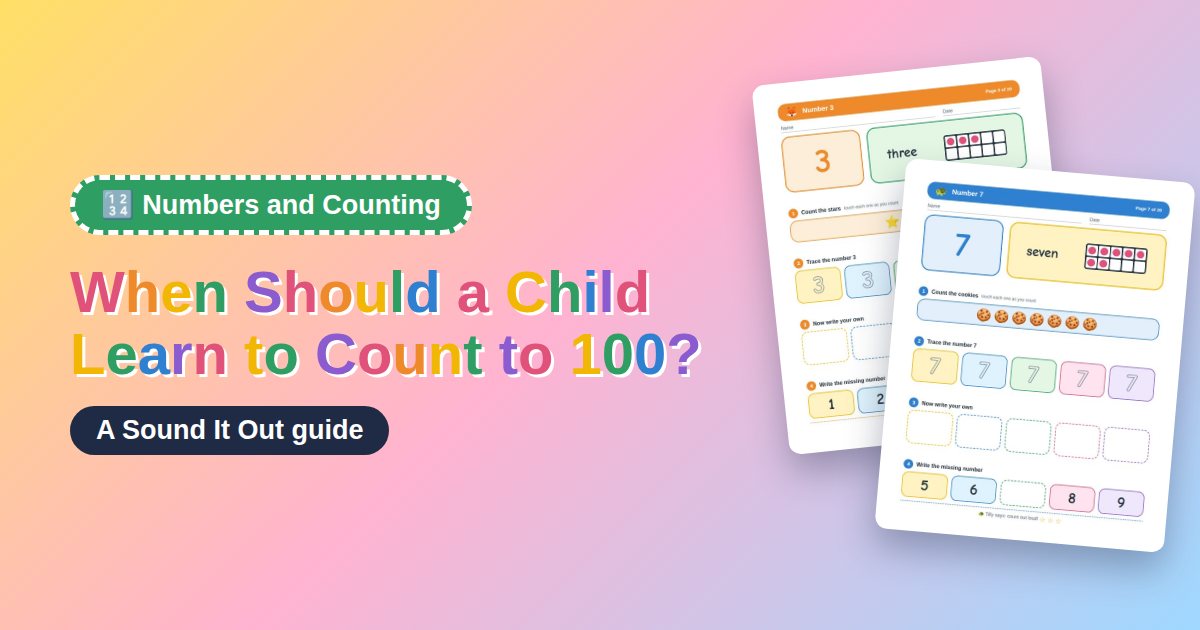 Numbers and CountingWhen Should a Child Learn to Count to 100?Learn when many children count to 100, why the tens pattern matters, and four clear steps to practice counting by ones at home.Read the guide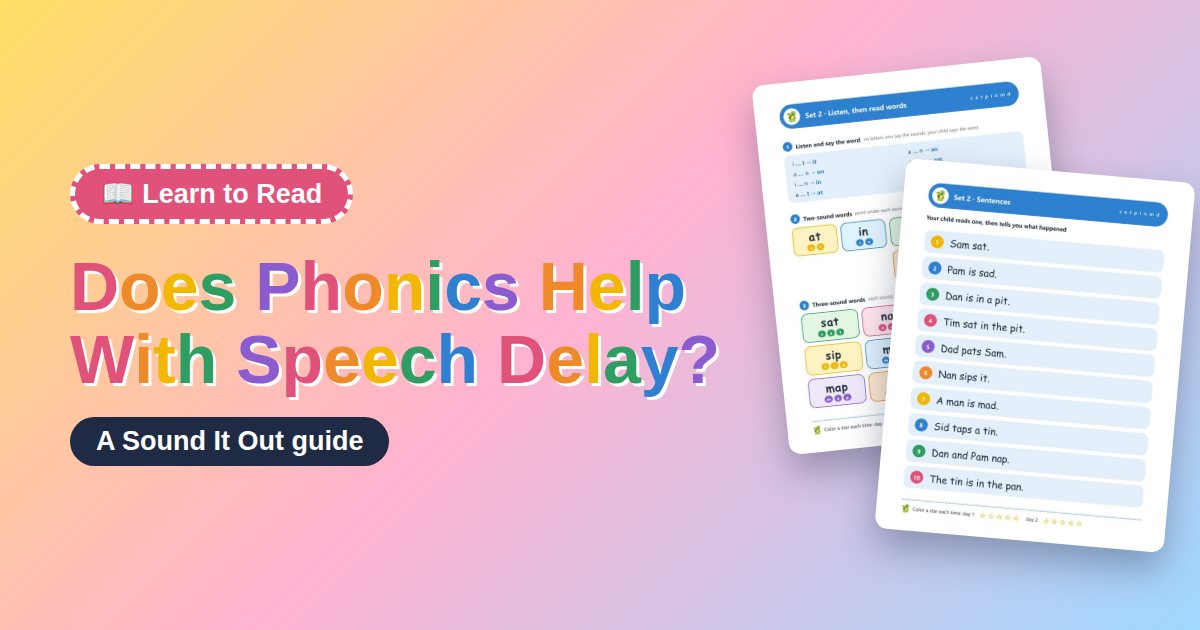
 Learn to ReadDoes Phonics Help With Speech Delay?Does phonics help with speech delay? What reading practice can and cannot do for a child who talks late, and why to see a speech-language pathologist.Read the guide
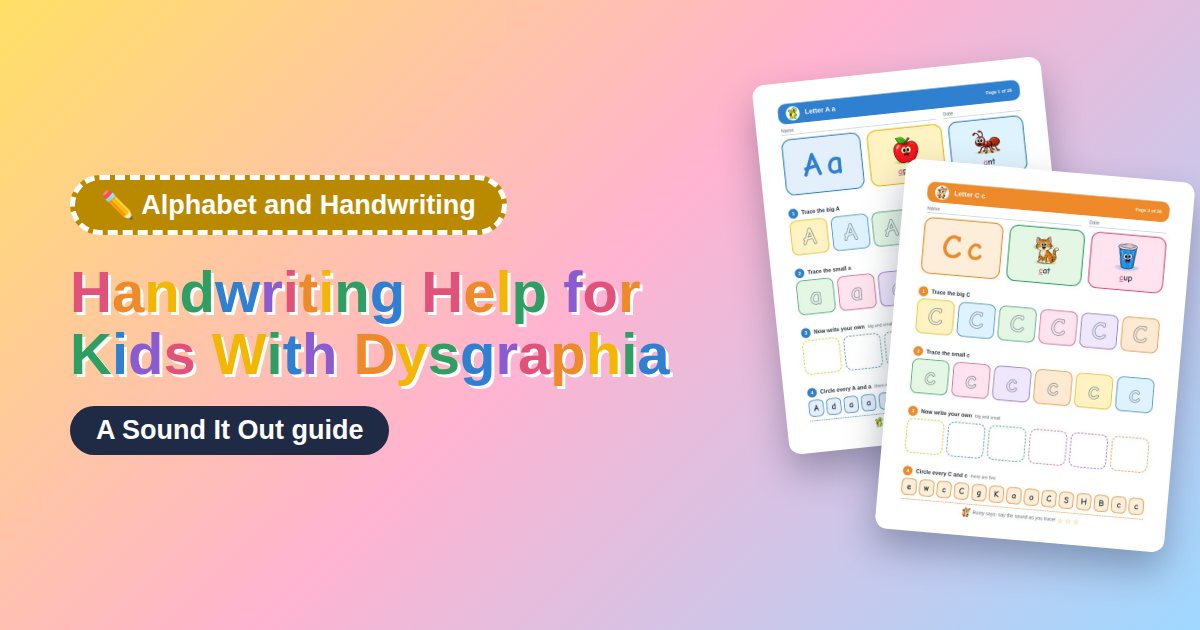 Alphabet and HandwritingHandwriting Help for Kids With DysgraphiaHandwriting help for kids with dysgraphia at home: short practice, letter starts, wide lines, and other ways to write. When to ask for an evaluation.Read the guide
The packs on this site are free. The One Sheet goes further: one sheet a day, made for your child from what you tell us happened.
See The One Sheet · $9.99 a month
Or get the Complete Kindergarten Bundle: 26 packs in one download for $3Is reading hard for your child? Find where to start