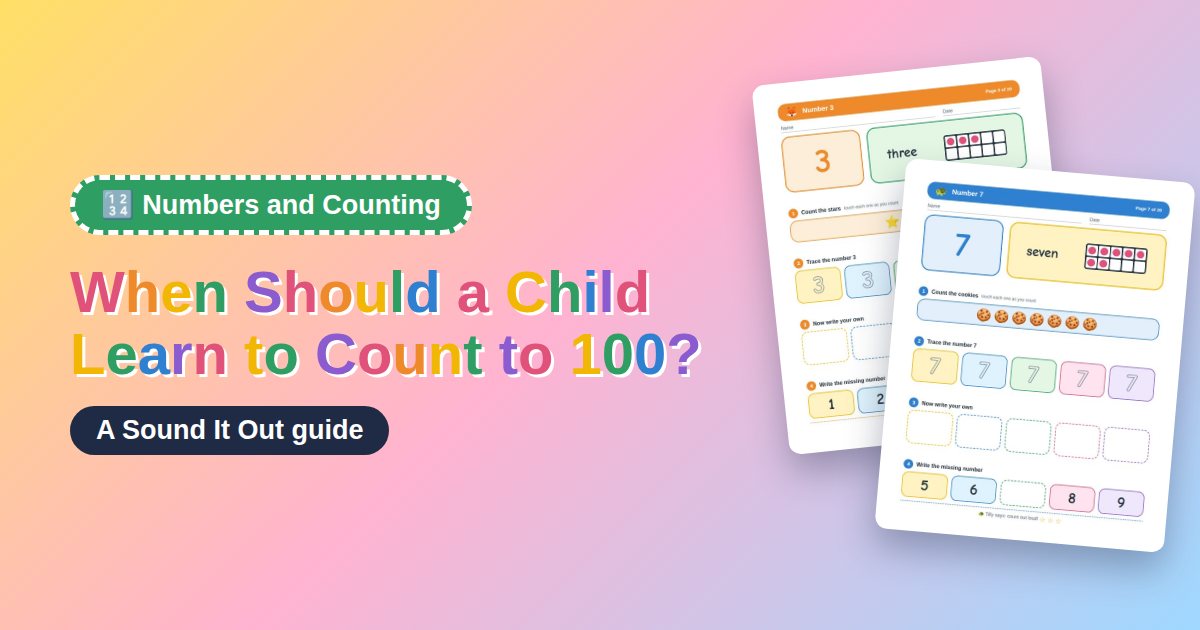
Most children can count to 100 by the end of kindergarten, around age 5 or 6. They usually learn to count by tens first, like 10, 20, 30, and then fill in the numbers in between. Some children reach this skill earlier in kindergarten, others need first grade. Children differ, so use count to 20 as an earlier checkpoint.
1What Counting to 100 Means
Counting to 100 means your child can say every number in order from 1 to 100 without skipping or stopping. It also means they understand that each number is one more than the last. This is different from just reciting a memorized string of words.
Many children learn the pattern of tens, such as 10, 20, 30, up to 100, before they can count every single number in between. Both skills matter, but counting by tens often comes first and makes the rest easier.
2Typical Age and Grade Milestones
Preschoolers around age 3 or 4 often count to 10 or 20. Kindergartners, usually age 5 or 6, work on counting to 100, first by tens and then by ones. By the start of first grade, most children can count to 100 and are starting to count past it.
These ages are general guides, not strict rules. Some children count to 100 in preschool, while others need extra practice into first grade.
3How to Help Your Child Count to 100
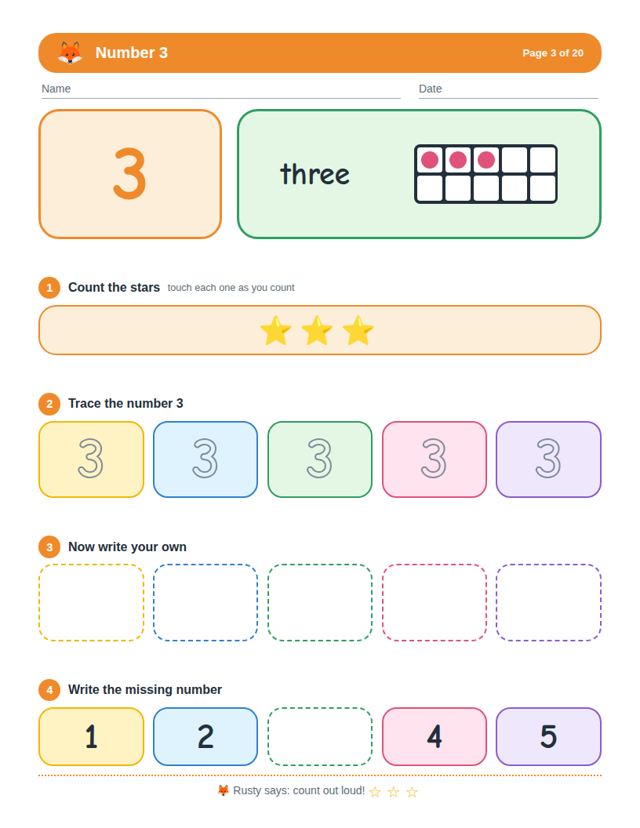
Practice counting out loud during daily routines, like counting stairs, snacks, or toys. Use a hundred chart so your child can see the pattern of numbers in rows of ten. Point to each number as you count so they connect the word to the symbol.
Break the task into chunks. Practice counting to 20 first, then 50, then 100, instead of asking your child to count to 100 all at once.
4Signs Your Child May Need More Practice
If your child skips numbers, loses the order after 12 or 13, or cannot count past 20 by age 5, extra practice can help. This does not mean something is wrong. It means counting needs more repetition, just like any new skill.
🖨️Print free practice pagesFree pages from every Sound It Out pack, in color and in black and white. No sign-up.See the free pages5Counting by Tens Makes a Big Difference
Once a child knows the tens pattern, 10, 20, 30, 40, and so on, counting to 100 becomes much easier. The numbers in between follow the same pattern as 1 to 9, just with a different word in front, like twenty-one, twenty-two, twenty-three.
Quick tips
- ⭐Count forward and backward from different starting numbers, not just from 1.
- 🎈Use a hundred chart or number line where your child can see and point to numbers.
- 🌈Practice in short sessions of a few minutes, several times a day.
- ✏️Celebrate progress at 20, 50, and 100 instead of waiting for the full count.
- 🎯Mix counting into daily life, like counting steps, blocks, or snack pieces.
 ➕ Addition and SubtractionMy Child Does Not Understand Subtraction: What to Do
 👀 Sight WordsWhat Is a Sight Word?
 ✏️ Alphabet and HandwritingHow to Teach a Child to Hold a Pencil