Home › Guides › Alphabet and Handwriting
Home › Guides › Alphabet and Handwriting
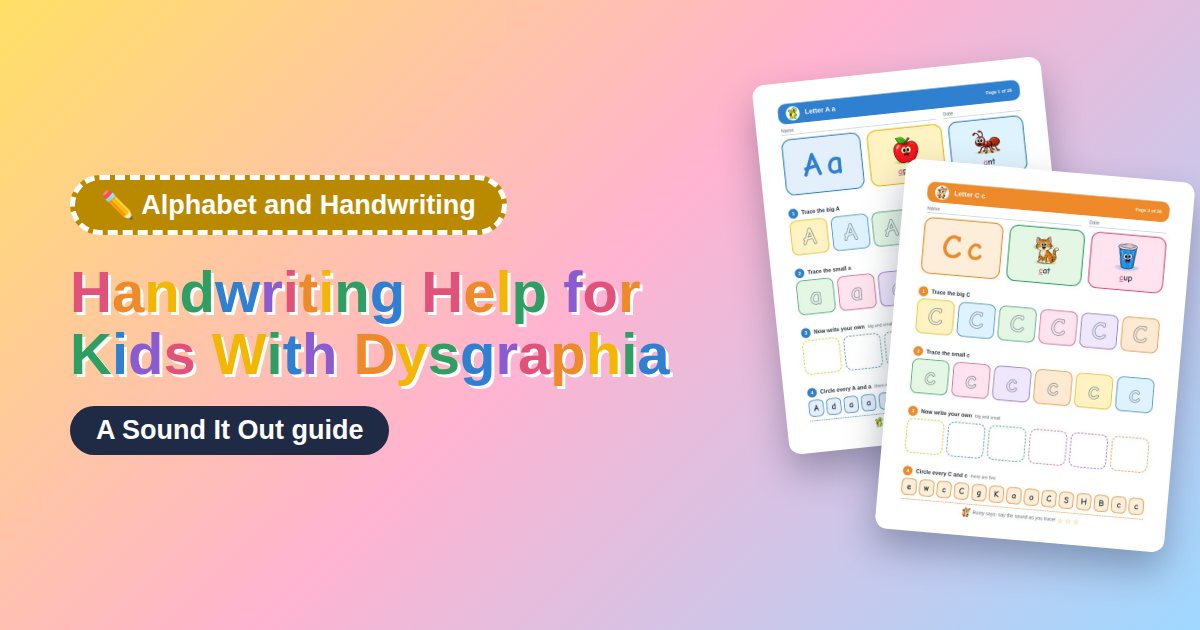
Dysgraphia is a learning difference that makes writing by hand very hard. Practice still helps, but keep it short and make it easier: wide lines, the same start for each letter every time, a comfortable pencil grip, and lots of praise. Let your child show what they know in other ways too, such as saying it or typing. Only a qualified professional can evaluate for dysgraphia, so talk to the school or your child's doctor.
Understood.org describes dysgraphia as a learning difference that affects handwriting and other parts of writing. Children with dysgraphia may write slowly, form letters in odd ways, and tire quickly.
It has nothing to do with how smart a child is. Many children with dysgraphia have great ideas that are hard to get onto paper.
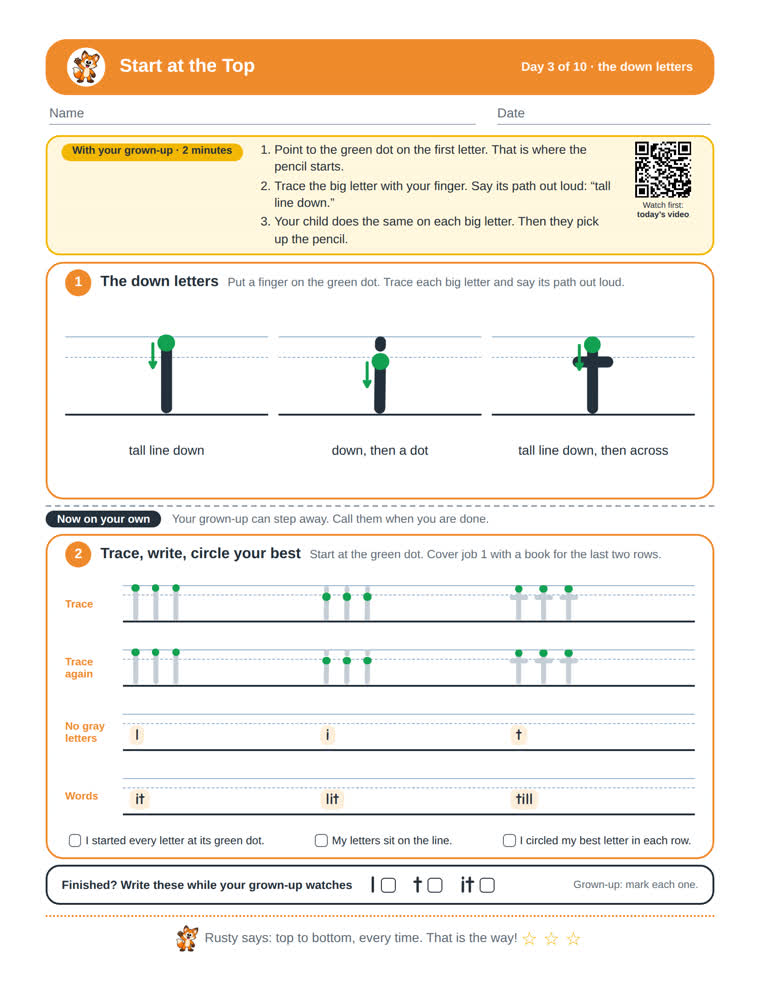
Teach each letter with the same start point and the same moves every time, and say the moves out loud. Work on a few letters at a time.
Use paper with wide lines and a clear middle line. Big first, then smaller. Short daily practice is better than long sessions.
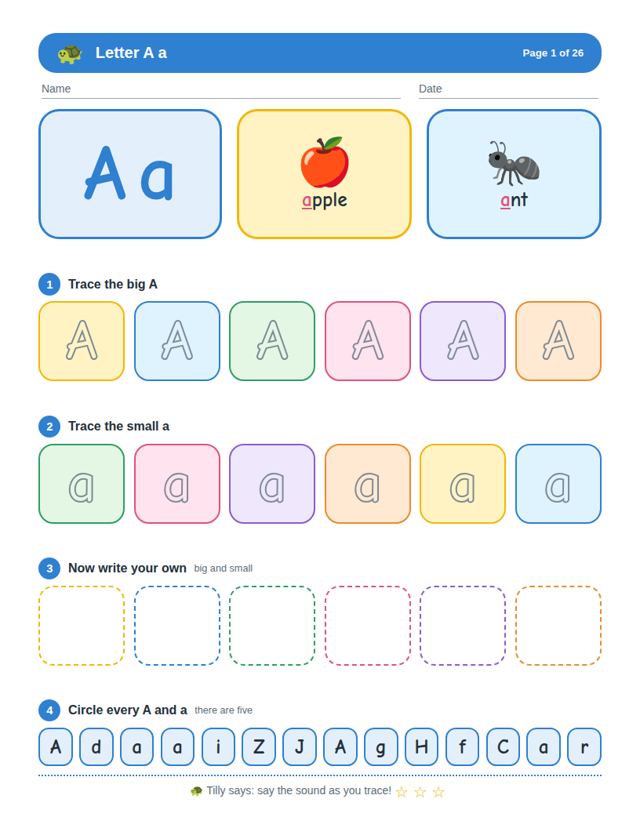
A thick pencil or a soft grip can make holding the pencil easier. Make sure your child sits with feet flat and the paper at a comfortable angle.
Stop before the hand gets tired. A tired hand makes messier letters and more frustration.
Let your child say their ideas while you write some of them, or type when it fits. This keeps ideas flowing while handwriting grows slowly.
Ask the school about an evaluation and about supports in class. An occupational therapist can also help with handwriting.
 Print free practice pagesFree pages from our packs, in color and in black and white.See the free pages
 Same start point, same moves, every time.
 Wide lines and big letters first.
 A thick pencil or soft grip can help.
 Stop before the hand gets tired.
 Let ideas out by saying or typing too.
No. Many children have messy handwriting while they learn. Dysgraphia is when writing stays very hard despite practice. Only a qualified professional can evaluate for it.
Yes, short and steady practice with clear letter moves can help. Combine it with other ways to write, such as typing.
Ask the school about an evaluation. Psychologists, and sometimes occupational therapists, are part of evaluating writing difficulties.
 Alphabet and HandwritingHow to Help a Child Write SentencesHow to help a child write sentences: say it first, count the words, write it, then check capital letter, spaces and period. Simple steps for home.Read the guide
 Alphabet and HandwritingHow to Teach a Left-Handed Child to WriteSimple handwriting help for a left-handed child: how to tilt the paper, hold the pencil a little higher, and form letters without smudging.Read the guide
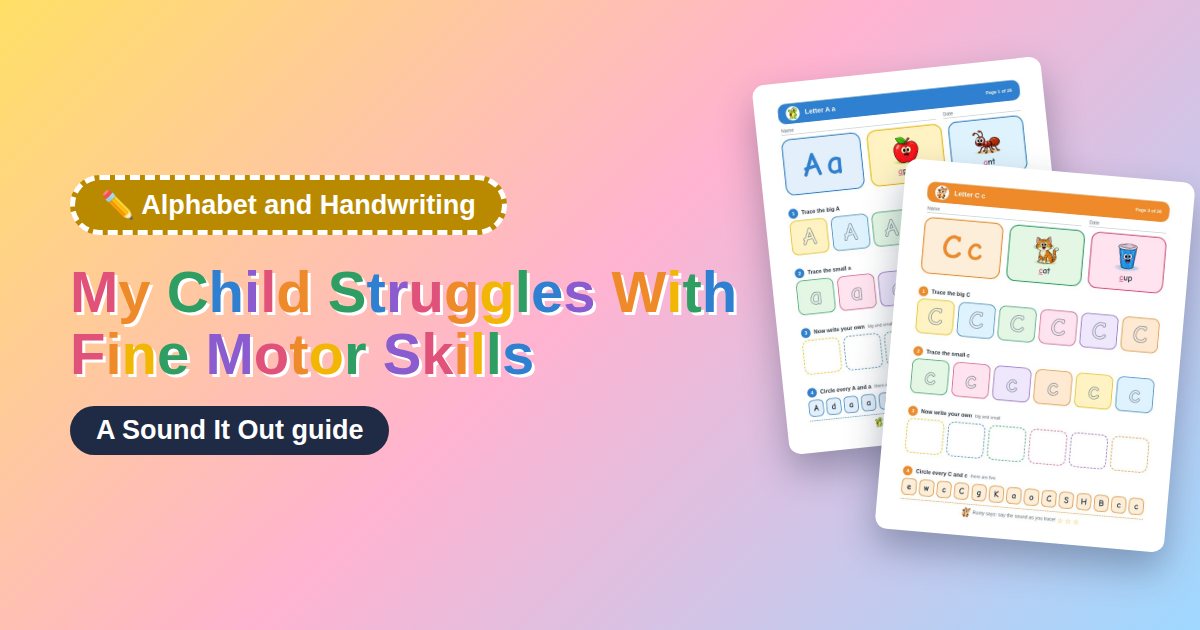 Alphabet and HandwritingMy Child Struggles With Fine Motor SkillsYour child struggles with fine motor skills: holding a pencil, cutting, buttons. Simple daily play that builds hand strength, and when to ask for help.Read the guide
“Letters are messy, start in the wrong place or face the wrong way”
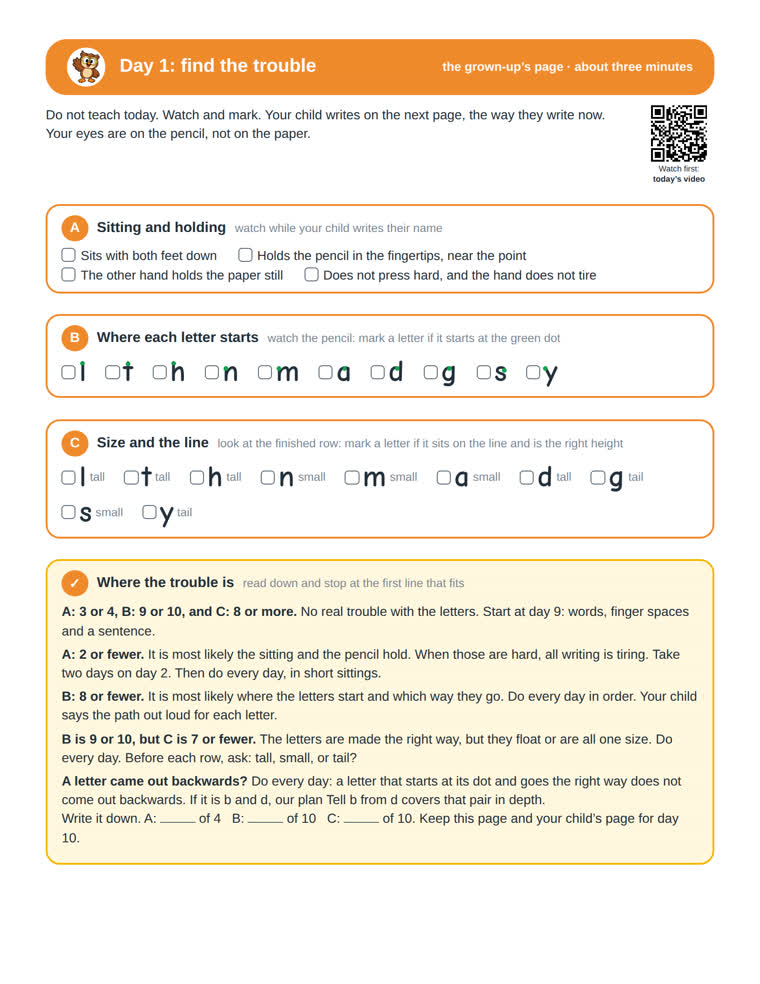
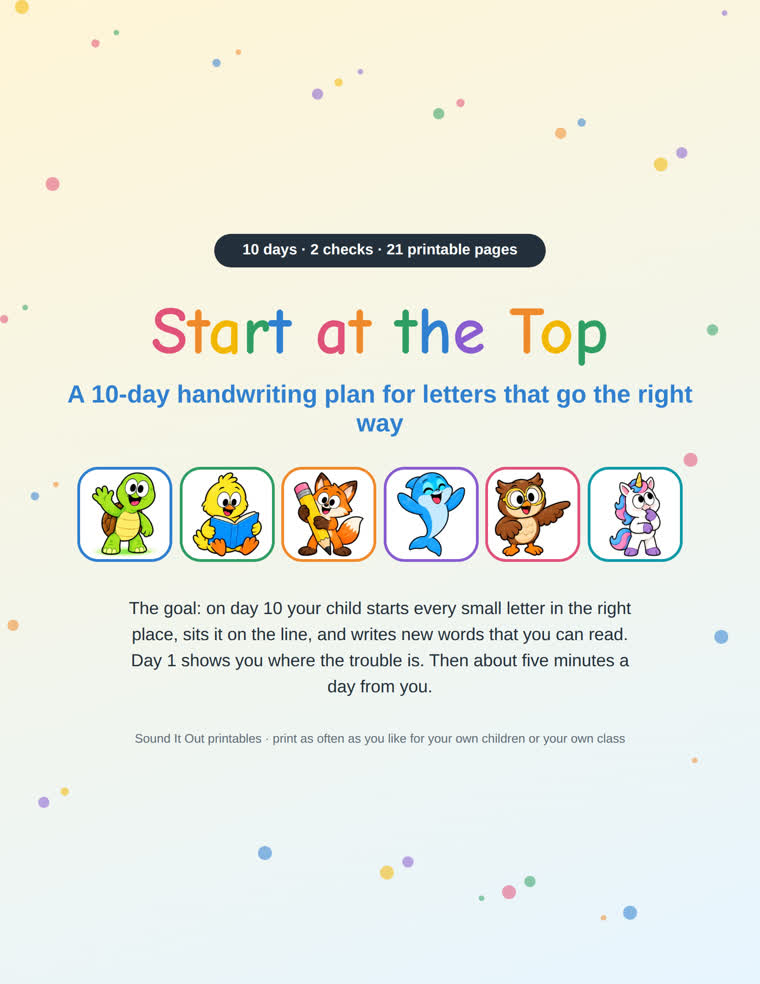
Start at the Top is a full 10-day plan, with a short video that shows you every step. The goal: on day 10 your child starts every small letter in the right place, sits it on the line, and writes new words that you can read. It is the goal, not a promise.