


Handwriting practice
How to teach letter formation, according to an expert panel
How to teach letter formation, according to an expert panel
A U.S. expert panel on writing recommends showing a child a comfortable pencil hold and the most efficient way to form each letter, with short practice and letters written from memory as well as traced. The results it reports are for writing. It does not report an effect on reading.
The writing guide says that when basic skills like handwriting take little effort, a child can give more attention to ideas.
In the source’s own words“When basic writing skills become relatively effortless for students, they can focus less on these basic writing skills and more on developing and communicating their ideas”
The guide says first writing lessons should begin by showing the child how to hold a pencil comfortably.
In the source’s own words“Early writing instruction should begin with demonstrations of how to hold a pencil comfortably between the thumb and forefinger, resting on the middle finger”
The guide says to show children the most efficient and readable way to form each letter, in print or in cursive.
In the source’s own words“Teachers also should show young writers the most efficient and legible ways to form each letter, regardless of whether print or cursive script is used”
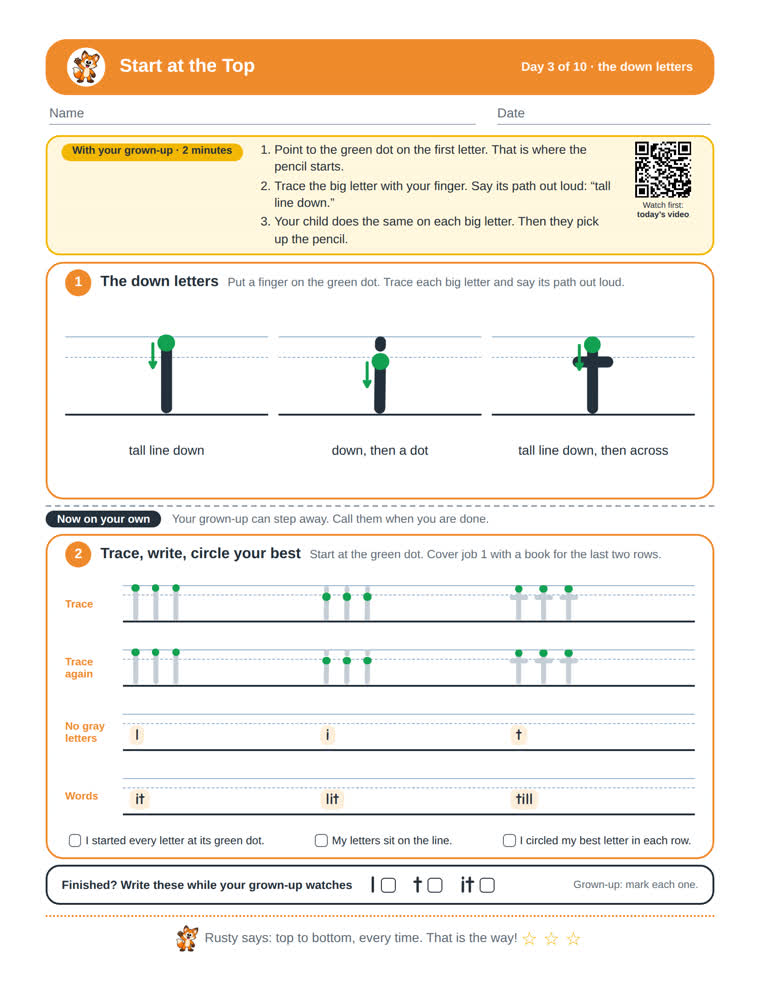
The guide suggests guided practice with letters marked by numbered arrows that show the order and direction of each stroke.
In the source’s own words“Guided practice can be helpful, using letters with numbered arrows depicting the order and direction of each stroke.”
The guide says children should also practice writing letters from memory, with the model covered.
In the source’s own words“Students also should practice writing letters from memory.”
The guide says a child might write a given letter only five to eight times before moving to something else.
In the source’s own words“Students might practice a specific letter only five to eight times before moving to another activity.”
The guide says writing single letters is not enough; children should also use their handwriting in sentences and real writing.
In the source’s own words“However, writing letters in isolation is insufficient; students also should apply their handwriting skills in sentences and in authentic writing activities.”
The guide says which handwriting program is used matters less than teaching smooth, easy letter formation.
In the source’s own words“The specific curriculum is less important than teaching fluent, effortless letter formation.”
We read each of these ourselves on October 9, 2026. Follow the links to read them too.
“Letters are messy, start in the wrong place or face the wrong way”
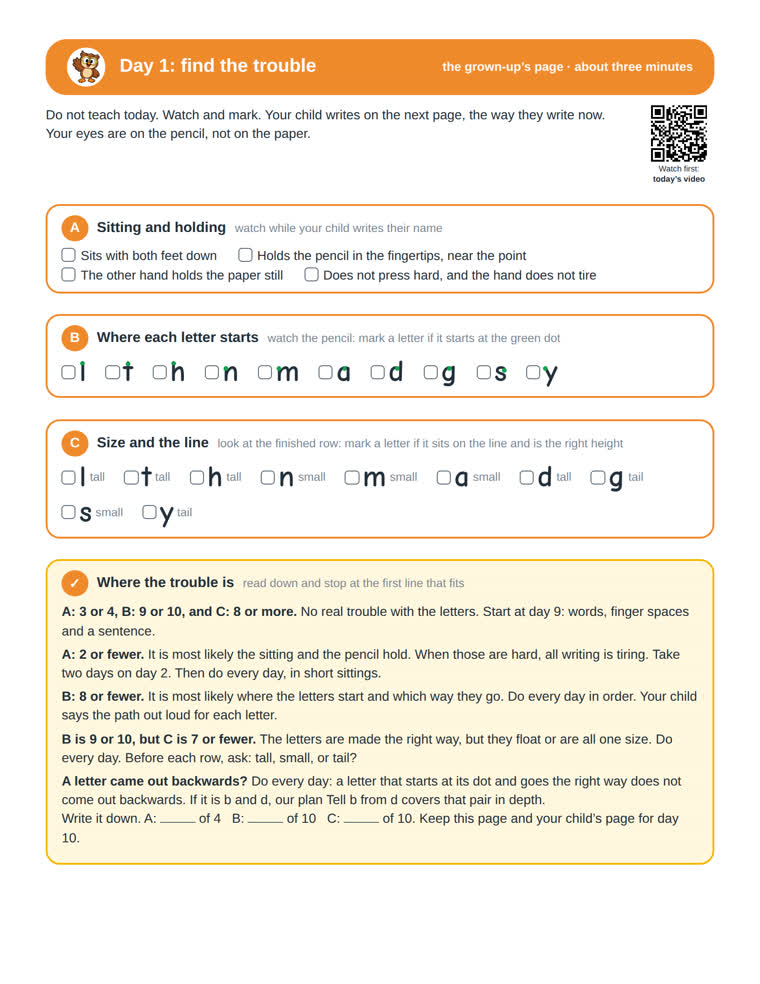
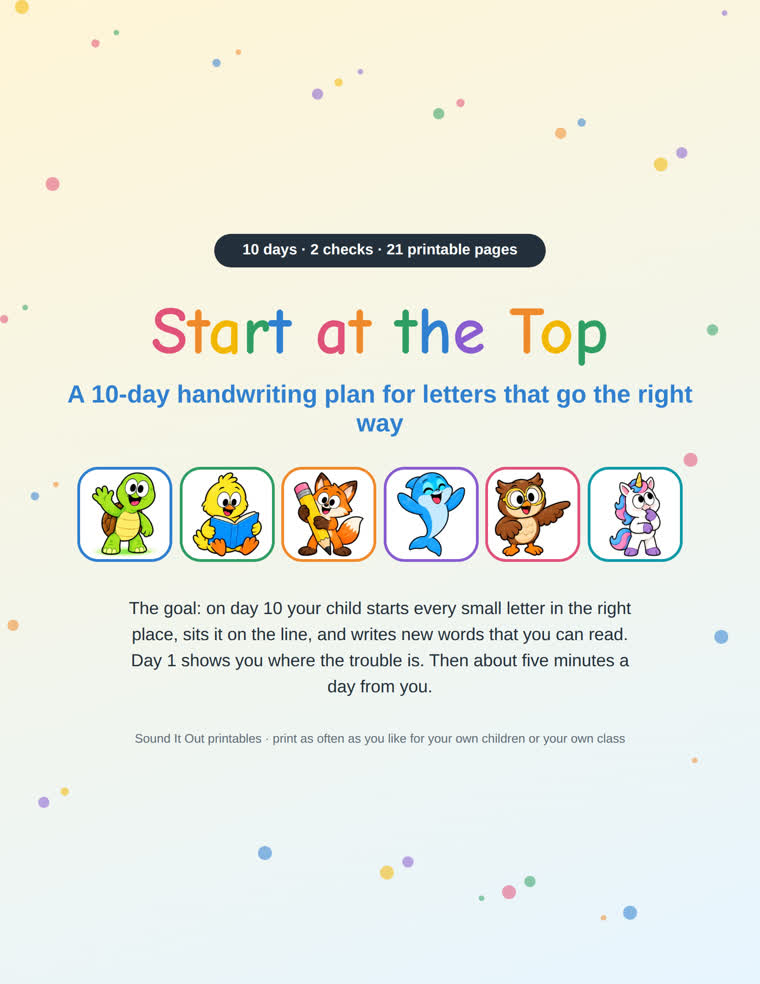
Start at the Top is a full 10-day plan, with a short video that shows you every step. The goal: on day 10 your child starts every small letter in the right place, sits it on the line, and writes new words that you can read. It is the goal, not a promise.