Home › Guides › Alphabet and Handwriting
Home › Guides › Alphabet and Handwriting
Fine motor skills are the small movements of the hands and fingers: holding a pencil, cutting, doing up buttons. They grow with practice and with play that makes the hands strong. A few minutes a day of squeezing, pinching, tearing and drawing helps. If your child finds these tasks much harder than other children their age, or loses skills, talk to the doctor, who may suggest an occupational therapist.
Fine motor skills use the small muscles in the hands and fingers. Writing, cutting, using a fork, building with small blocks and doing up buttons all need them.
They develop at different speeds in different children. Strong hands and good control usually come before neat writing.
Squeeze and roll play dough. Tear paper into small pieces. Pick up small things with fingers or tongs. Pinch clothes pegs onto a box. Thread big beads.
These games build the strength and control a hand needs before it can hold a pencil well.
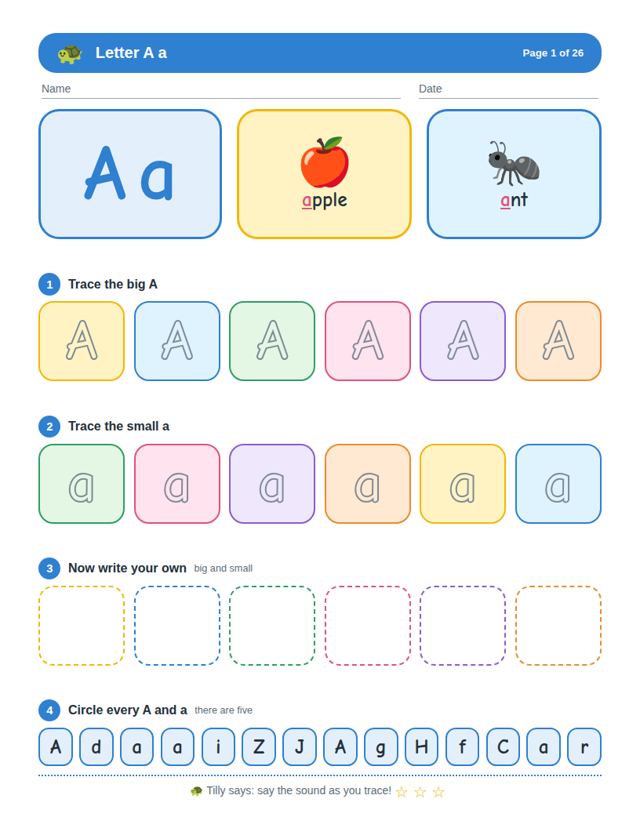
Start with big movements: lines and circles on large paper, chalk on the ground, a finger in sand. Then smaller ones on paper.
For scissors, start with snipping strips of paper, then cutting along straight lines, then curves.
Talk to your child's doctor if your child finds hand tasks much harder than others of the same age, avoids them strongly, or seems to lose skills they had.
The doctor may suggest an occupational therapist, who helps children with hand skills. This page is about play at home, not about therapy.
 Print free practice pagesFree pages from our packs, in color and in black and white.See the free pages
 Play dough every day builds hand strength.
 Tear, pinch, thread and build.
 Go big before small: big paper, chalk, sand.
 Snip strips before cutting lines.
 Keep it play, a few minutes at a time.
Play dough, tearing paper, picking up small things, pegs, threading beads, drawing on big paper and snipping strips with child scissors.
Many children move toward a mature pencil grip between about four and six. Strong hands come first.
Your child's doctor first. They may suggest an occupational therapist.
 Alphabet and HandwritingHandwriting Help for Kids With DysgraphiaHandwriting help for kids with dysgraphia at home: short practice, letter starts, wide lines, and other ways to write. When to ask for an evaluation.Read the guide
 Alphabet and HandwritingHow to Help a Child Write SentencesHow to help a child write sentences: say it first, count the words, write it, then check capital letter, spaces and period. Simple steps for home.Read the guide
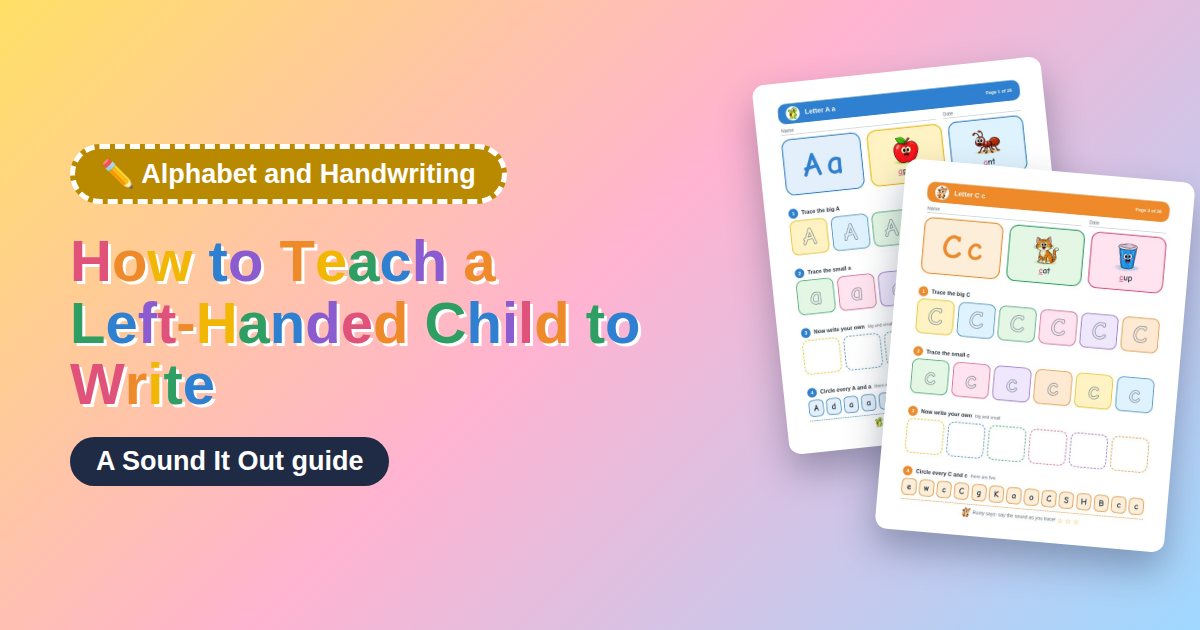 Alphabet and HandwritingHow to Teach a Left-Handed Child to WriteSimple handwriting help for a left-handed child: how to tilt the paper, hold the pencil a little higher, and form letters without smudging.Read the guide
“Letters are messy, start in the wrong place or face the wrong way”
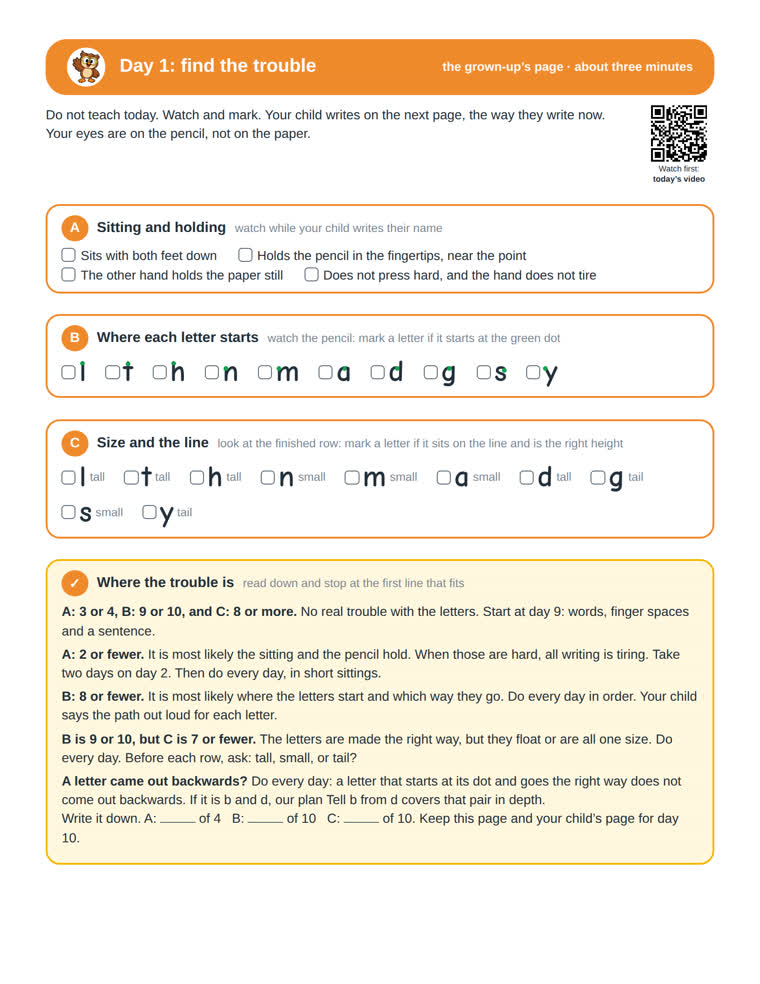
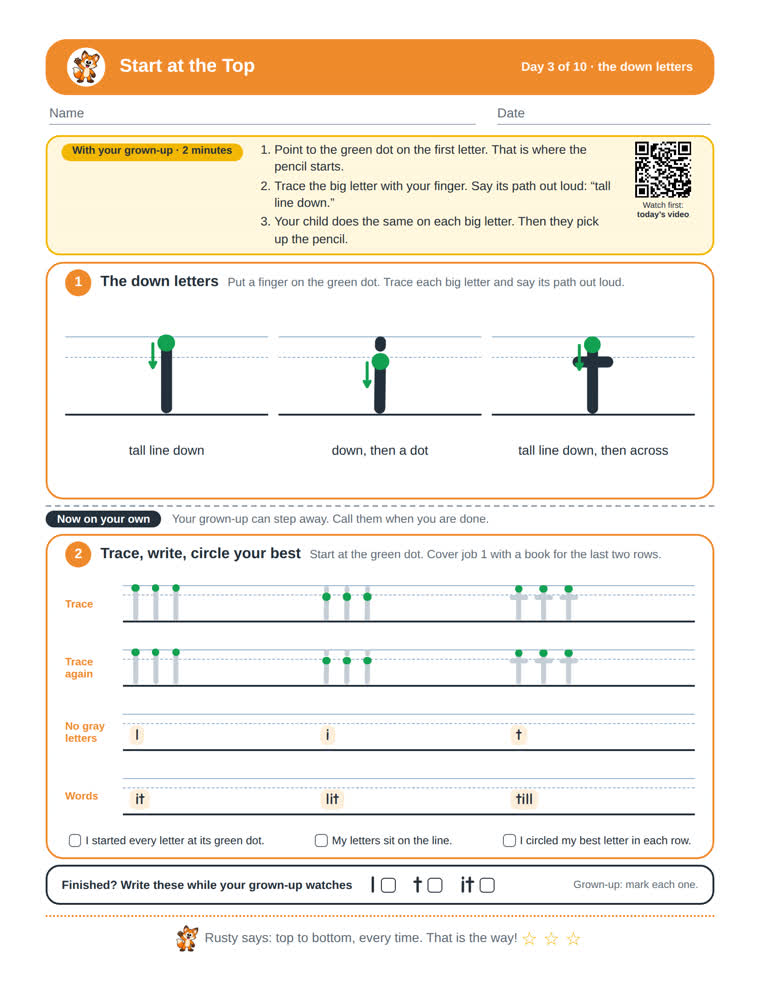
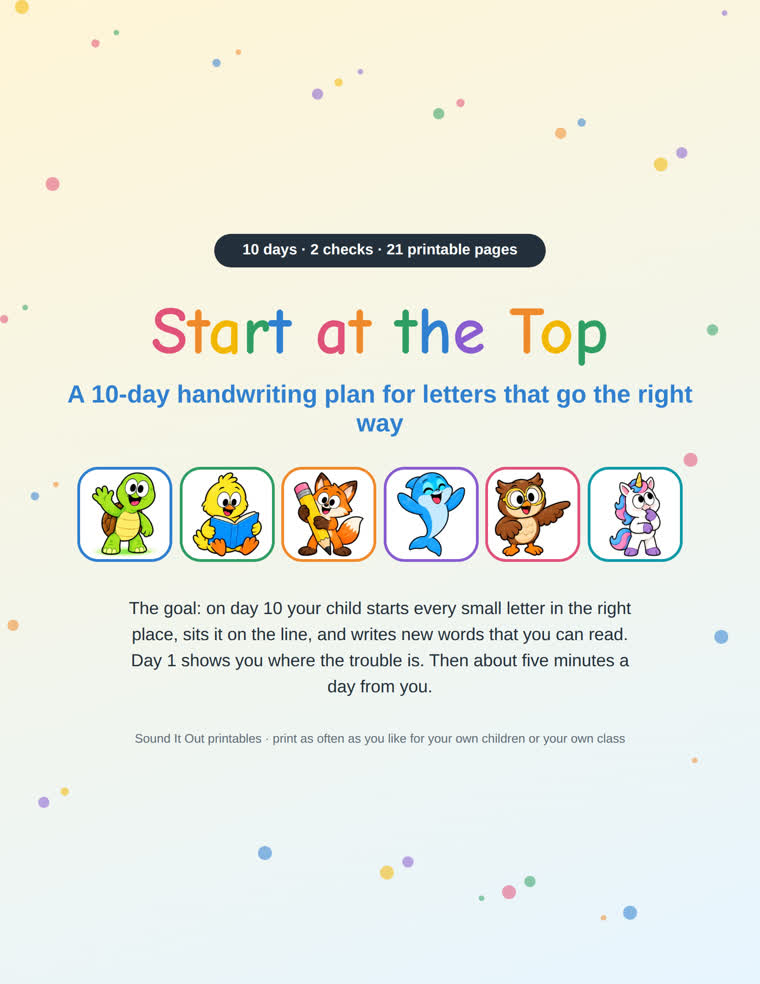
Start at the Top is a full 10-day plan, with a short video that shows you every step. The goal: on day 10 your child starts every small letter in the right place, sits it on the line, and writes new words that you can read. It is the goal, not a promise.