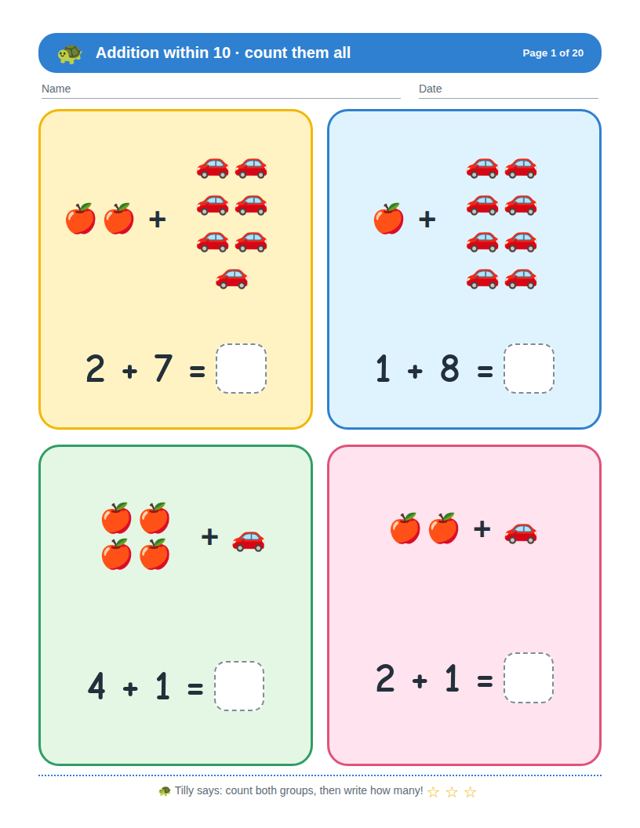
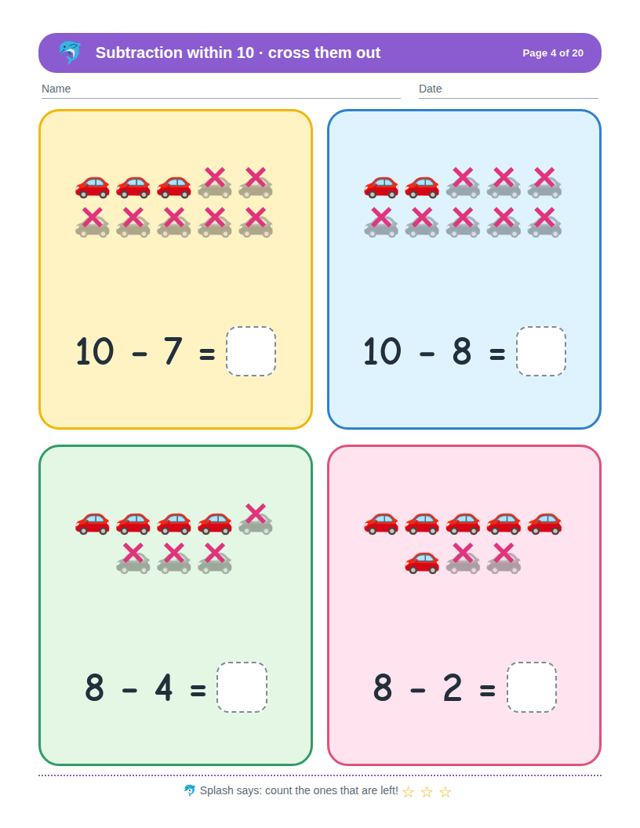
Subtraction often feels confusing because it is more abstract than addition, and many children have not had enough practice taking objects away or comparing groups. This is common, not a sign of trouble. Build understanding with real objects first, not worksheets. Remove items from a group and count what is left, use a number line, and talk through word problems like take away and how many more before using subtraction signs.
1Why Subtraction Feels Harder Than Addition
Subtraction asks your child to think backward, which is harder than counting forward for addition. It also uses many different words for the same idea, such as take away, minus, how many are left, and how many more. Mixing up these words is one of the most common reasons subtraction feels confusing.
2Start With Real Objects, Not Numbers
Before using numbers on a page, let your child subtract with things they can touch. Give them ten crackers or buttons, ask them to take three away, and have them count what is left. Do this many times with different numbers so the action of removing and counting becomes familiar before it becomes a written problem.
3Show Subtraction on a Number Line
Draw a simple number line from 0 to 10. For a problem like 7 minus 3, have your child put a finger on 7 and hop backward three times, landing on 4. This gives them a picture of subtraction instead of a memorized rule, and it works for any subtraction problem they meet.
4Teach the Words That Mean Subtract
Point out that minus, take away, how many are left, and how many more all lead to the same kind of math. Use these words in everyday talk, such as asking how many cookies are left after eating two, so your child hears subtraction language outside of worksheets too.
🖨️Print free practice pagesFree pages from every Sound It Out pack, in color and in black and white. No sign-up.See the free pages5Connect Subtraction to Addition Facts
Once your child knows that 4 plus 3 makes 7, show them that 7 minus 3 makes 4, using the same objects. Seeing addition and subtraction as two sides of the same fact helps your child use what they already know instead of starting from zero every time.
6When to Add Worksheets and Equations
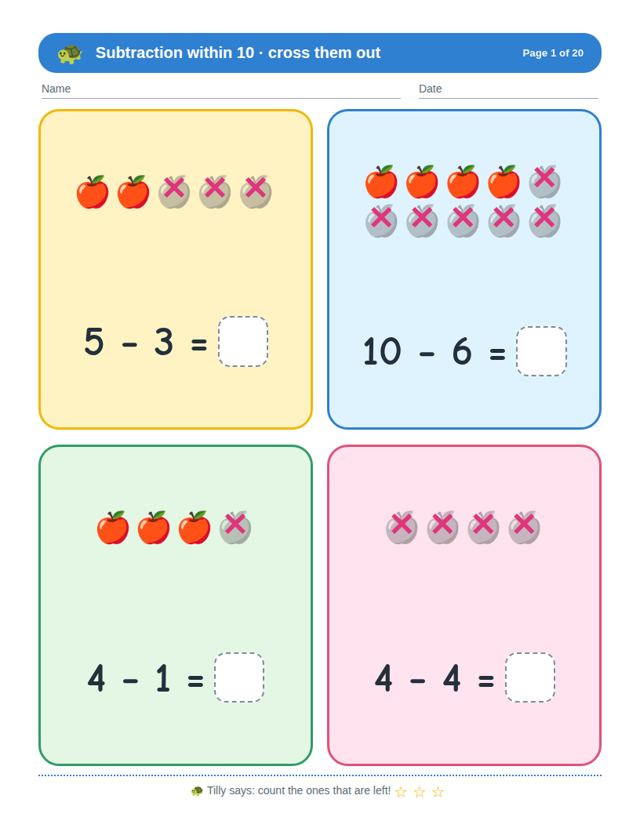
Once your child can subtract small numbers with objects and a number line without help, start adding short worksheets with a few problems at a time. Keep numbers small, under 10, until subtraction with objects feels easy and automatic.
Quick tips
- ⭐Use real objects like buttons or crackers before moving to numbers on paper.
- 🎈Say the problem out loud using different words, such as take away and minus, so your child learns they mean the same thing.
- 🌈Practice with small numbers, under 10, until subtraction feels easy before increasing the numbers.
- ✏️Link every subtraction fact to an addition fact your child already knows.
- 🎯Keep practice short, about ten minutes a day, so your child does not get frustrated.
 👀 Sight WordsWhat Is a Sight Word?
 ✏️ Alphabet and HandwritingHow to Teach a Child to Hold a Pencil
 🔷 Shapes, Time and MoneyHow to Teach a Child to Tell Time