
Home › Guides › Alphabet and Handwriting
Home › Guides › Alphabet and Handwriting
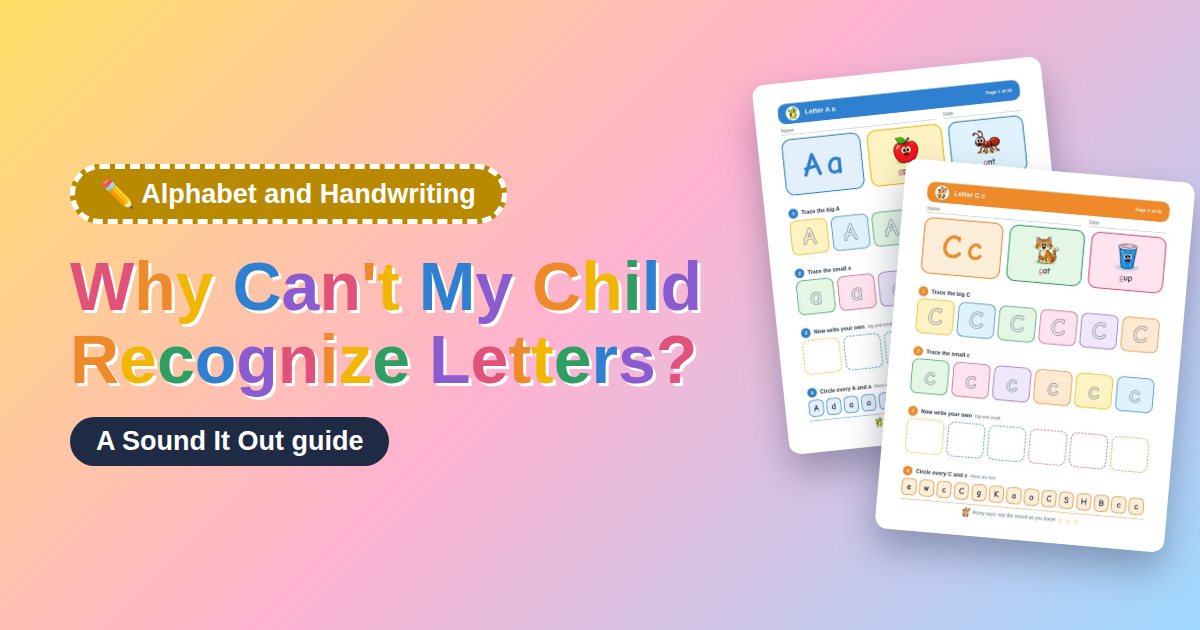
Many children need much more practice with letters than we expect, and some letters look alike, such as b, d, p and q. Teach only two or three letters at a time, with their sounds, and go back over them every day before adding a new one. If your child is five or older and still knows very few letters after steady practice, tell the teacher or your child's doctor.
There are 26 letters, each with a capital and a small shape, many of them alike. To a young child, a, d and g, or n, h and m, can look very close.
Children also need to see a letter many times, on many days, before it sticks. A letter learned on Monday is often gone by Wednesday if it is not used again.
Start with two or three letters that look different from each other, such as s, a and t. Teach the shape and the sound together: this is s, it says sss.
Practice them for a few minutes a day until your child knows them most times. Then add one more. Always start the day with the letters from before.
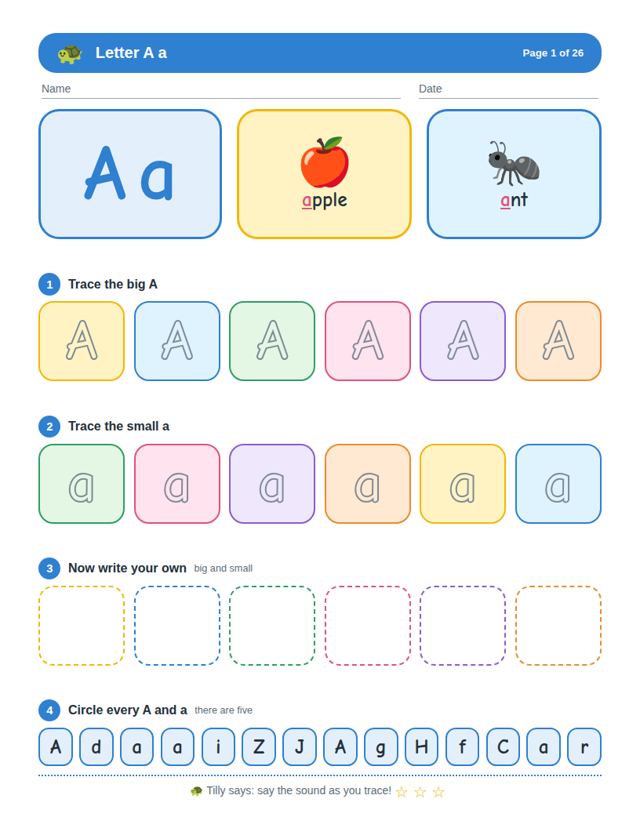
Letters stick better when they are used. As soon as your child knows s, a and t, put them together: at, sat. Reading a real word makes the letters matter.
Point out the letters your child knows on signs, boxes and books. Keep it light, a quick game, not a test.
Tell the teacher if your child is five or older and still knows very few letters after weeks of short, steady practice. Ask what the school's checks show.
If you also notice trouble with hearing the sounds in words, or with rhyming, read our page on the signs of dyslexia, which explains who can evaluate a child.
 Practice this in the free reading appReading games your child can play on a phone, tablet or computer. Every word can be sounded out. No sign-up.Open the app
 Teach two or three letters at a time.
 Teach the letter's sound with its shape.
 Start every day with the letters from before.
 Use the letters in short real words as soon as you can.
 Keep sessions to a few minutes.
Children vary a lot. Many know some letters when they start kindergarten and learn the rest during the year. What matters most is steady progress.
Teach both together for each letter: its shape, its name and its sound. The sound is what your child needs to read words.
Not on its own. Trouble learning letters can be one of several signs, especially together with trouble hearing sounds in words. The teacher or a specialist can tell you more.
 Alphabet and HandwritingHandwriting Help for Kids With DysgraphiaHandwriting help for kids with dysgraphia at home: short practice, letter starts, wide lines, and other ways to write. When to ask for an evaluation.Read the guide
 Alphabet and HandwritingHow to Help a Child Write SentencesHow to help a child write sentences: say it first, count the words, write it, then check capital letter, spaces and period. Simple steps for home.Read the guide
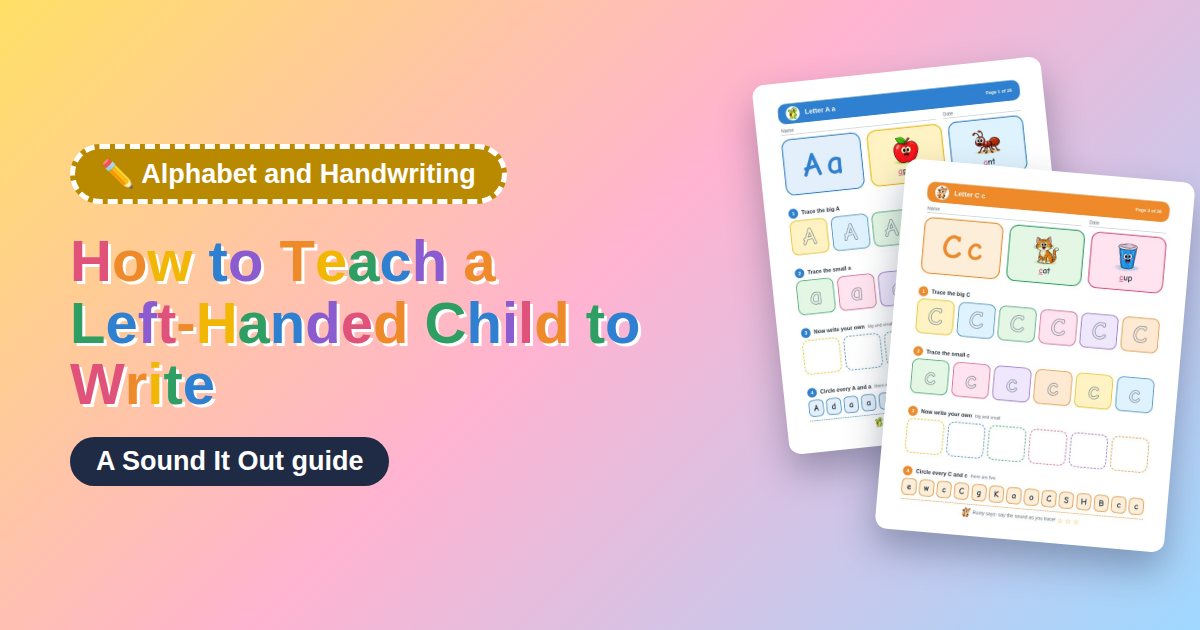 Alphabet and HandwritingHow to Teach a Left-Handed Child to WriteSimple handwriting help for a left-handed child: how to tilt the paper, hold the pencil a little higher, and form letters without smudging.Read the guide
The packs on this site are free. The One Sheet goes further: one sheet a day, made for your child from what you tell us happened.
See The One Sheet · $9.99 a month
Or try the 10-day plan: Eight Sounds That Stay, $19 one timeOr do the free 3-minute check first