Neither guide we read explains why a child forgets letter sounds. Both set out what to do: review each new sound together with a small set of sounds already learned, and for a child who is struggling, go deep on a few skills with time to review until they hold steady.
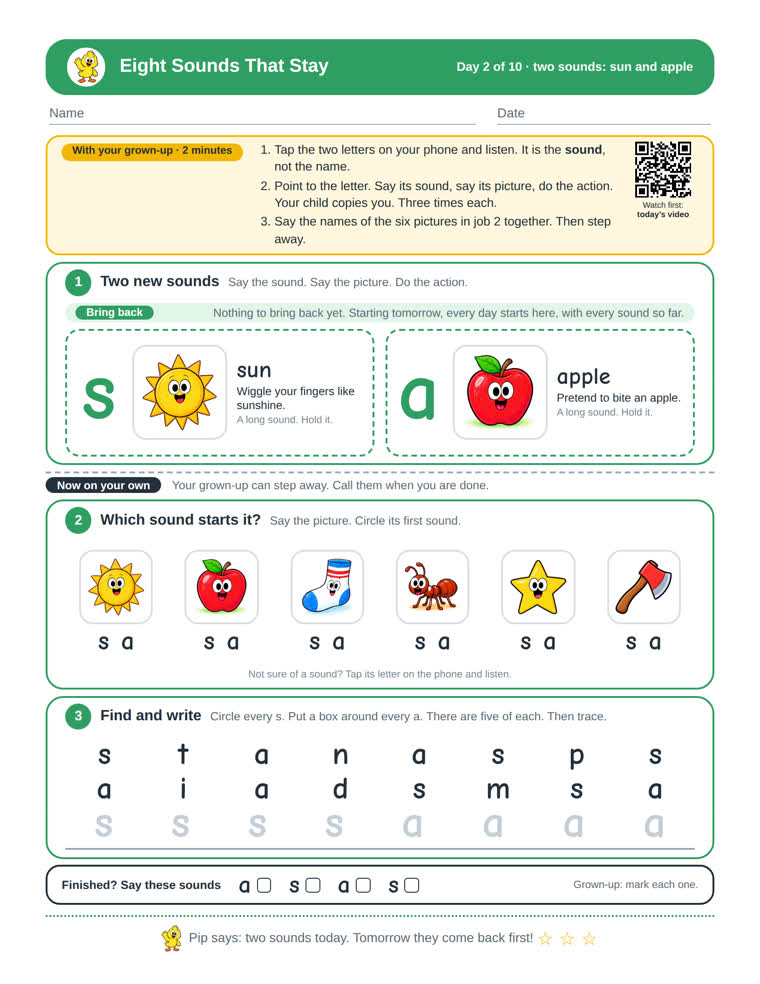
The foundational reading guide says a newly taught letter sound should be reviewed together with a small set of sounds the child already learned.
In the source’s own words“Finally, ensure that students have continued practice with the phoneme. Review the new letter sound together with a small group of previously learned letter sounds”
The guide suggests a memorable picture and a short story for each letter, so the child remembers the sound on seeing the letter.
In the source’s own words“so that students remember the character and the sound when they see the letter in print”
The guide says children should also write the letters in real words or their name as part of practice.
In the source’s own words“have students write the letters in meaningful contexts, such as writing their name or familiar words containing the letters, such as mad and sad.”
For letters a child mixes up, the panel advises teaching one letter until the child knows it instantly, then adding another letter or two while still reviewing the first.
In the source’s own words“Then, teach the student another letter or two, reviewing and reinforcing the first letter a bit longer.”
The panel says mixing up letters such as b and d is common in the early grades.
In the source’s own words“Letter reversals (when students confuse the shape or sound of one letter for a different letter, such as confusing d for b) are common among children in the early grades.”
For children who are behind, the intervention guide says to give clear correction and review that keeps going back over earlier material.
In the source’s own words“Students should be given clear, corrective feedback, and cumulative review to ensure understanding and mastery.”
For children with the greatest difficulty, the panel favors depth on few skills, with time to review and practice what was just learned until it holds steady across lessons.
In the source’s own words“Such focus provides opportunities to review, practice, and reinforce newly learned proficiencies so that students can demonstrate sustained and consistent levels of proficiency across lessons.”
In the panel's opinion, too many goals at once can overwhelm a struggling child.
In the source’s own words“In the opinion of the panel, too many instructional objectives can overwhelm students.”
We read each of these ourselves on October 9, 2026. Follow the links to read them too.
“Does not know the letter sounds, or learns them and forgets them”
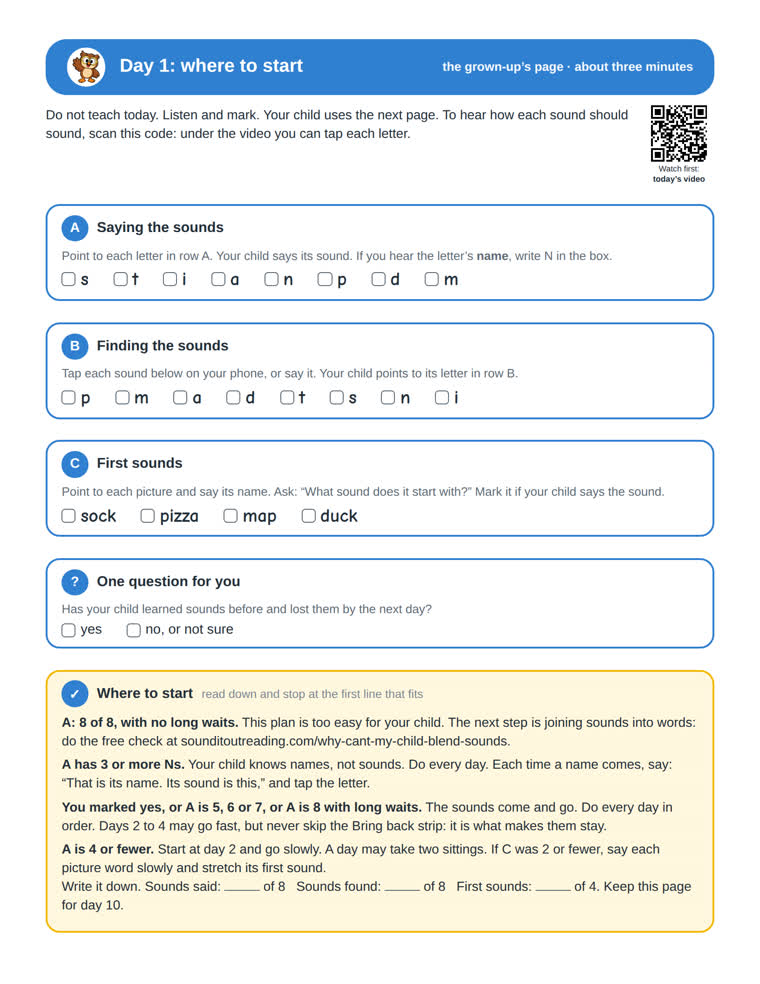
Eight Sounds That Stay is a full 10-day plan, with a short video that shows you every step. The goal: on day 10 your child says the sound of eight letters, in any order, a day after the last lesson, and uses them to read short words never seen before. It is the goal, not a promise.