
Home › Guides › Learn to Read
Home › Guides › Learn to Read
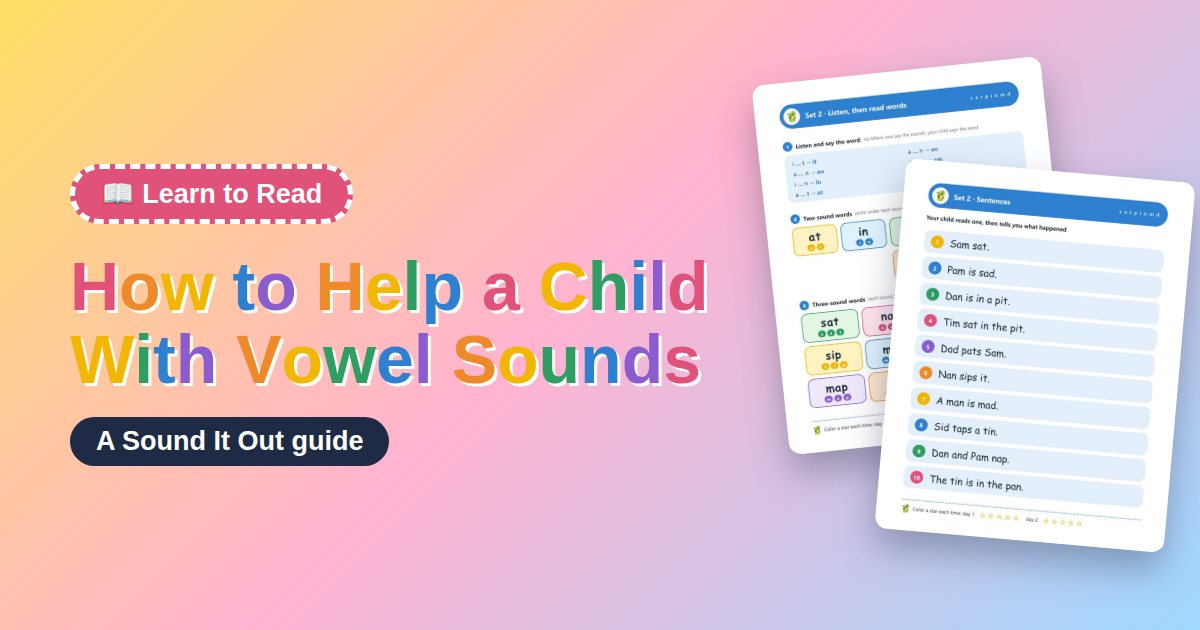
Short vowel sounds, like a in cat, e in bed and i in pig, sound close to each other, so many children mix them up. Teach one short vowel at a time, with a key word and the shape of the mouth. Practice reading short words with that vowel until it is steady, then add the next one. Short e and short i are the most often mixed, so teach them apart.
Every word has a vowel, and the short vowels a, e, i, o and u are close in sound. The difference between pen and pin is small to a young ear.
So a child who mixes vowels is not careless. Their ear is still learning to hear the difference.
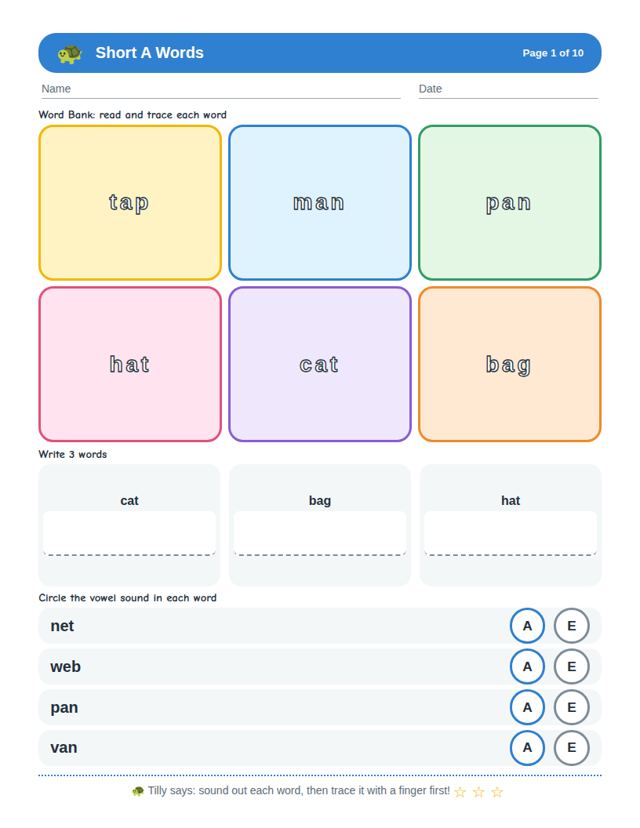
Start with short a. Give it a key word, like apple, and show the mouth: open wide. Read short words with a: cat, map, sat, hat.
When short a is steady, move to short o, then i, then u, then e. Keep e and i apart at first, since they are the most often mixed.
Let your child look in a mirror while saying the sound. Short a: mouth wide open. Short o: round. Short e: a small smile. Short i: a bigger smile.
Feeling and seeing the mouth helps the ear tell the sounds apart.
When two or three vowels are steady, mix words: cat, cot, cut. Change one letter and read again.
If your child also struggles to blend sounds into words, start with the blending step first, then come back to vowels.
 Practice this in the free reading appReading games your child can play on a phone, tablet or computer. Every word can be sounded out. No sign-up.Open the app
 Teach one short vowel at a time.
 Give each vowel a key word and a mouth shape.
 Practice short words with that vowel.
 Keep e and i apart at first.
 Mix vowels only when each one is steady.
 Listen and Say the WordYou say the sounds slowly, your child says the whole word. No letters to look at, so it trains the ear first.Play free
 Build the WordYour child hears a word and taps the letter tiles in the right order to build it.Play free
 Read the WordOne short word at a time, such as sat, pin or dog. Every word uses only the sounds of the level you choose.Play free
Short a words worksheets, CVC word family practice.
Get the free pages FREE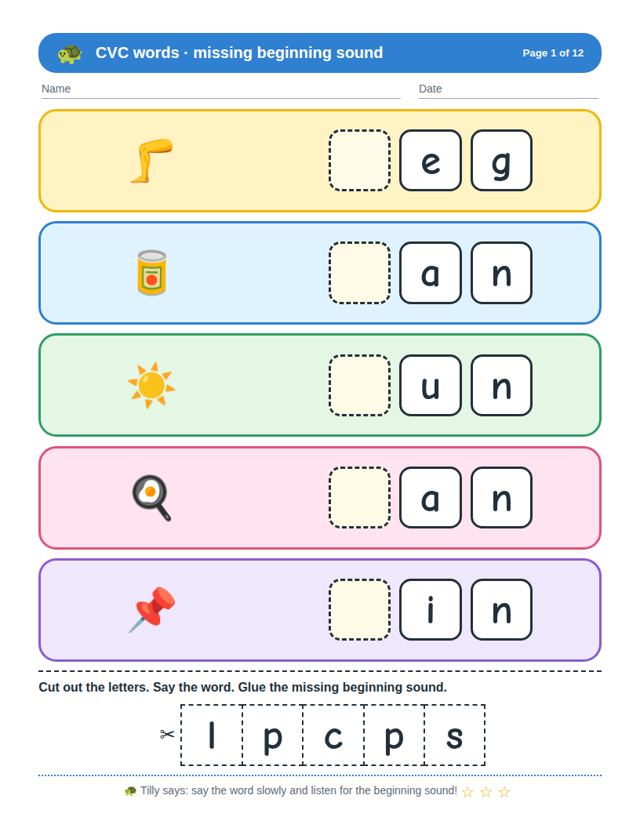
CVC cut and paste worksheets for beginning, middle and ending sounds.
Get the free pages $3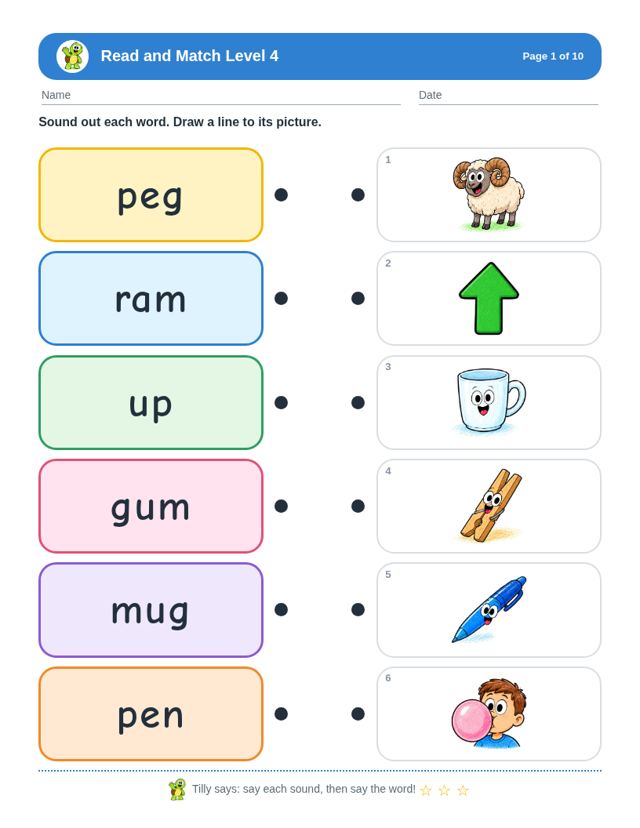
All 5 read and match level worksheet packs in one download.
See inside $3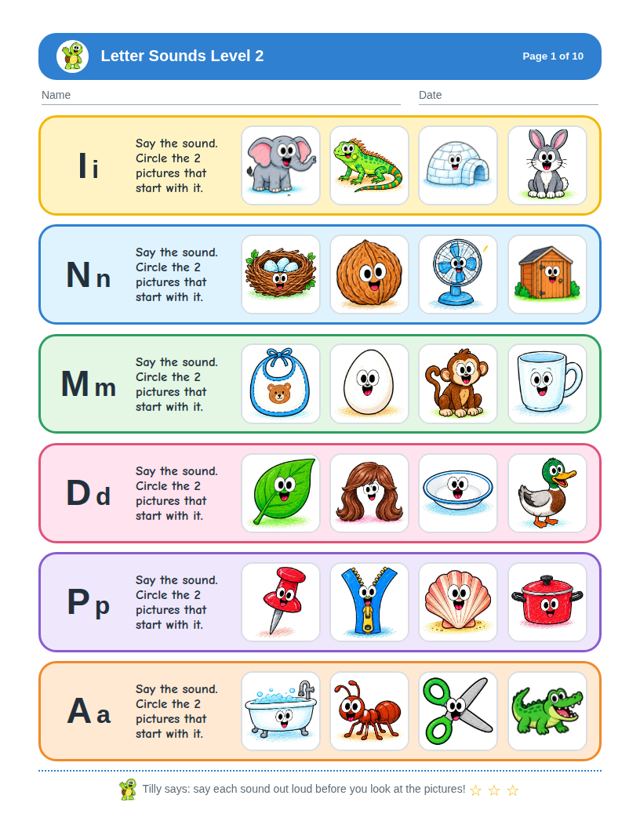
All 7 letter sounds level worksheet packs in one download.
See insideShort a is a good start: its sound is clear and many short words use it.
They sound very close. Teach them on different days, and use the mouth shape: short e is a small smile, short i a bigger one.
Teach short vowels first. Long vowels, such as a in cake, come after short vowels are steady.
 Learn to ReadDoes Phonics Help With Speech Delay?Does phonics help with speech delay? What reading practice can and cannot do for a child who talks late, and why to see a speech-language pathologist.Read the guide
 Learn to ReadHow to Help a Child With ADHD With Reading at HomeReading help for a child with ADHD at home: very short daily sessions, one small step at a time, movement breaks, and when to ask the school.Read the guide
 Learn to ReadHow to Teach Reading to Kids With Autism at HomeHow to teach reading to a child with autism at home: the same short routine each day, clear steps, real pictures, and the free check to start.Read the guide
The packs on this site are free. The One Sheet goes further: one sheet a day, made for your child from what you tell us happened.
See The One Sheet · $9.99 a month
Or try the 10-day plan: From Sounds to Words, $19 one timeOr do the free 3-minute check first