
Home › Guides › Learn to Read
Home › Guides › Learn to Read
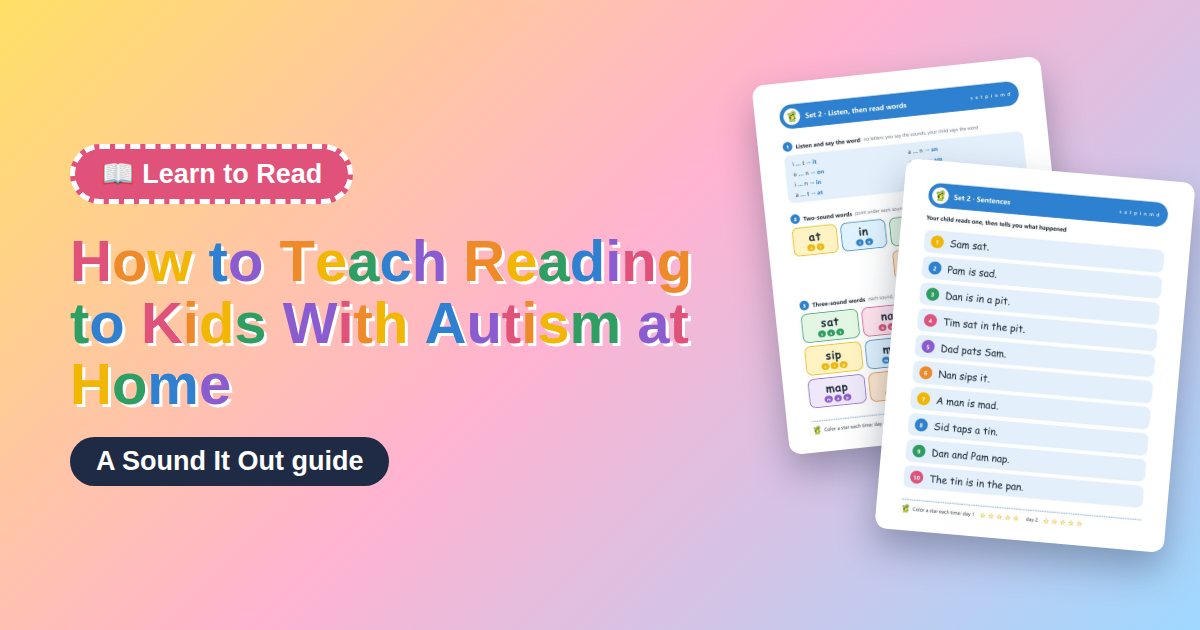
Many children with autism can learn to read with the same step-by-step teaching of letter sounds that helps other children. What often helps is the way you teach: the same short routine every day, one small step at a time, clear pictures and few words, and plenty of practice before something new. Your child's teacher, therapist or doctor knows your child best, so share what you do at home with them.
Reading words rests on a few skills: hearing the sounds in a word, knowing which letter makes which sound, and joining the sounds to read the word. A U.S. Department of Education guide for schools recommends teaching these skills step by step for young readers.
These steps are the same for a child with autism. The difference is usually in how they are taught, not in what is taught.
Many children with autism do best when they know what comes next. Use the same place, the same time and the same order each day. For example: two sounds from yesterday, one new sound, then three short words.
Show the order with pictures your child can see, and check off each part when it is done. Keep it short. A few calm minutes every day is worth more than a long session that ends in tears.
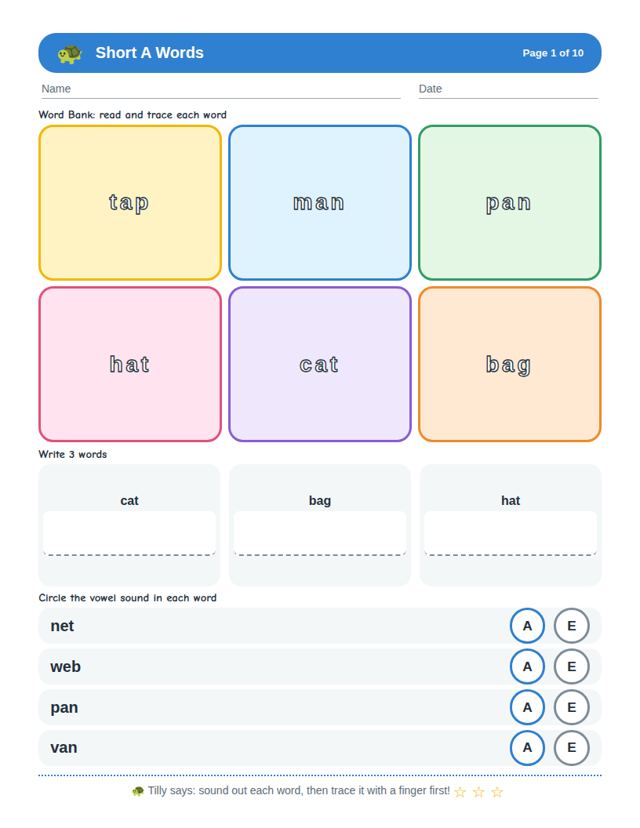
Say less, and show more. Point to the letter, say its sound, and have your child say it back. Use real pictures for words, such as a picture of a cat for cat.
Some children read words before they talk much, and some know many words by sight but cannot yet sound out new ones. Both can still learn letter sounds. Practice the sounds, and then use them to read short new words.
Some children with autism read words well but find it harder to understand what a sentence or story means. After a short sentence, ask one simple question, or have your child point to the matching picture.
If understanding is the hard part, tell the teacher or therapist. They can plan help for language and understanding, which is not something our pages teach.
 Practice this in the free reading appReading games your child can play on a phone, tablet or computer. Every word can be sounded out. No sign-up.Open the app
 Keep the same order every day and show it with pictures.
 Teach one new sound at a time and repeat yesterday's first.
 Use real pictures for words, not cartoons that could mean many things.
 Stop while it is still going well.
 Tell the teacher or therapist what you practice at home, so everyone uses the same words.
 Listen and Say the WordYou say the sounds slowly, your child says the whole word. No letters to look at, so it trains the ear first.Play free
 Build the WordYour child hears a word and taps the letter tiles in the right order to build it.Play free
 Read the WordOne short word at a time, such as sat, pin or dog. Every word uses only the sounds of the level you choose.Play free
Short a words worksheets, CVC word family practice.
Get the free pages FREE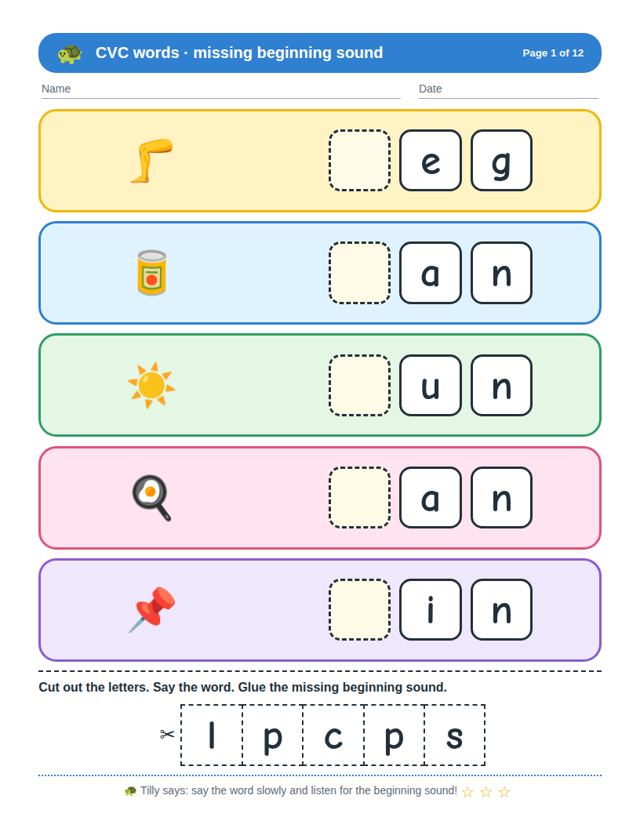
CVC cut and paste worksheets for beginning, middle and ending sounds.
Get the free pages $3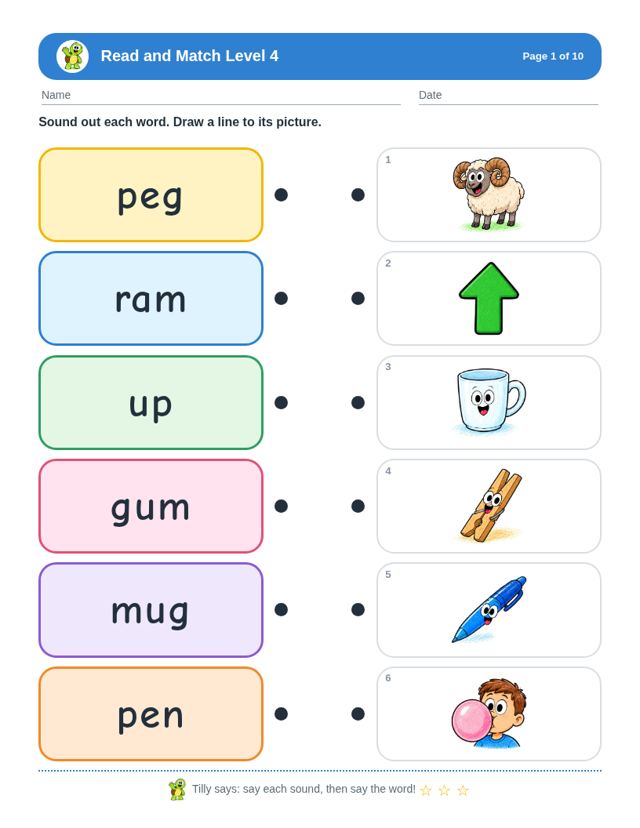
All 5 read and match level worksheet packs in one download.
See inside $3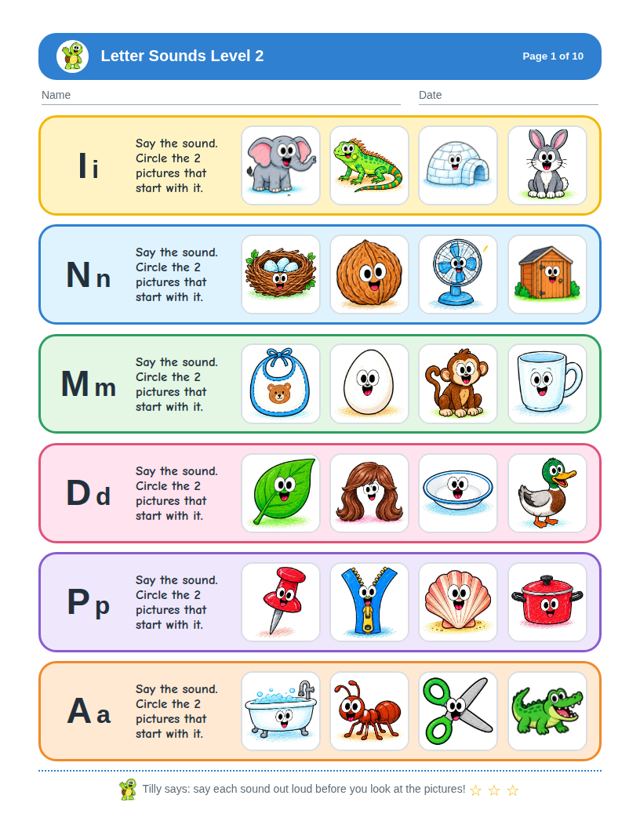
All 7 letter sounds level worksheet packs in one download.
See insideMany can. Step-by-step teaching of letter sounds helps many children learn to read words. Children differ, so watch what works for your child and share it with the teacher or therapist.
Teach the letter sounds and how to join them, a few at a time. Then practice reading short new words made only from sounds your child knows.
No. It is about teaching reading at home. Questions about autism belong with your child's doctor or a specialist.
 Learn to ReadDoes Phonics Help With Speech Delay?Does phonics help with speech delay? What reading practice can and cannot do for a child who talks late, and why to see a speech-language pathologist.Read the guide
 Learn to ReadHow to Help a Child With ADHD With Reading at HomeReading help for a child with ADHD at home: very short daily sessions, one small step at a time, movement breaks, and when to ask the school.Read the guide
 Learn to ReadHow to Help a Child With Vowel SoundsYour child mixes up vowel sounds like short a, e and i. How to teach one short vowel at a time, with mouth shapes and short words to read.Read the guide
“Behind in reading” can mean fourteen different things, and each one needs different help. Check off what is true for your child. You will see what to work on first, and what can wait.