Home › Guides › Sight Words
Home › Guides › Sight Words
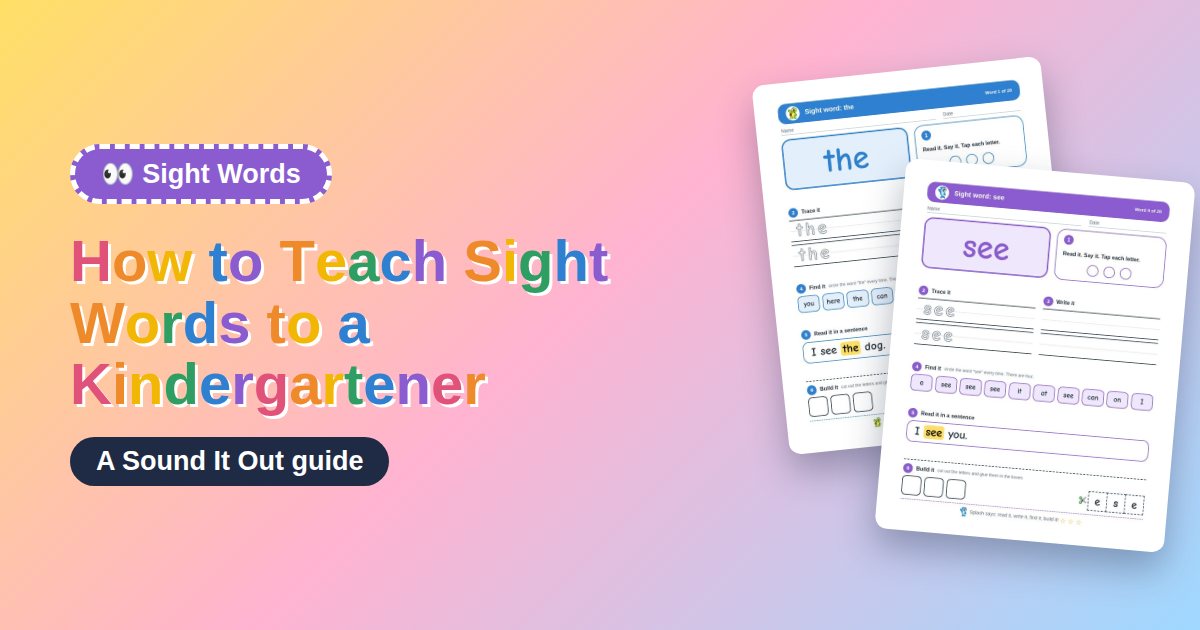
Teach sight words a few at a time, three to five a week. Sound out the parts of each word that follow the letter sounds, and point out the one part that does not. Read the words every day for a few minutes, in short sentences, and bring back last week’s words before adding new ones.
A list of fifty words at once is too many. Pick three to five words for the week, such as the, and, is, said and was. Most early readers see these words on every page of a beginner book.
When those words are easy, add the next few. Keep the old words in every practice session, so they stay.
Most sight words are not pure memory. In the word and, every sound follows the letters. In said, only the middle part is unusual. Point to the letters that make the usual sounds, then show the one part to remember.
This is called mapping the word. It helps the word stick, because your child links the letters to the sounds instead of trying to remember a shape.
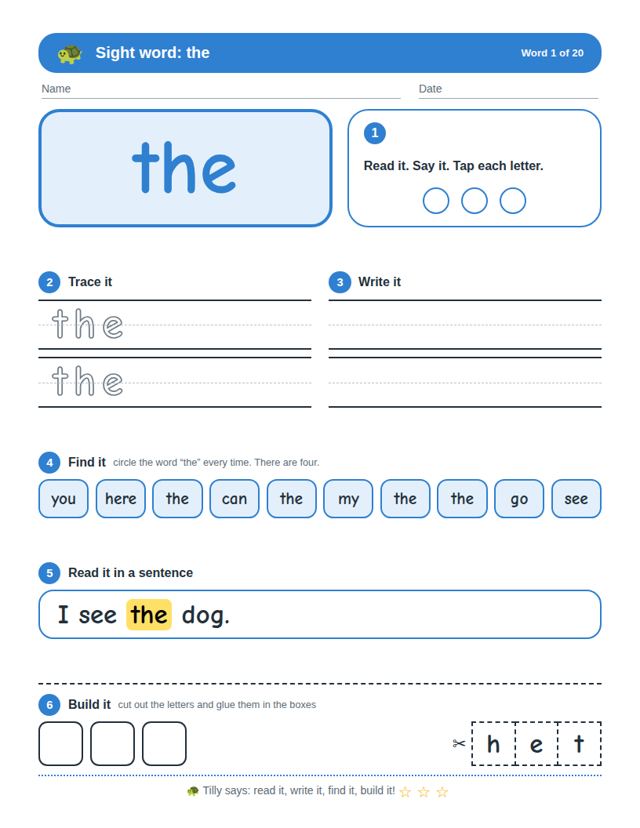
Five minutes a day works better than one long session a week. Read the week’s words on cards, then find them in a short sentence or a book.
Mix the cards each time, so your child reads the word and does not just remember the order.
A word read alone on a card is only half the job. Write two or three short sentences that use the week’s words and words your child can sound out: I can see the cat. The dog is big.
Reading the words inside sentences is what makes reading a book easier.
 Practice this in the free reading appReading games your child can play on a phone, tablet or computer. Every word can be sounded out. No sign-up.Open the app
 Teach three to five words a week, not a whole list.
 Show which letters make their usual sound, and which part is unusual.
 Bring back last week’s words before adding new ones.
 Read the words in short sentences, not only on cards.
 Stop while your child is still doing well.
 Word ChainsOne sound changes each time: map, mad, mud. Your child spots what changed and reads the new word.Play free
 Listen and Say the WordYou say the sounds slowly, your child says the whole word. No letters to look at, so it trains the ear first.Play free
 Build the WordYour child hears a word and taps the letter tiles in the right order to build it.Play free
It depends on the school: lists differ a lot, so ask the teacher which list they use. Learning a few words well matters more than the number.
No. Words are remembered best when your child links the letters to the sounds. Sound out the parts that follow the rules and remember only the unusual part.
That is common. Fewer words at a time, more short practice, and reading them in sentences usually helps. If words still do not stay, the free check below shows what may be in the way.
A few very common words, yes. But most reading comes from sounding words out, so letter sounds come first for most of the practice.
 Sight WordsMy Child Cannot Remember Sight Words: What to DoHere is why your child forgets sight words right after learning them, and four simple things to try this week to help it stick.Read the guide
 Sight WordsWhat Is a Sight Word?Learn what a sight word is, why a few common words do not fully follow the sounds, and simple steps to teach them without guessing.Read the guide
 Learn to ReadDoes Phonics Help With Speech Delay?Does phonics help with speech delay? What reading practice can and cannot do for a child who talks late, and why to see a speech-language pathologist.Read the guide
The packs on this site are free. The One Sheet goes further: one sheet a day, made for your child from what you tell us happened.
See The One Sheet · $9.99 a month
Or try the 10-day plan: Words That Stick, $19 one timeOr do the free 3-minute check first