Home › Guides › Sight Words
Home › Guides › Sight Words
This is common and usually means the word was never fully learned, only guessed from a picture or shape. Sight words need the same sound by sound work as any other word. This week, slow down, mark the sounds in each word, and review a small stack daily instead of a large list. Memory comes from repeated correct practice, not from staring at a word.
Many children learn to say a sight word out loud but do not remember it a day later. This is common. It usually means the word was memorized as a shape or guessed from the picture on the page, not sounded out letter by letter. A word that was never truly decoded has nothing holding it in memory. The next time the child sees it, there is no way back in except to guess again, and the guess is often wrong.
Some sight words, like can, it, in, on, at, up and big, follow the sounds exactly and are not true sight words at all. They should be sounded out like any other word, not memorized by shape. True sight words, like the, said and was, have one part that does not follow the sounds. That part needs to be marked and learned by heart, but every other sound in the word should still be matched to its letter.
Before working on sight word memory, check that your child can blend simple sounds. If blending itself is shaky, memory work will not stick, because there is no sound base to attach the word to. Your child needs to know the sounds for s, a, t, p, i, n, m and d, and be able to blend two sounds together, like at, in, on, and three sounds together, like sat, tap, nap.
To check quickly, write the word sat on a card. Point to each letter and have your child say each sound, then blend them into the word. Try it with top, hid, and fin. If your child blends these smoothly most of the time, you are ready to work on sight word memory. If blending is still slow or wrong often, spend this week on blending practice instead, and come back to sight words after.
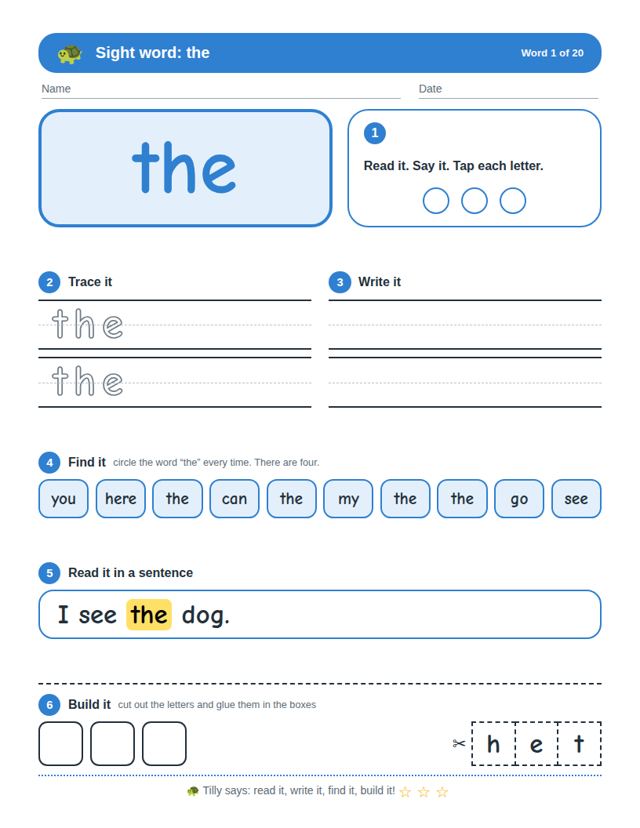
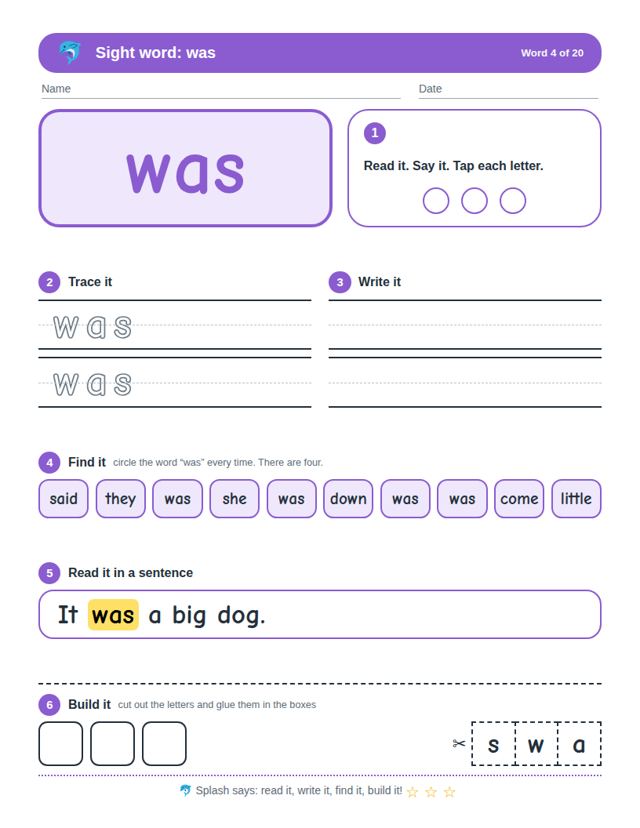
Hold up the word card and say, “Let’s sound this out.” Point under each letter and say each sound slowly, then blend. For the, say “th” then a short “uh” sound, so it is th-uh, the. For was, say “w” then “a” then “z,” so it is w-a-z, was. Do this for five words a day: the, was, said, of, and you.
After sounding it out, mark the one part that does not follow the rule. In the word the, circle the “e” and say, “This part is tricky, it says uh here.” In was, circle the “s” and say, “This part is tricky, it says z here.” Marking the tricky part, instead of the whole word, keeps the rest of the word regular and easy to remember.
A long list of twenty words overwhelms memory. Instead, work with a small stack of five words at a time. Choose five words from this week’s list, such as the, was, said, of, and you. Go through the stack three times in a row each day: once sounding each word out slowly, once a little faster, and once at a normal speaking pace.
Only add a new word to the stack once an old one is solid. If a word is still shaky after many days, take it out of the stack and put it back in alone for extra practice. A small stack that gets reviewed every day works better than a big list that only gets seen once a week.
 Practice this in the free reading appReading games your child can play on a phone, tablet or computer. Every word can be sounded out. No sign-up.Open the app
Once a word is sounded out correctly from a card three days in a row, put it into a short sentence. Write “The dog ran” or “I said no” and have your child read the whole sentence, pointing under each word. Seeing the word inside a sentence, next to words it already knows, like dog, ran, no, I, helps the memory stick in a way that a lone card cannot.
Use the same small set of sentences for a few days in a row, not a new one each time. Read each sentence three times: once slowly to work it out, once a little smoother, and once so it sounds like talking. This repeated reading, not flashcards alone, is what moves a word from short memory into long-term memory.
Memory fades without review. Keep a “known” pile of words your child has already learned, and run through it for a minute or two each day, mixed in with the new stack. If a word is missed, do not just tell your child the word. Cover it, uncover one letter at a time, and have your child sound it out again from scratch.
This daily review takes very little time once a word is known. It is the single biggest reason words that seemed learned last month come back easily this month, instead of looking brand new again every time. Skipping review for even a week can undo days of careful work, so keep the known pile moving through your hands every day, even on busy days when there is only time for a quick run through.
If your child looks at the first letter and guesses a whole word, such as saying “said” for “saw,” cover the rest of the word with a finger or card and uncover one letter at a time. Say, “Look again. Touch every letter.” Never confirm a wrong guess. Wait for your child to work through all the letters before saying if it is right.
If a word is known today but gone tomorrow, the word is probably moving straight from the card to short-term memory without enough review. Shrink the stack to three words instead of five, and review that smaller stack twice a day instead of once, in the morning and again before bed. Fewer words reviewed more often beats more words reviewed less often.
If your child confuses look-alike words, such as was and saw, or then and when, put the two words side by side and say the sounds in each one out loud, pointing to the letters that are different. Say, “Was starts with w, saw starts with s. Let’s touch and say each sound.” Comparing the two words directly, instead of drilling them apart, helps your child notice the difference that matters.
A few minutes a day works better than one long session once a week. A normal week looks like this: five short sessions, Monday through Friday, each one about five to ten minutes long. Each session includes sounding out the new stack, reading the mixed sentences, and a quick run through the known pile. Weekends can be a short, relaxed review instead of new teaching.
Stop a session before your child is tired or frustrated, even if the stack is not finished. A short session that ends well is more useful than a long one that ends in tears, because a tired brain does not store new memories well. Children differ in how many sessions they need before a word feels solid, so do not compare pace with another child.
Your child is ready to move on from a word when it is read correctly and quickly from a card on three different days, without sounding it out each time, and also read correctly when it shows up inside a new sentence it has not seen before. That second part matters most, because it shows the word is truly known, not just memorized in one place.
Once several words from the stack are solid, move them into the known pile for daily review, and bring in a new small stack of five words to start the same steps again. Over time, the known pile grows and short, simple sentences turn into short books, and the same sounding-out and review habits keep working at every stage.
 Keep practice sessions short and end them before your child gets tired.
 Never let your child guess a word from its shape or the picture next to it.
 Review known words every day, even for just a minute or two.
 Use the same small set of sentences for several days before swapping them out.
 Mark only the tricky part of a word, and sound out the rest like any other word.
 Praise the sounding-out process, not how fast your child reads.
 Keep the stack small, five words or fewer, rather than a long list.
 Word ChainsOne sound changes each time: map, mad, mud. Your child spots what changed and reads the new word.Play free
 Listen and Say the WordYou say the sounds slowly, your child says the whole word. No letters to look at, so it trains the ear first.Play freeBuild the WordYour child hears a word and taps the letter tiles in the right order to build it.Play free
Sight word practice worksheets, one word per page.
Get the free pages FREE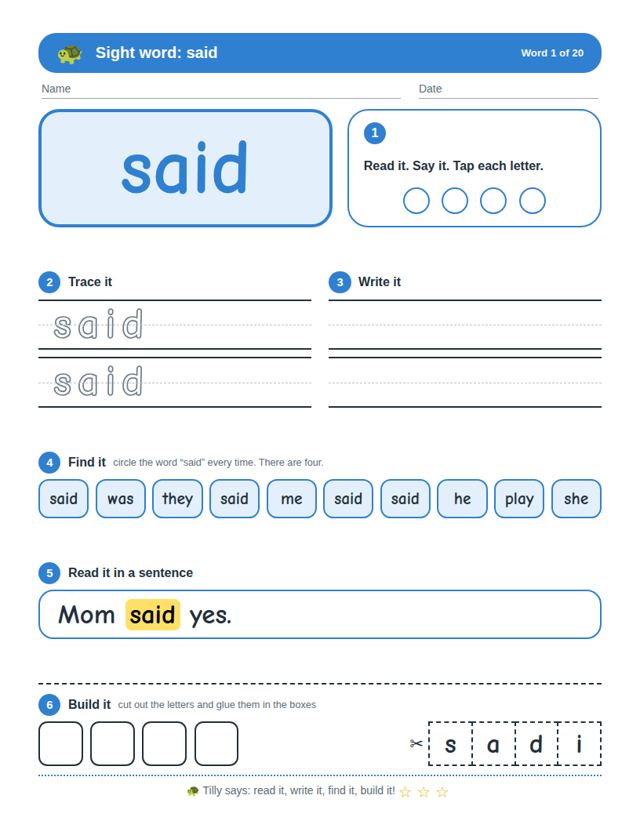
Sight word practice worksheets, one word per page.
Get the free pages $1Sight word practice worksheets, one word per page.
See inside $1Sight word practice worksheets, one word per page.
See insideWork with a small stack of about five words at a time rather than a long list. Add a new word only once an older one is solid, read correctly on three different days without help. A small stack reviewed daily is remembered far better than a long list seen only once a week.
Flashcards work well for first sounding out a word, but they are not enough on their own. Always follow flashcard practice with the same word inside a short sentence, so your child sees it used in real reading. Flashcards alone can teach a shape instead of a word, and that memory fades fast.
Yes, this is common and does not mean something is wrong. Memory for new words fades without review, especially in young children. The answer is daily review of already-known words, not more new words. If forgetting continues for many weeks despite daily review, mention it to the teacher.
Phonics means sounding out words using letter sounds. Most words that get called sight words, such as can, it, and big, actually follow the sounds exactly and should be sounded out like any other word. Only a small group of words, like the, said and was, have one part that breaks the sound rules, and that part alone needs to be learned by heart.
There is no single age, because children differ in when they start and how quickly they move through words. What matters more than age is whether blending is solid first. Once a child blends two and three sound words smoothly, sight words, including the tricky ones, can be learned alongside regular reading practice.
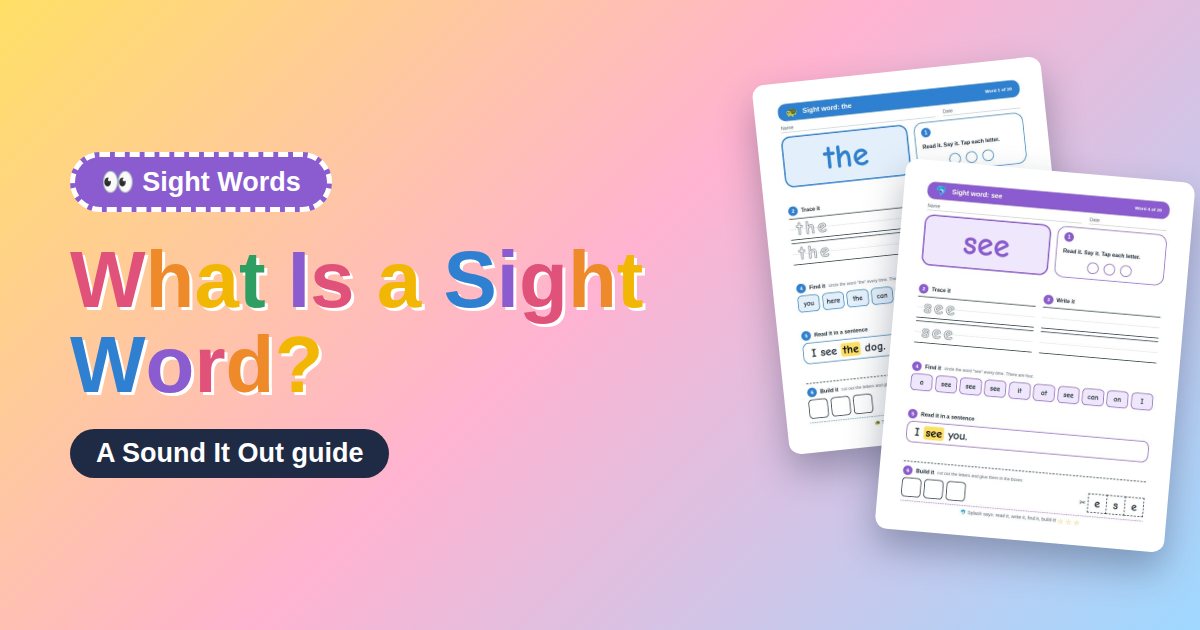
 Sight WordsWhat Is a Sight Word?Learn what a sight word is, why a few common words do not fully follow the sounds, and simple steps to teach them without guessing.Read the guide
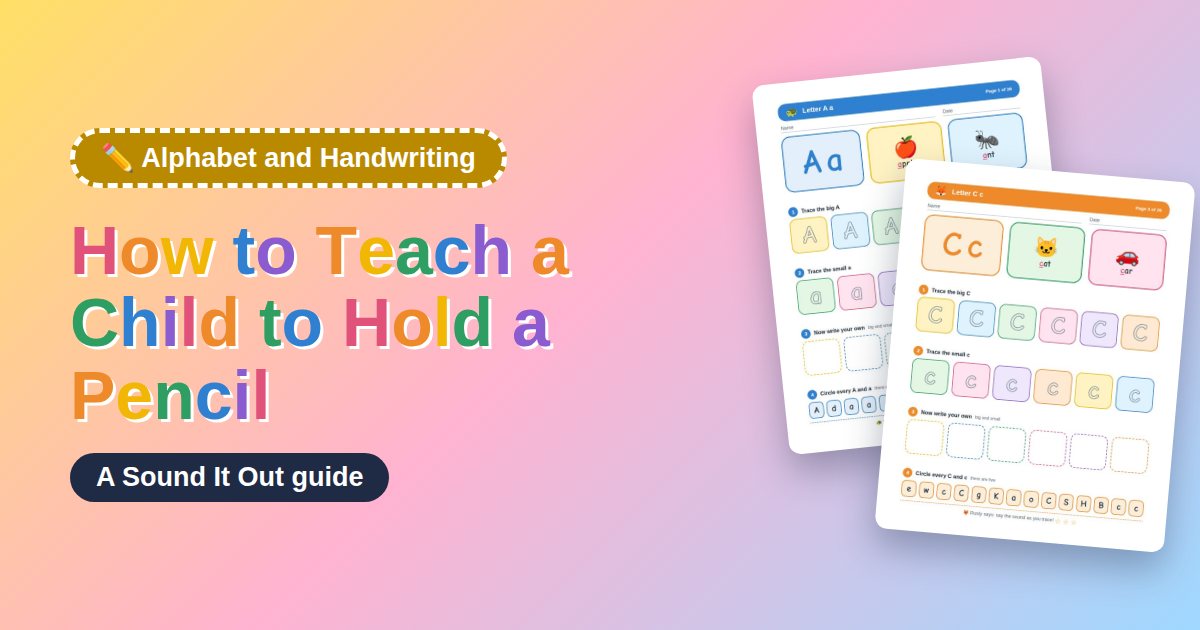 Alphabet and HandwritingHow to Teach a Child to Hold a PencilLearn when children are ready to hold a pencil correctly, the exact tripod grip steps to teach, and activities that build hand strength.Read the guide
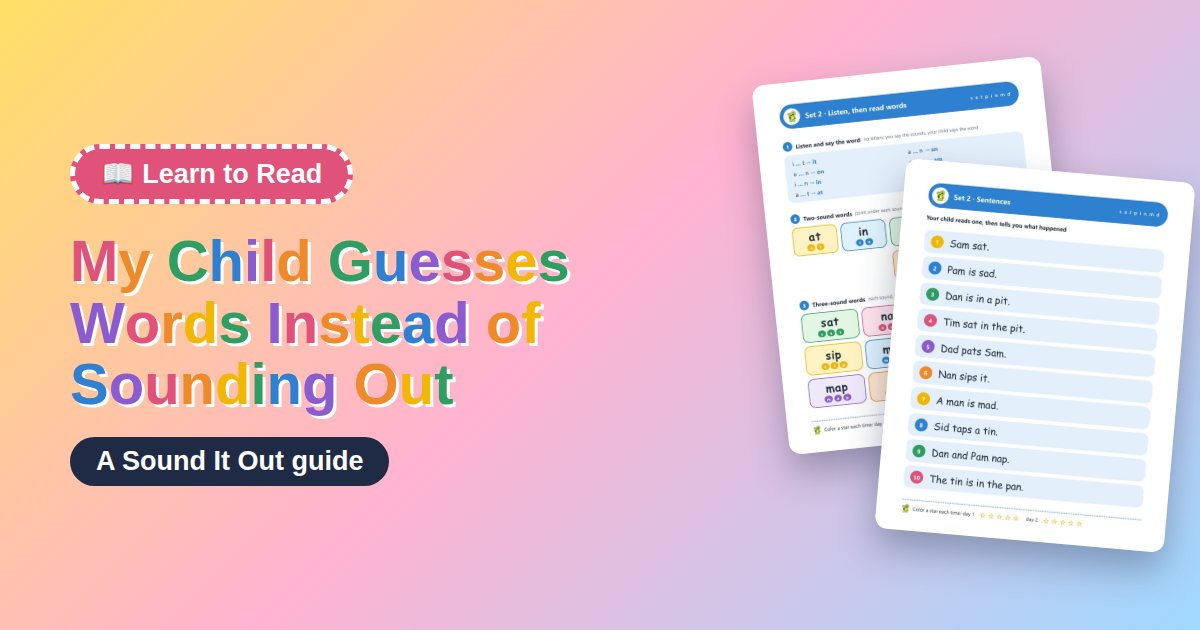 Learn to ReadMy Child Guesses Words Instead of Sounding OutLearn why kids guess at words instead of sounding them out, and get four simple steps, with example words, to build real sounding-out skills.Read the guide
“Cannot remember common words like the, said and was”
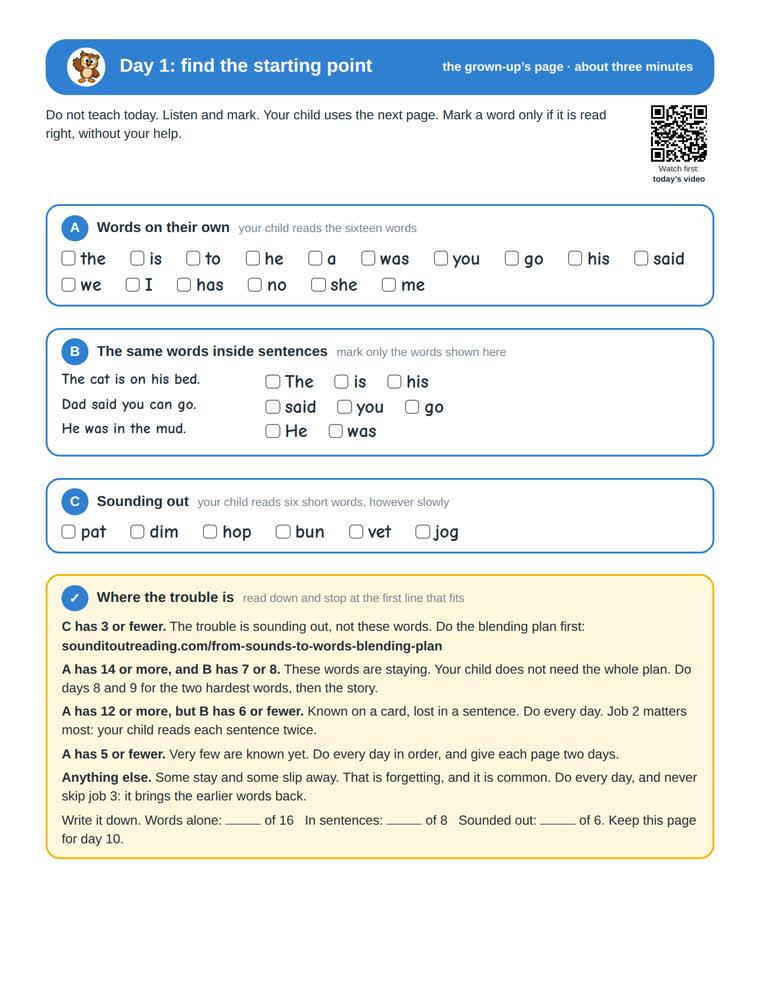
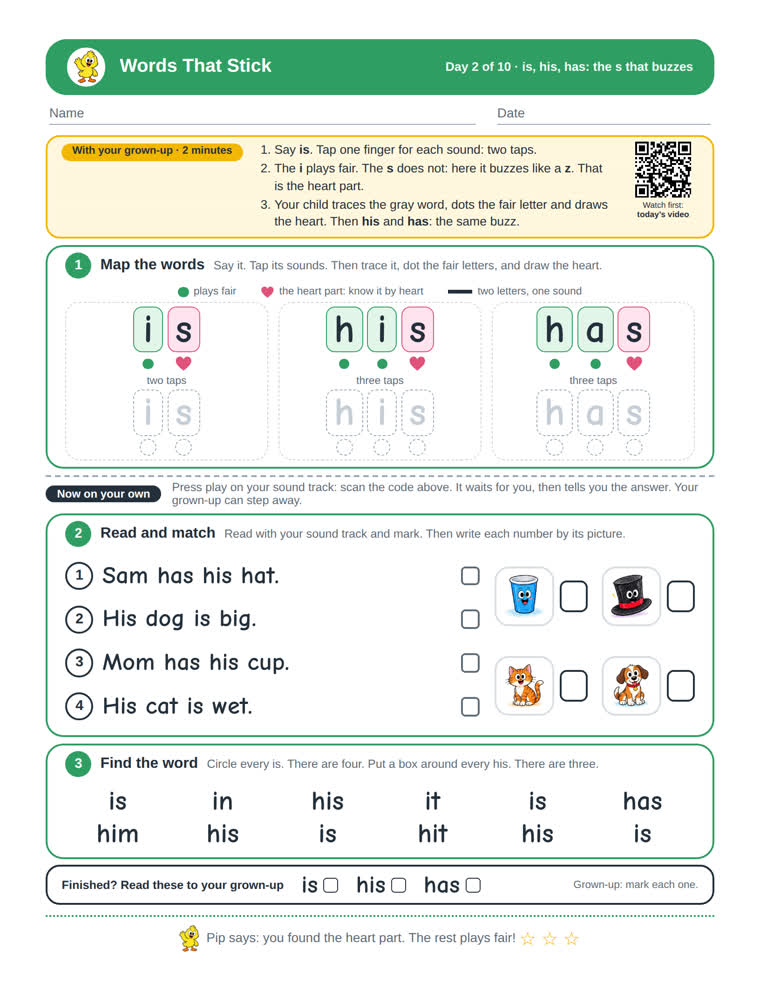
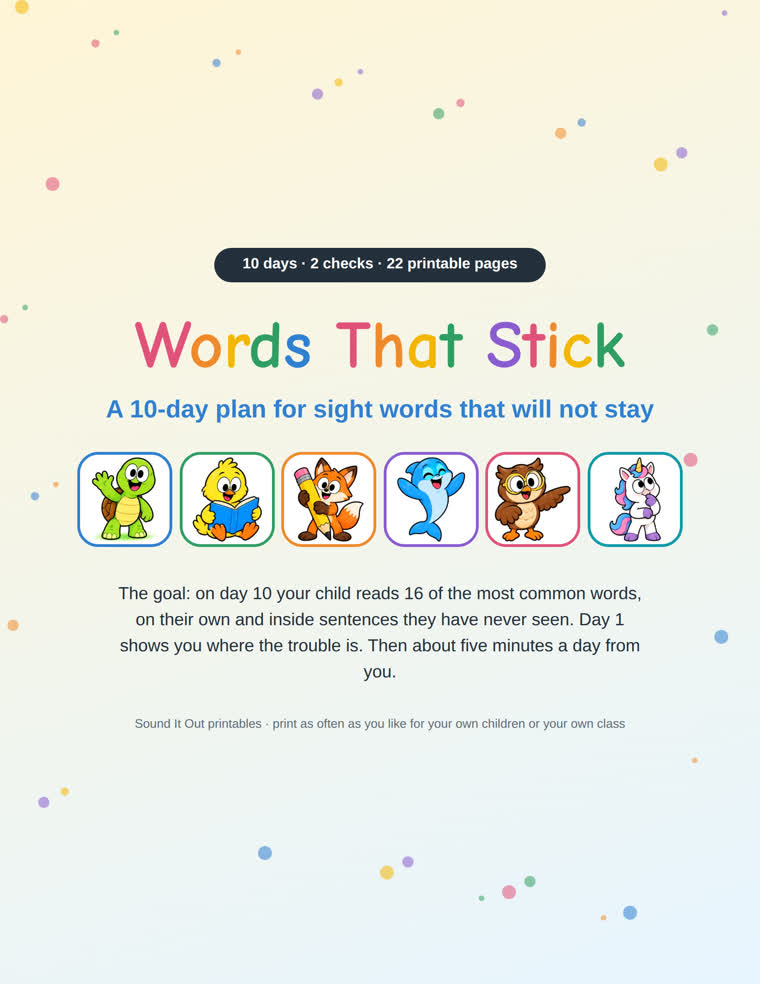
Words That Stick is a full 10-day plan, with a short video that shows you every step. The goal: on day 10 your child reads 16 of the most common words, on their own and inside sentences never seen before. It is the goal, not a promise.