Home › Guides › Learn to Read
Home › Guides › Learn to Read
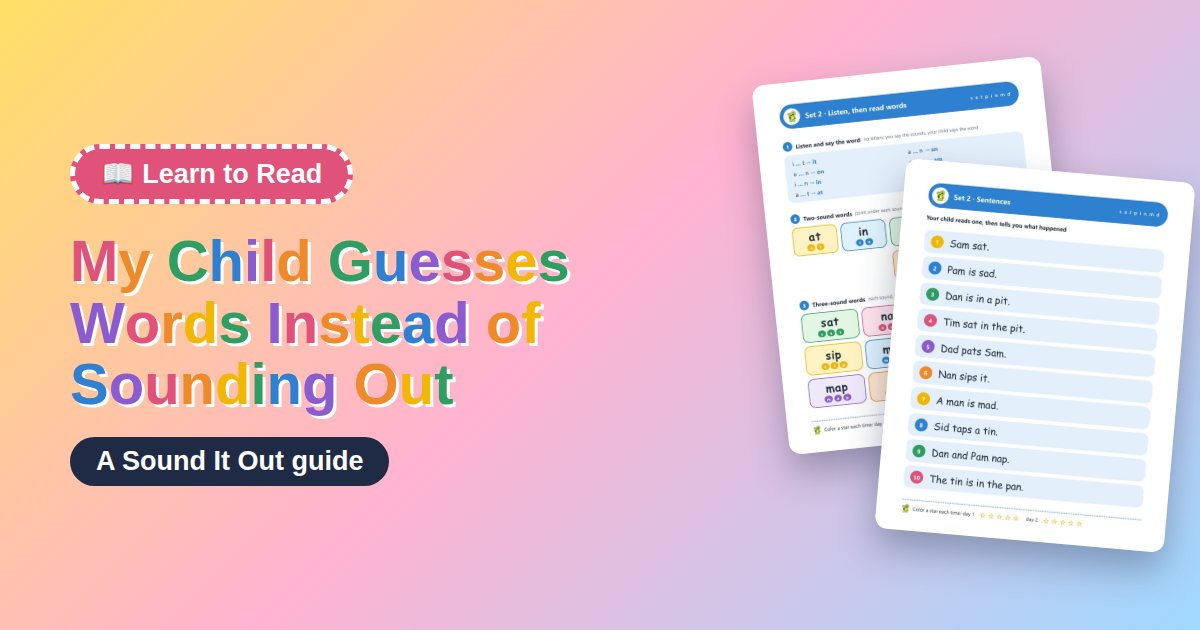
Guessing instead of sounding out is common and usually means your child is relying on pictures, memory, or the first letter instead of reading every letter in order. It often happens with picture books a child knows well, or after learning words as whole shapes. Work on it by covering the word, showing one letter at a time, and practicing blending with simple word lists until sounding out, not guessing, becomes the first thing your child tries.
Guessing is one of the most common habits in early readers, and on its own it is not a sign of a learning problem. It usually starts because pictures, the first letter, or a word’s shape give enough of a hint to seem right, so the brain takes the shortcut instead of doing the slower work of reading every letter in order.
This habit often grows stronger when a child has learned words as whole shapes. They start to expect every word to come instantly, so when a new word appears, they guess rather than sound it out. Common words like “the” and “said” are better taught by matching each sound to its letter or letters and marking only the part that has to be learned by heart. Children differ in how long this habit lasts, and direct practice usually helps.
Before you start, check one thing: can your child say the sound for each single letter without a word attached? Point to s, a, t, p, i, n, m, and d one at a time and ask, “What sound does this make?” If they can say most sounds correctly but still guess at words, the problem is the guessing habit, not missing letter knowledge, and the steps below are the place to start.
If your child does not know several of these sounds, review the letter sounds first, two or three at a time, before moving on. Keep each sound clean and short, with no extra “uh” on the end. Sounding out only works once the sounds themselves come easily.
Use an index card or your hand to cover any picture next to the word. Say, “I’m covering the picture. Now look only at the letters and tell me the sounds.” This removes the easiest guessing shortcut right away.
Practice with simple words like cat, sun, map, dog, and bed. Point to each letter left to right and have your child say each sound before blending. If they glance toward the covered picture, gently say, “Eyes on the letters, not the picture.”
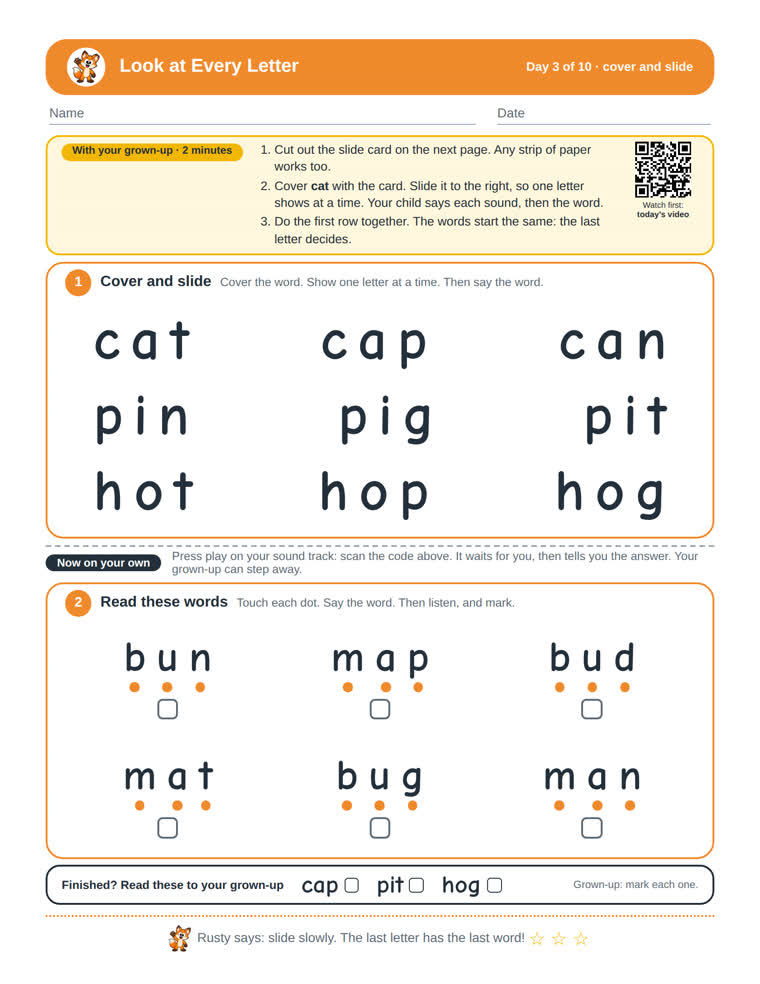
Cover the word with a card, then slide the card to show the first letter only. Ask, “What sound is this?” Wait for the answer, then show the next letter and ask again. Do not let your child skip ahead to say the whole word before finishing each sound.
Use words such as hat, sit, hop, mud, and pin. If your child blurts out a guess, do not uncover more of the word to help. Cover it again, show one letter at a time, and say, “Look again. Touch every letter.” This works against the habit of jumping to a guess.
 Practice this in the free reading appReading games your child can play on a phone, tablet or computer. Every word can be sounded out. No sign-up.Open the app
Once your child can say each sound in order, teach them to blend without stopping between sounds. Hold the first sound until the next one, with no gap: “fffaaan” becomes “fan.” Model it once, then have your child try.
Practice with fan, pet, lip, dot, bug, and red. If blending comes out choppy, say the sounds yourself while sliding your finger smoothly under the word, then have your child copy exactly what you did.
Storybooks are full of pictures and context, which makes guessing too easy. For a week, practice on plain word lists with no pictures at all, using word families like -at, -an, -ig, -op, and -ug. Write or print five words from one family, such as cat, bat, hat, mat, and sat, and have your child sound out each one.
Say, “There is no picture here, so you have to read every letter.” This lets the sounding-out skill work on its own before you bring books back into practice.
If your child still guesses after a week, check whether the book is too hard. If more than a few words per page need sounding out, go back to an easier book where almost every word is already known, and practice decoding skills separately with word lists. If your child still guesses at most words after steady daily practice, tell the teacher.
If your child seems rushed or frustrated, slow everything down and praise the act of sounding out, even if the final word is wrong at first. Say, “I love how you looked at every letter,” rather than just saying the answer is right or wrong.
If your child confuses look-alike words such as was and saw, or big and dig, practice those pairs side by side and ask, “How are these two words different?” This trains close reading of letters instead of a quick glance.
Ten to fifteen minutes a day is enough, done five or six days a week. A normal week might look like this: two days on letter sounds and the cover-the-picture step, two days on showing one letter at a time and blending with word lists, and two days bringing an easy book back in to apply the skill.
Keep sessions short and stop before your child gets tired or frustrated. Short daily practice works better than one long session once a week.
Your child is ready to move past this stage when they sound out an unfamiliar word on their own, without being reminded to look at the letters, and when a covered picture no longer changes their reading accuracy. Another good sign is catching their own mistake and rereading a word correctly without you pointing it out.
Once sounding out is reliable on single words, move on to reading short, simple sentences and gradually increase the number of new words per page, while still praising careful letter-by-letter reading over fast guessing. If you want to look closer, the free check on this site, “Why does my child guess words when reading?”, takes about three minutes, and the free finder can help you see what is causing the difficulty.
 Always cover pictures during decoding practice so letters are the only clue.
 Praise the act of sounding out, not just correct answers.
 Use plain word lists without pictures to work on the guessing habit.
 Keep practice sessions short, around ten to fifteen minutes a day.
 Choose books where your child already knows most of the words.
 If your child guesses, cover the word, show one letter at a time, and say, “Look again. Touch every letter.”
 Review single letter sounds first if blending still feels shaky.
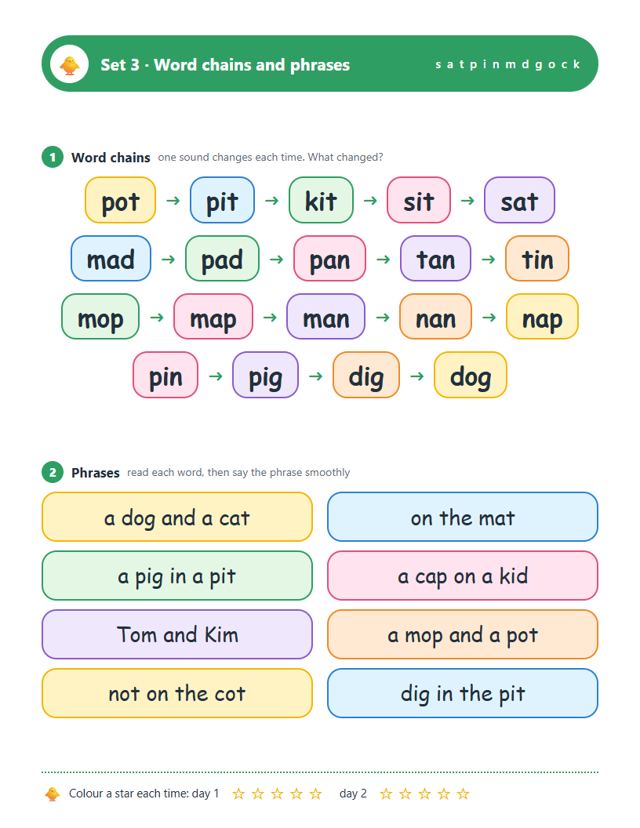
 Word ChainsOne sound changes each time: map, mad, mud. Your child spots what changed and reads the new word.Play free
 Listen and Say the WordYou say the sounds slowly, your child says the whole word. No letters to look at, so it trains the ear first.Play freeBuild the WordYour child hears a word and taps the letter tiles in the right order to build it.Play free
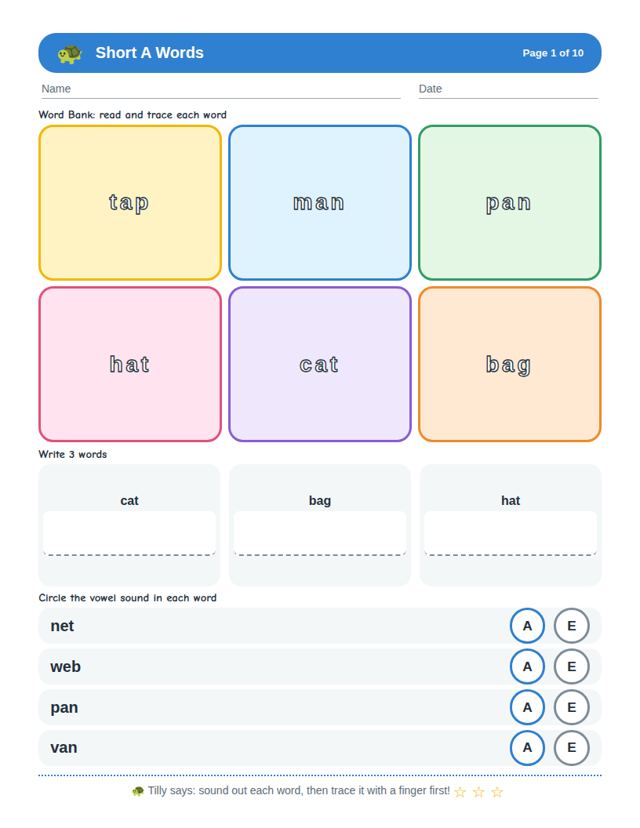
Short a words worksheets, CVC word family practice.
Get the free pages FREE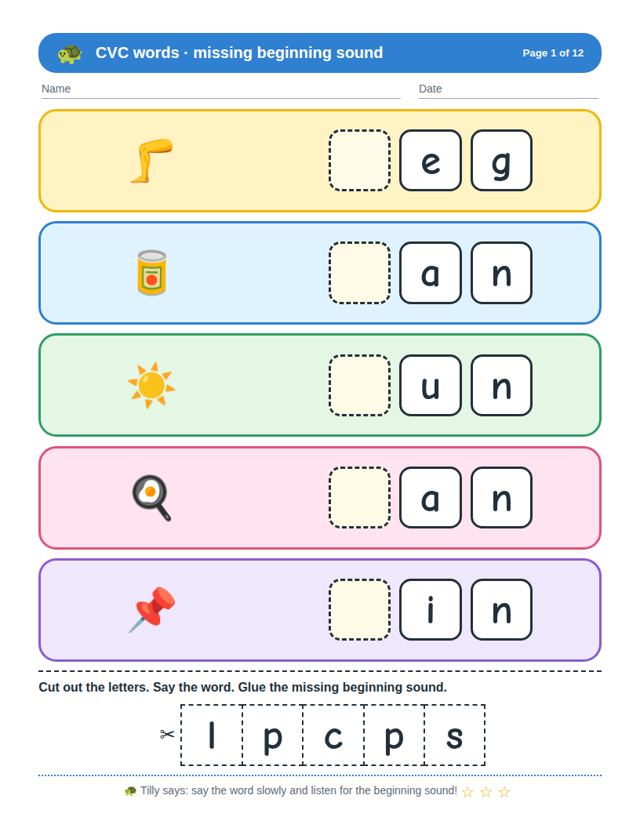
CVC cut and paste worksheets for beginning, middle and ending sounds.
Get the free pages $1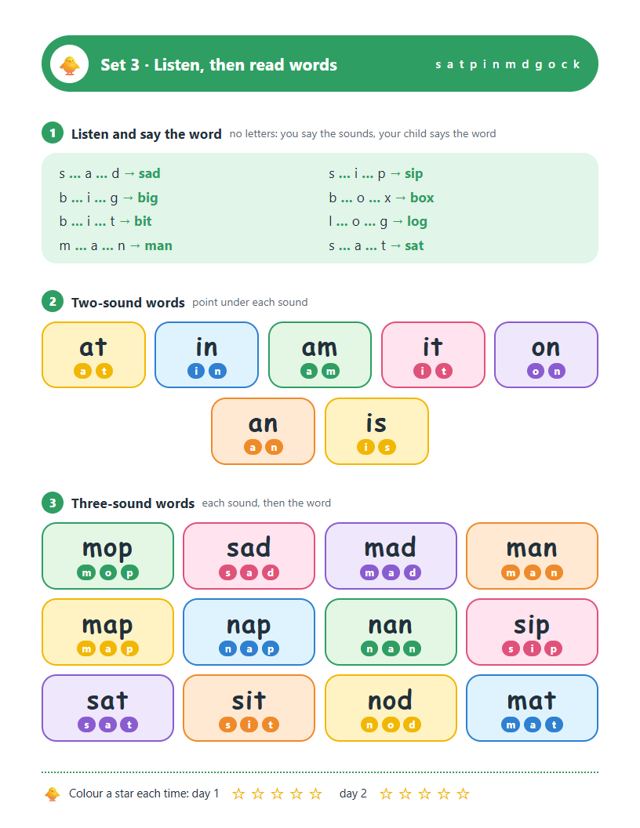 Reading Path · Levels 2 to 7
Decodable phonics reading practice: words, sentences and stories.
See inside $1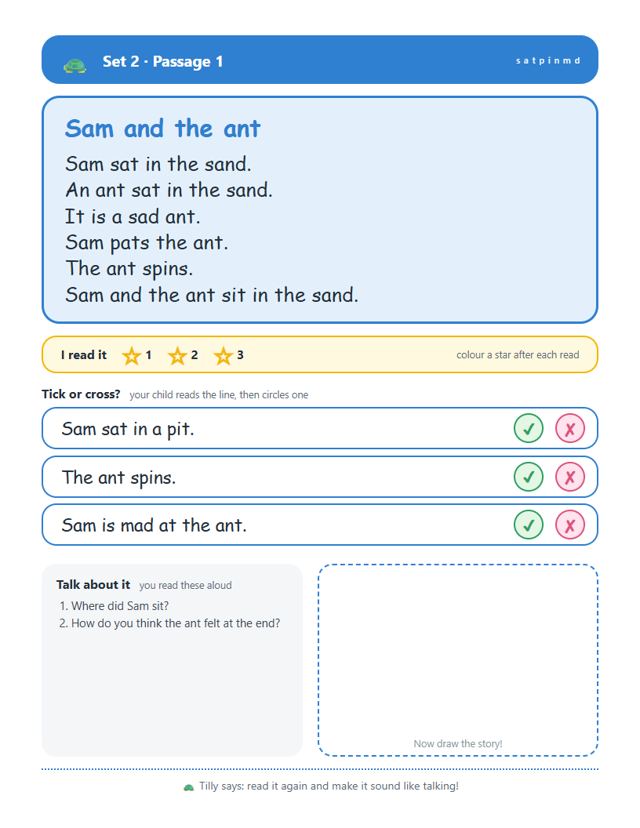 Reading Path · Levels 2 to 7
24 decodable reading passages with comprehension questions.
See insideNot on its own. Guessing is a common habit in early readers and is usually a learned shortcut. Many children drop it with steady sounding-out practice using the steps above. If the guessing does not ease, tell your child’s teacher.
You do not need to stop picture books completely, but add some practice time with plain word lists or covered pictures each day. This way your child still enjoys books while also building real decoding skill.
This usually means your child is using the first letter as a shortcut instead of reading every letter. Cover the word, show one letter at a time, and wait for each sound before moving on. Say, “Look again. Touch every letter.”
There is no set number of weeks, and children differ. Some need longer, especially if letter sounds also need review. Short daily practice matters more than how quickly the habit fades.
Keep sessions very short, five minutes if needed, and praise effort rather than speed. If frustration continues, switch to an easier word list for a few days so your child can feel successful before you add harder words again.
 Learn to ReadMy Child Reads Slowly, One Sound at a Time: What to DoLearn why your child reads one sound at a time instead of smoothly, and simple steps to make reading smoother, with no timing.Read the guide
 Learn to ReadMy Child Knows Sounds but Cannot Blend: What to DoYour child knows the letter sounds but cannot blend them into words. Learn why this happens and what to try this week.Read the guide
 Alphabet and HandwritingHow to Teach a Child to Hold a PencilLearn when children are ready to hold a pencil correctly, the exact tripod grip steps to teach, and activities that build hand strength.Read the guide
“Guesses words from the first letter or the picture, or “reads” books from memory”
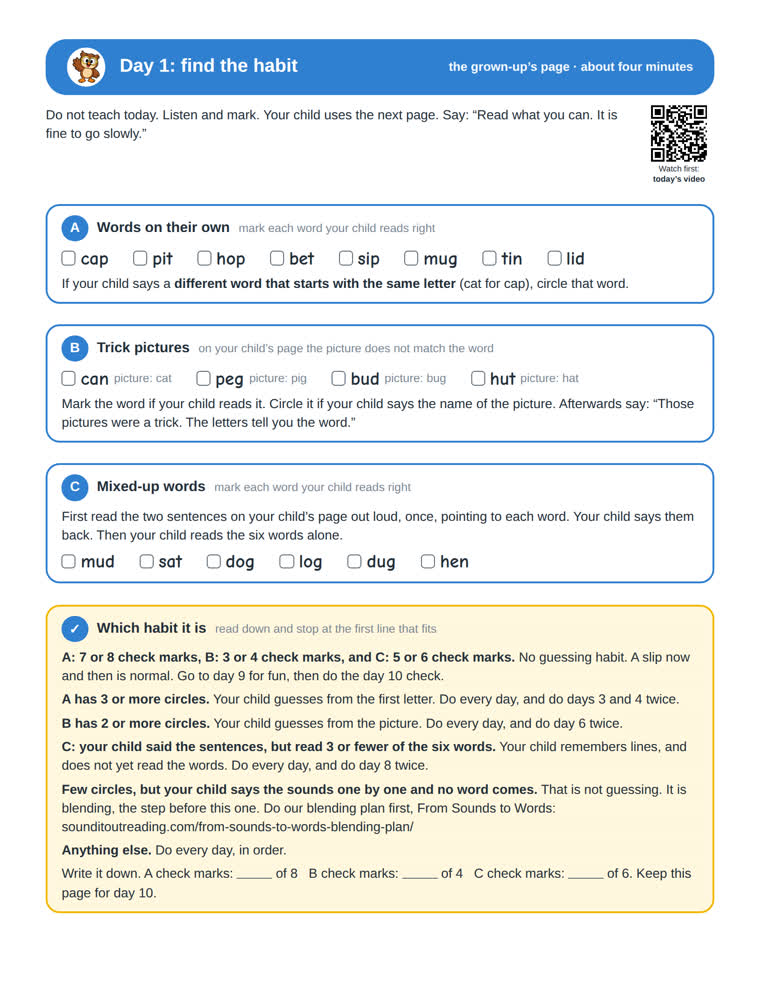
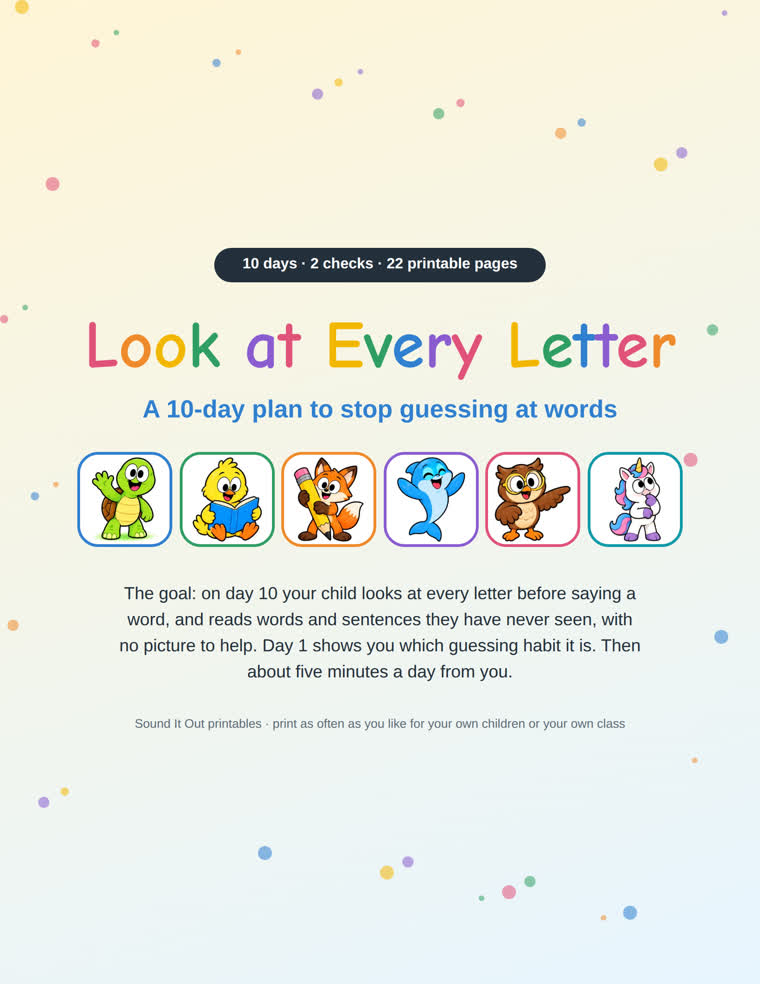
Look at Every Letter is a full 10-day plan, with a short video that shows you every step. The goal: on day 10 your child looks at every letter before saying a word, and reads words and sentences never seen before, with no picture to help. It is the goal, not a promise.