
Home › Guides › Learn to Read
Home › Guides › Learn to Read
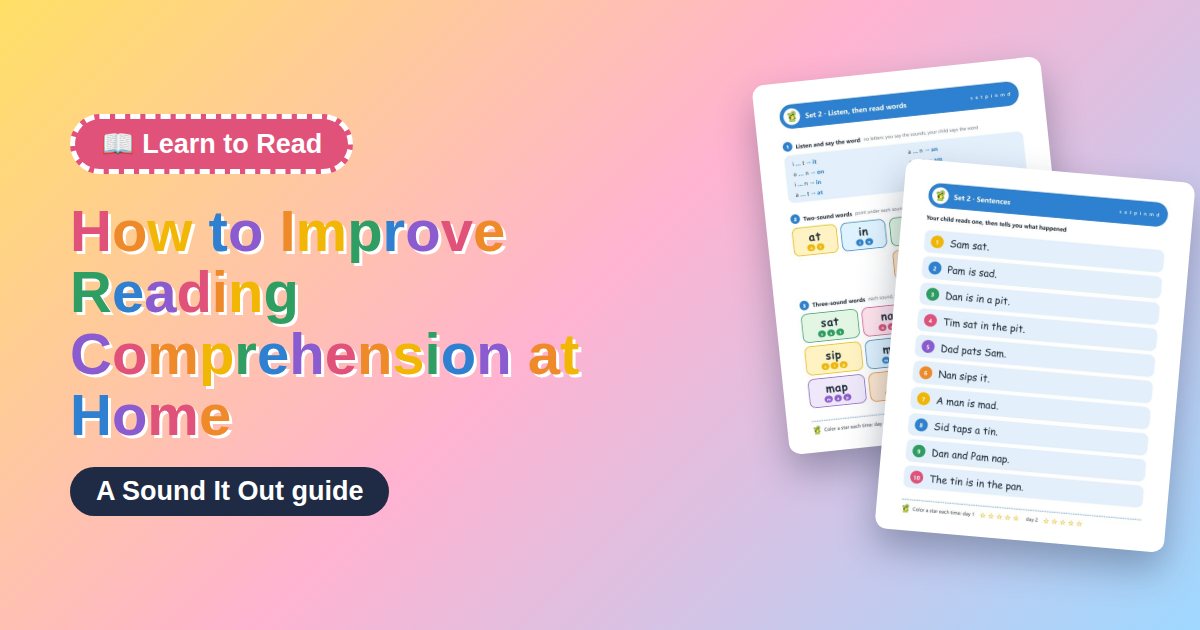
First make sure the words are easy enough: a child who works hard on each word has little attention left for the meaning. Then talk about the text before, during and after reading. Ask what happened, who it was about and why, and let your child retell the story in order. Reading aloud to your child builds understanding too.
If your child stops on many words, reading the words takes all their attention. Practice with easier text, where most words are read smoothly.
When reading the words becomes easy, understanding usually grows.
Before: look at the title and pictures. What might happen? During: stop once or twice and ask what just happened. After: ask about the start, the middle and the end.
These short talks teach your child to think while reading.
Ask your child to tell the story back: first, next, then, last. Drawing the four parts helps a younger child.
Retelling shows what your child understood and what was missed.
Books read aloud by you can be harder than what your child reads alone. They build words and understanding of stories.
Keep reading aloud even after your child reads alone.
 Practice this in the free reading appReading games your child can play on a phone, tablet or computer. Every word can be sounded out. No sign-up.Open the app
 Use text with words your child can read easily.
 Ask what happened after each page or two.
 Retell the story in order.
 Talk about words your child does not know.
 Keep reading aloud to your child.
 Listen and Say the WordYou say the sounds slowly, your child says the whole word. No letters to look at, so it trains the ear first.Play free
 Build the WordYour child hears a word and taps the letter tiles in the right order to build it.Play free
 Read the WordOne short word at a time, such as sat, pin or dog. Every word uses only the sounds of the level you choose.Play free
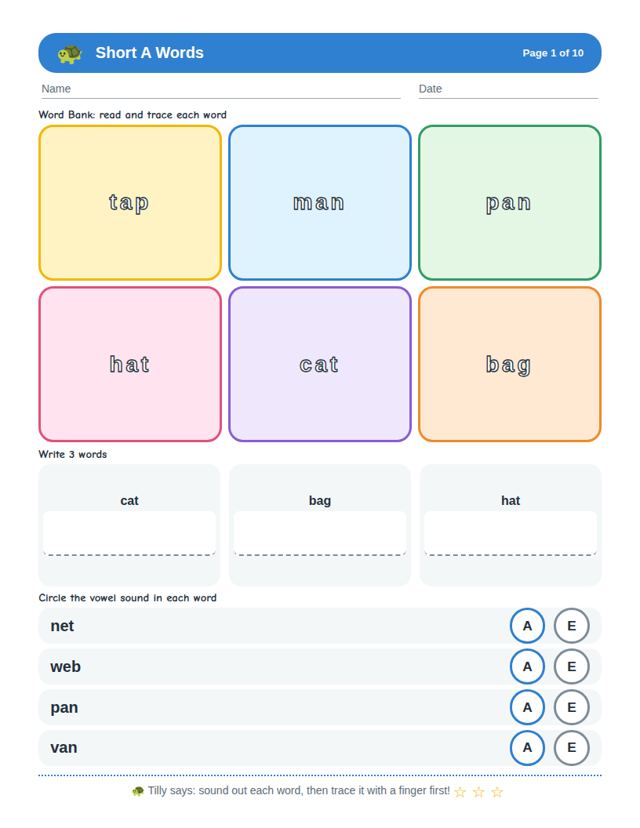
Short a words worksheets, CVC word family practice.
Get the free pages FREE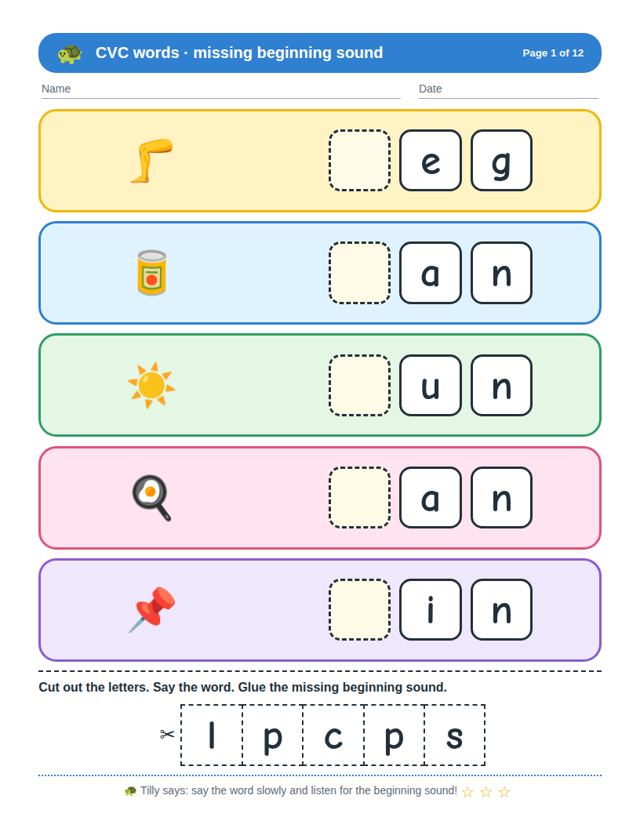
CVC cut and paste worksheets for beginning, middle and ending sounds.
Get the free pages $3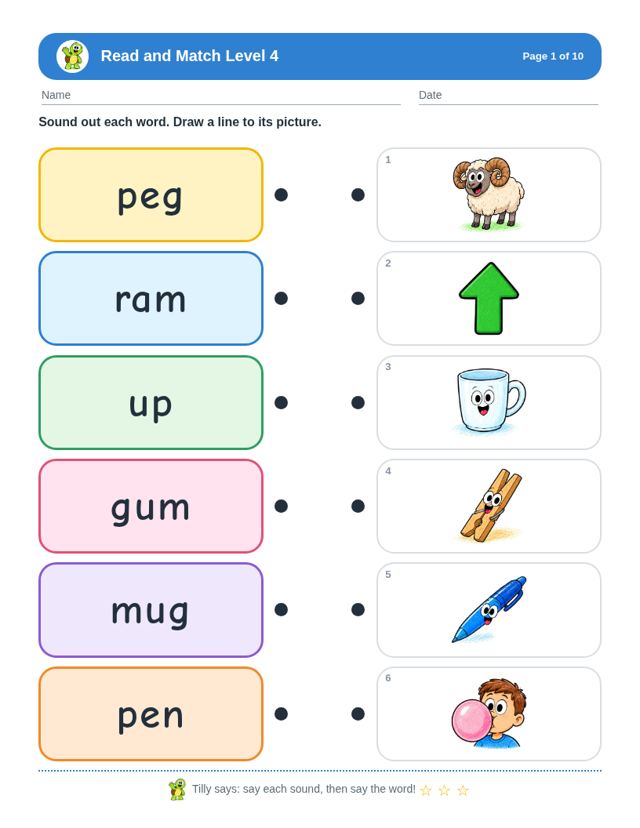
All 5 read and match level worksheet packs in one download.
See inside $3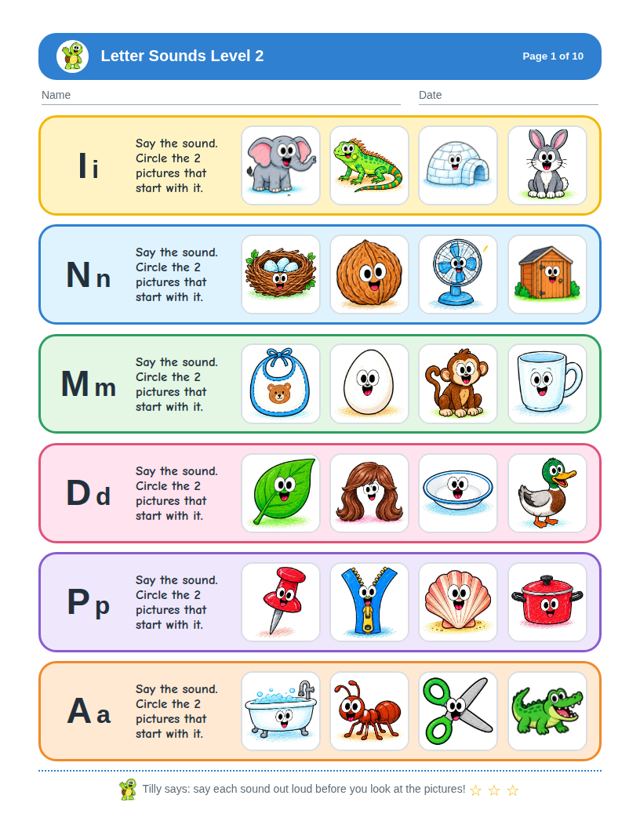
All 7 letter sounds level worksheet packs in one download.
See insideOften reading the words takes all the effort. It can also be new words, or not yet thinking while reading. The free check below shows which.
Yes. Reading again makes the words easier, so more attention goes to the meaning.
Simple ones first: who, what, where. Then why and what might happen next.
If understanding stays hard even when the words are easy and the text is read to your child, talk to the teacher.
 Learn to ReadDoes Phonics Help With Speech Delay?Does phonics help with speech delay? What reading practice can and cannot do for a child who talks late, and why to see a speech-language pathologist.Read the guide
 Learn to ReadHow to Help a Child With ADHD With Reading at HomeReading help for a child with ADHD at home: very short daily sessions, one small step at a time, movement breaks, and when to ask the school.Read the guide
 Learn to ReadHow to Help a Child With Vowel SoundsYour child mixes up vowel sounds like short a, e and i. How to teach one short vowel at a time, with mouth shapes and short words to read.Read the guide
The packs on this site are free. The One Sheet goes further: one sheet a day, made for your child from what you tell us happened.
See The One Sheet · $9.99 a month
Or try the 10-day plan: Read It, See It, $19 one timeOr do the free 3-minute check first