



Reads the words but does not understand
What helps reading comprehension in the early grades
What helps reading comprehension in the early grades
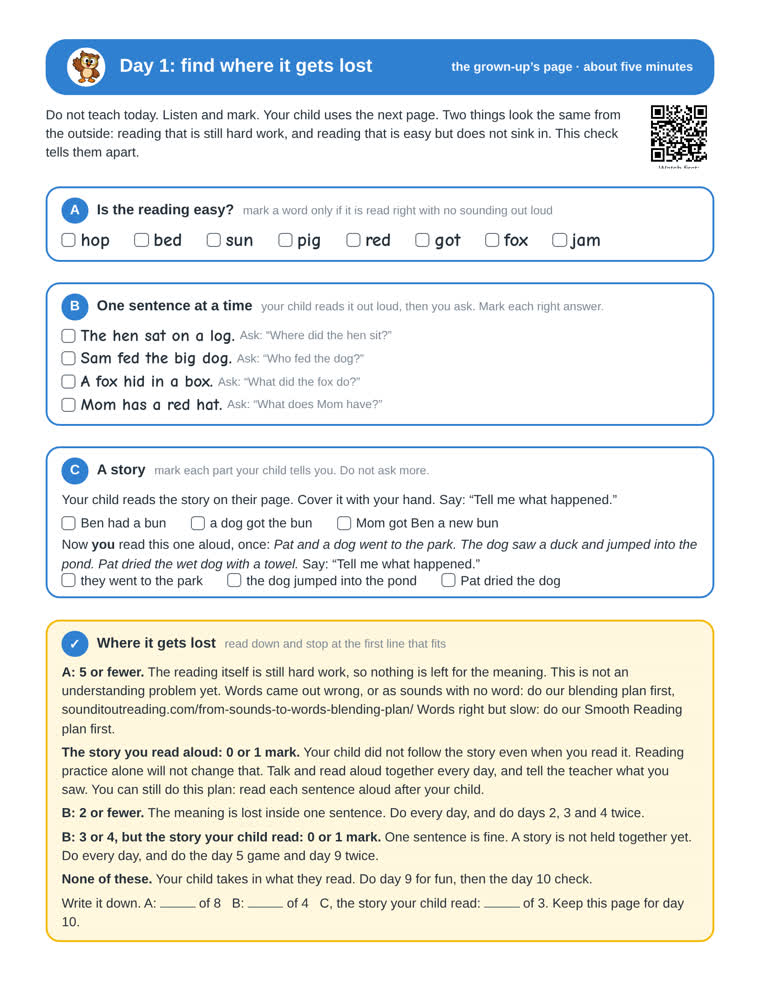
A U.S. expert panel wrote that teaching a child to sound out words is needed but will not by itself bring every child to good understanding. Its strongest recommendation is to teach comprehension strategies, such as retelling the main points of what was read.
The panel wrote that teaching a child to sound out words is needed but will not by itself bring every child to good understanding.
In the source’s own words“the panel believes decoding instruction alone will not produce desired levels of reading comprehension for all students.”
The guide's first recommendation, rated strong, is to teach children comprehension strategies, which it says help readers understand more and get past difficulties.
In the source’s own words“Comprehension strategies help readers enhance their understanding, overcome difficulties in comprehending text, and compensate for weak or imperfect knowledge related to the text.”
The guide says strategies can be taught one at a time or several together, and both ways can help.
In the source’s own words“The strategies may be taught one by one or in combination. Both approaches can improve reading comprehension, so the panel recommends that teachers choose the approach they are most comfortable with in the classroom.”
One of the strategies in the guide is retelling: the child says or writes the main points of what was read.
In the source’s own words“Students briefly describe, orally or in writing, the main points of what they read.”
The guide's second recommendation, rated moderate, is to teach children how texts are organized, such as the parts of a story.
In the source’s own words“Teach students to identify and use the text’s organizational structure to comprehend, learn, and remember content.”
The guide recommends guided discussion about what a text means, and rates the evidence for it as minimal.
In the source’s own words“Guide students through focused, high-quality discussion on the meaning of text Level of evidence: Minimal Evidence”
The guide says time spent only on word-level skills will not be enough to make young children effective readers.
In the source’s own words“Devoting time only to word-level skills will not be sufficient to help primary grade students become effective readers.”
In the panel's experience, a text can be easy to sound out and still too hard to understand.
In the source’s own words“In the panel’s experience, a text that is easy to decode may be too difficult for students to comprehend because the information might be complicated”
We read each of these ourselves on October 9, 2026. Follow the links to read them too.
“Reads the words but cannot tell me what it said”
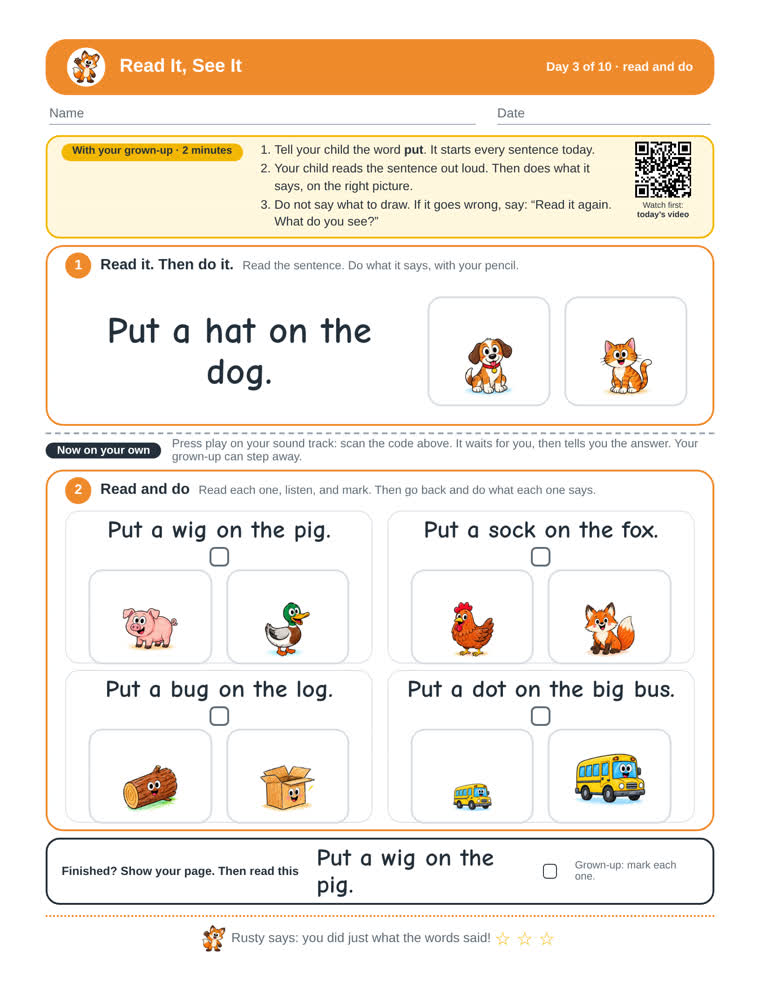
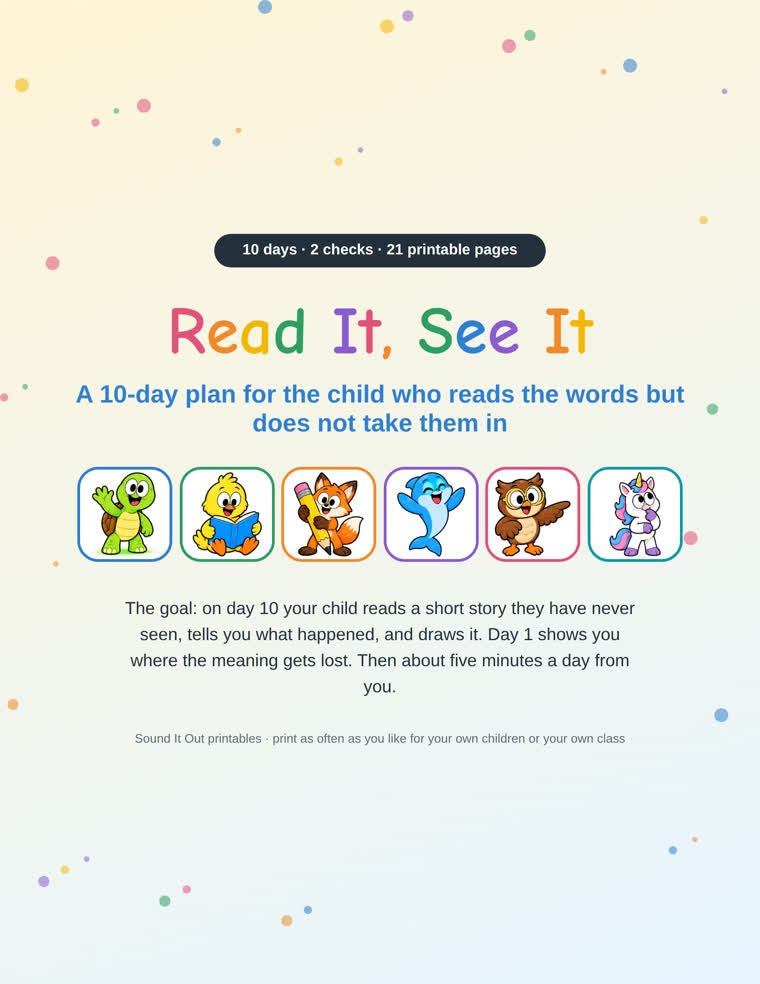
Read It, See It is a full 10-day plan, with a short video that shows you every step. The goal: on day 10 your child reads a short story they have never seen, tells you what happened, and draws it. It is the goal, not a promise.