The reading skill
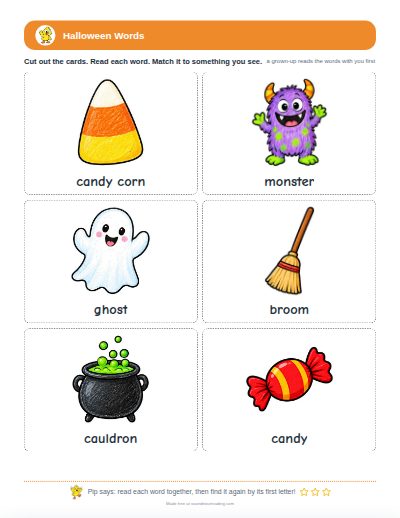
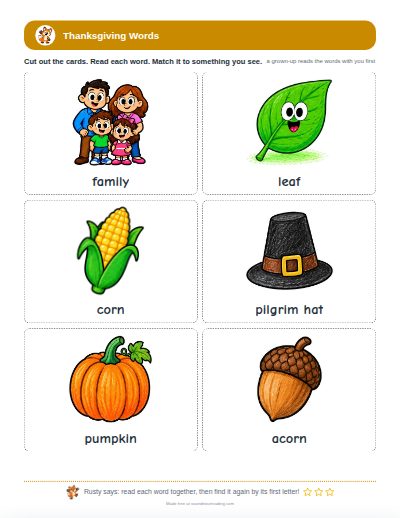
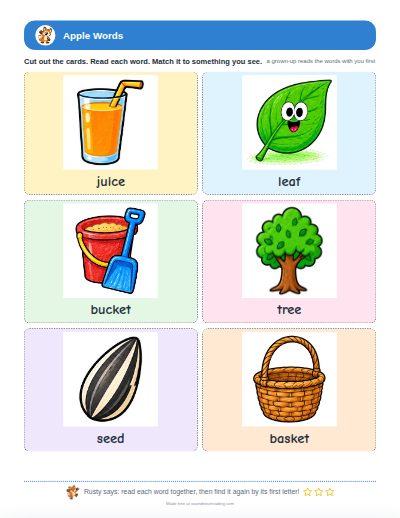
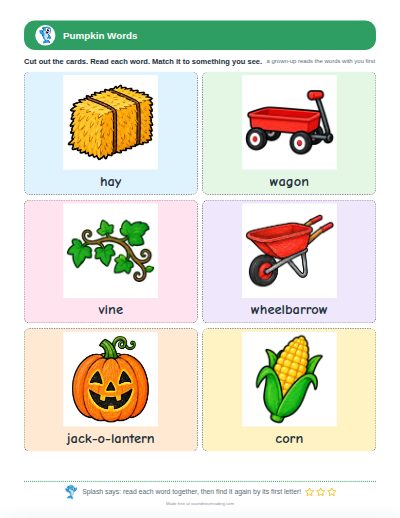
These pages help your child learn new words by sight. Your child sees each seasons word beside its picture, reads it with you, traces it, finds it in a puzzle and writes it.
The seasons words
Spring tree, summer tree, fall tree, winter tree, sun, snowflake, leaf, umbrella, snowman, tulip, pumpkin, sunglasses, mitten, kite. Many of these cannot be sounded out by a beginner yet, so each sheet says that a grown-up reads the words first.
Four kinds of page
Cards to cut apart for matching and sorting. A page to read, trace and write four words at a time. A word search with words across and down only. A write the room set: hang the numbered cards around the room, and your child finds each one and writes its word. They fit a week about the four seasons.
A seasons week at home
Lay the four tree cards in a row: spring, summer, fall, winter. Each day, your child sorts the other cards under the season they belong to: the snowman under winter, the sunglasses under summer, the pumpkin under fall, the tulip under spring.
Spring, summer, fall, winter
In spring the tree has blossoms and tulips grow. In summer it is hot: sunglasses and the sun. In fall the leaves turn orange and fall, and pumpkins are ready. In winter there is snow, a snowman and mittens. Then spring comes again.
Which season is it now?
Look out of the window together and choose the tree card that matches today. Talk about what you wear and what you see. Come back to the cards when the season changes.
Why is fall used and not autumn?
Fall is the word most children in America hear. Autumn means the same season; you can say both.