
Home › Guides › Learn to Read
Home › Guides › Learn to Read
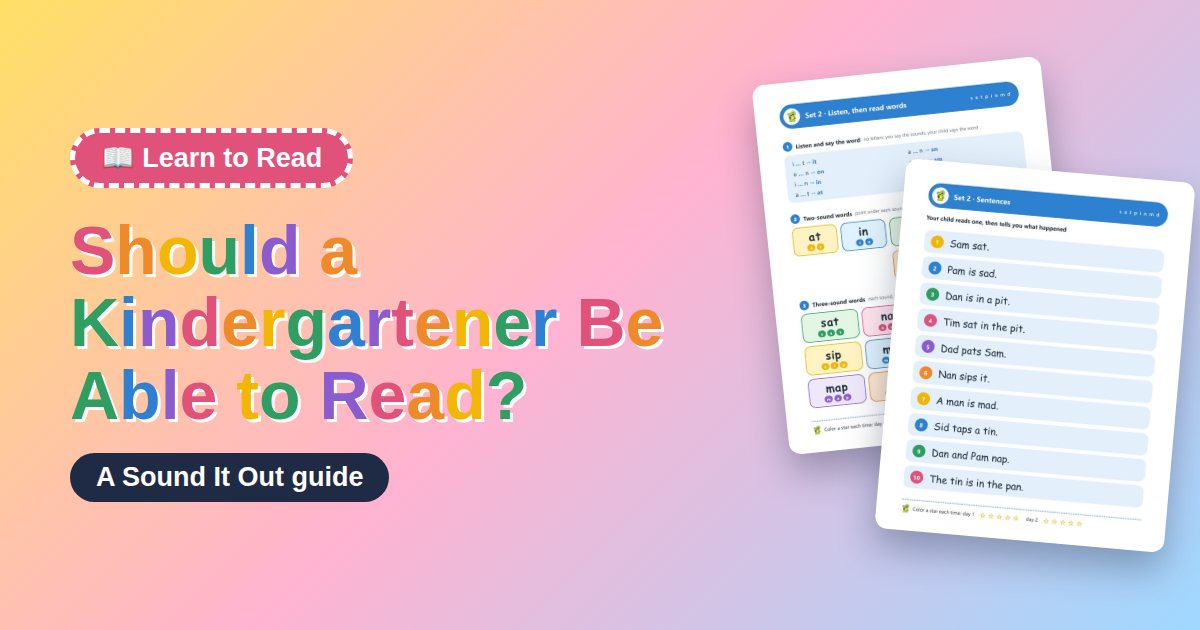
Most children are not reading books on their own at the start of kindergarten. During the year, many learn most letter sounds and start to read short, simple words like cat and sun. Children differ a lot, and a slow start is common. What matters most is steady progress. If your child is not learning letter sounds by the middle of the year, talk to the teacher.
In kindergarten, children usually learn to hear the sounds in words, learn the sounds of the letters, and begin to join sounds to read short words. A U.S. Department of Education guide for schools describes these as the first steps of reading.
By the end of the year, many children can read some short words and a few common words like the and is. Some read more, some less.
It is normal for a kindergartener to read slowly, sound by sound, to mix up b and d, and to need help with many words.
Children who were not read to much, or who are learning English, may start a bit later and catch up with steady practice.
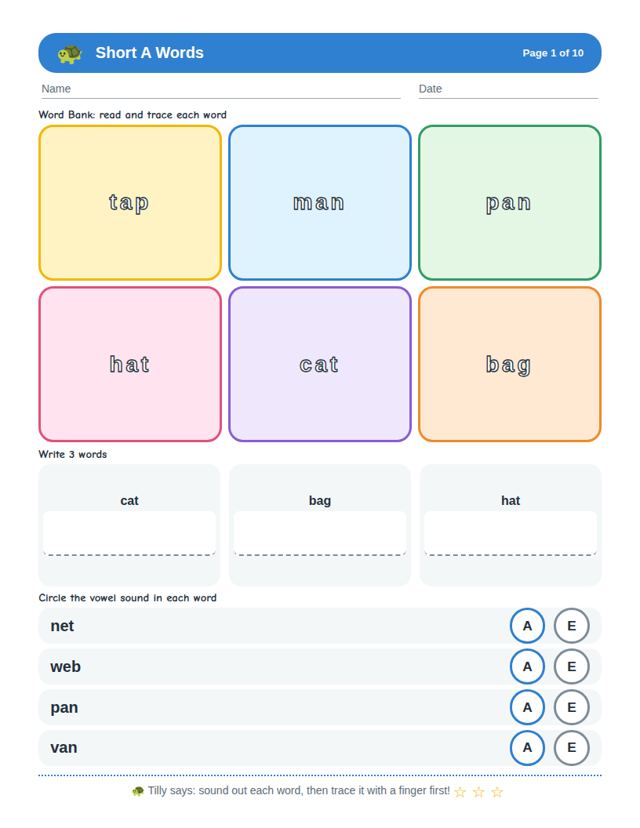
Play sound games: what sound does sun start with? Practice a few letter sounds a day. When your child knows a few, read short words made of them.
Read aloud every day. Talk about the story and new words. A few minutes of practice and a story at bedtime is enough.
Ask the teacher if by the middle of kindergarten your child knows very few letter sounds, cannot tell you the first sound of a word, or cannot rhyme at all.
Ask what the school's reading checks show. Early help works best.
 Practice this in the free reading appReading games your child can play on a phone, tablet or computer. Every word can be sounded out. No sign-up.Open the app
 Play sound games in the car or at dinner.
 Practice a few letter sounds a day.
 Read short words made only of sounds your child knows.
 Read aloud every day.
 Look for steady progress, not a race.
 Listen and Say the WordYou say the sounds slowly, your child says the whole word. No letters to look at, so it trains the ear first.Play free
 Build the WordYour child hears a word and taps the letter tiles in the right order to build it.Play free
 Read the WordOne short word at a time, such as sat, pin or dog. Every word uses only the sounds of the level you choose.Play free
Short a words worksheets, CVC word family practice.
Get the free pages FREE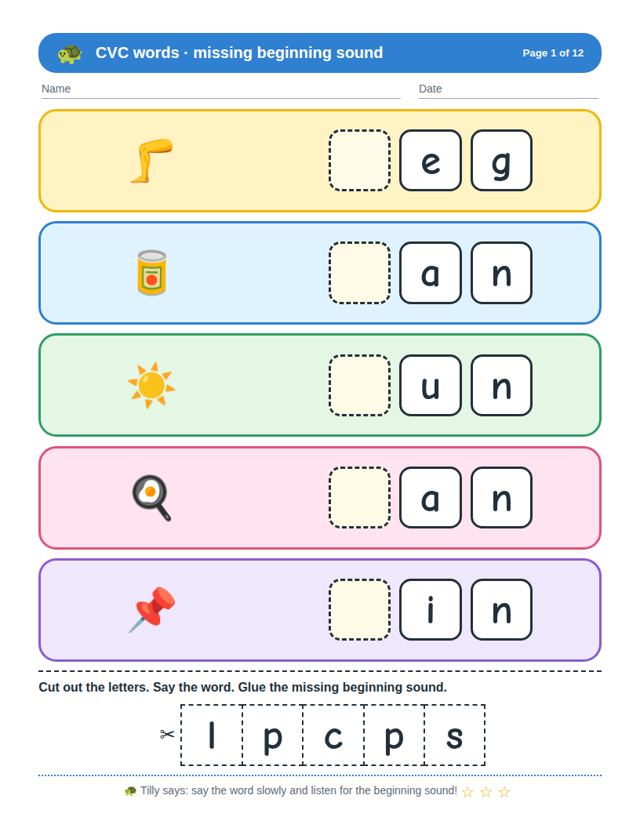
CVC cut and paste worksheets for beginning, middle and ending sounds.
Get the free pages $3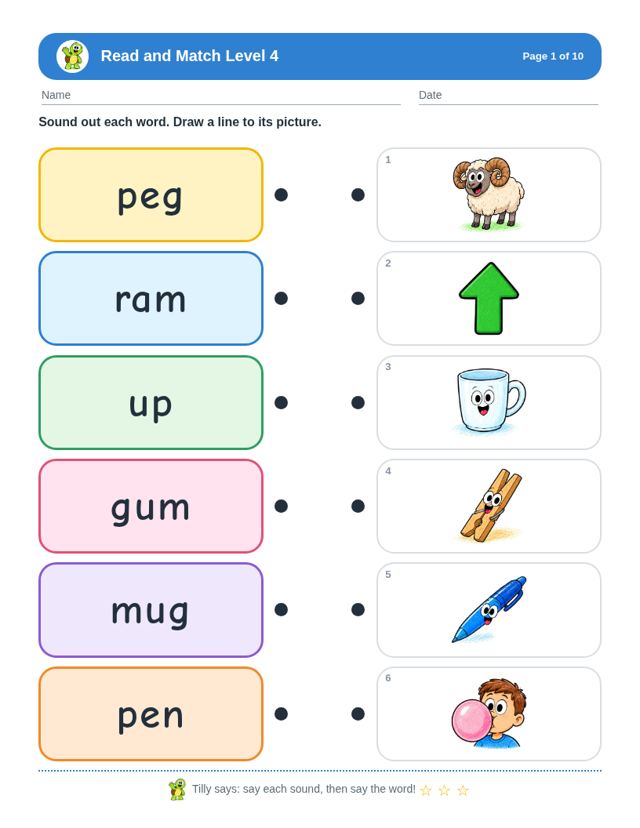
All 5 read and match level worksheet packs in one download.
See inside $3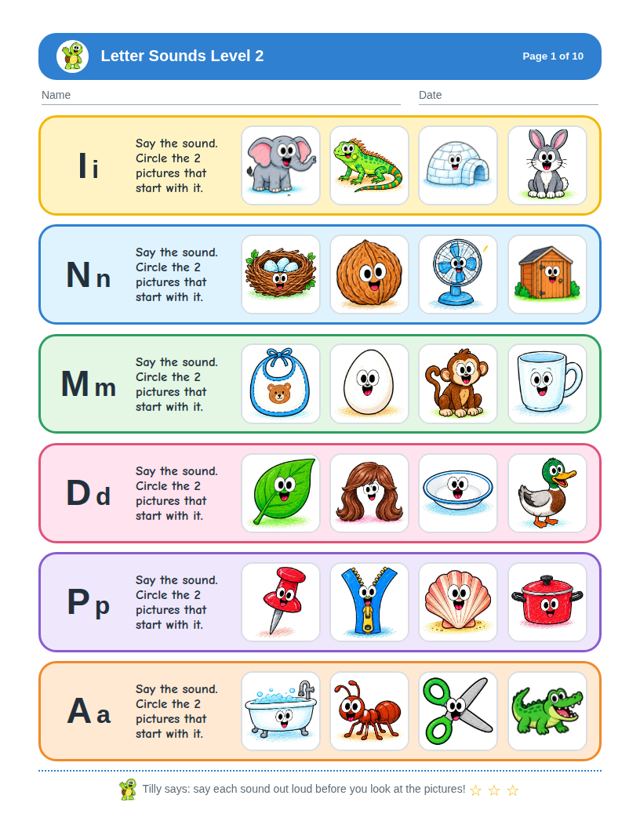
All 7 letter sounds level worksheet packs in one download.
See insideNot on its own. Many children are just starting. Watch for steady progress with letter sounds and hearing sounds in words. If there is little progress by mid-year, ask the teacher.
You do not have to. Playing with sounds, learning some letters and reading aloud together are a great start.
Many children know most letter sounds and can read some short words and a few common words. Ask the teacher what the school expects.
 Learn to ReadDoes Phonics Help With Speech Delay?Does phonics help with speech delay? What reading practice can and cannot do for a child who talks late, and why to see a speech-language pathologist.Read the guide
 Learn to ReadHow to Help a Child With ADHD With Reading at HomeReading help for a child with ADHD at home: very short daily sessions, one small step at a time, movement breaks, and when to ask the school.Read the guide
 Learn to ReadHow to Help a Child With Vowel SoundsYour child mixes up vowel sounds like short a, e and i. How to teach one short vowel at a time, with mouth shapes and short words to read.Read the guide
“Behind in reading” can mean fourteen different things, and each one needs different help. Check off what is true for your child. You will see what to work on first, and what can wait.