
Home › Guides › Learn to Read
Home › Guides › Learn to Read
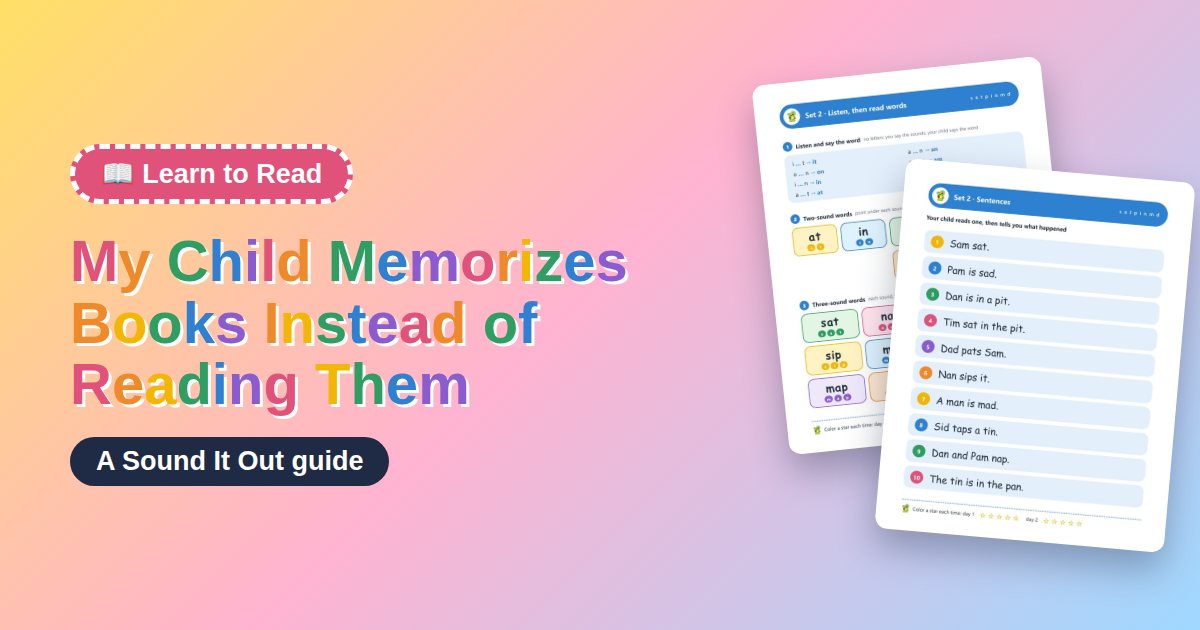
Many children memorize a favorite book instead of truly reading it, especially after hearing it read aloud many times. This happens when a child uses pictures and memory instead of sounding out each word. What helps is covering the words so your child cannot see the pictures, and switching to a new, unfamiliar book right away. Then your child must use letter sounds instead of memory to read.
Many children memorize a favorite book after hearing it read aloud many times. This is common, not a sign of trouble. The pictures, the rhythm of the words, and the parent’s voice all give clues that help a child predict what comes next on the page. A child who does this is using memory and pictures, not letter sounds, to get the words right.
This becomes a problem when a child relies only on memory and pictures and never practices sounding out words. On a new book with no pictures to guide them, the same child may get stuck on simple words. The goal is not to stop your child from loving favorite books. The goal is to make sure they also practice reading with their eyes on the letters.
Before you work on this, your child should know at least six or seven letter sounds, said clean and short, with no extra uh sound. Sounds like s, a, t, p, i, and n are a good starting set. Your child does not need to know all 26 letters to begin reading words.
To check, cover the pictures and the rest of the page with a blank sheet of paper or your hand. Leave only three or four words showing. Point to a short word like sat or tap and ask your child to read it with no pictures in sight. If your child reads it correctly without looking at the picture, they are using the letters, not memory.
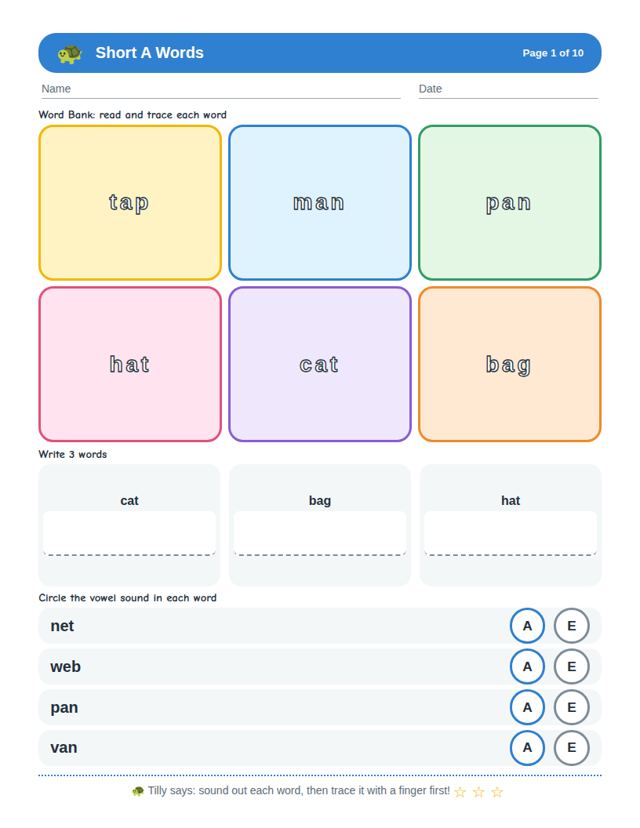
Take the memorized book and cover each page with a blank index card or a sticky note. Leave only one line of text showing at a time. Say, “Let’s read just the words today. Cover the picture with your hand.” This removes the clues your child has been using and forces them to look at the letters instead.
Point to one word at a time, such as cat, run, big, sit, and hop. Ask your child to read it alone, with no picture showing. If your child reads a word right the first time without seeing the picture, mark it as a true read, not a guess. This step shows you exactly which words your child can really sound out.
After covering the pictures in the old favorite, bring out a book your child has never seen before. Choose one with simple words your child can sound out, such as a book with words like mat, pig, sun, and run. Say, “This is a new book. We have not read this one yet, so let’s sound out the words together.”
A new book has no memorized rhythm or pattern to lean on. Your child must look at each letter to read the word, which builds the habit of sounding out instead of guessing from memory. Pick short books with only a few words on a page at first, so the task stays simple and short.
 Practice this in the free reading appReading games your child can play on a phone, tablet or computer. Every word can be sounded out. No sign-up.Open the app
Pick five or six words made only from sounds your child already knows, such as sat, tap, pat, sit, and tip. Point to each letter in order and say, “Hold the first sound, then slide into the next one with no stop.” Show your child by saying sss then aaa then t, running the sounds together into sat.
Practice this with two-sound words first, such as at, it, and up, before moving to three-sound words. Say, “Touch each letter and tell me its sound. Now say them together, fast.” This step rebuilds the blending skill your child may be skipping when memory does all the work.
Word families group words that share an ending, such as the -at family: cat, hat, mat, sat, and bat. Change only the first letter and ask your child to read each new word. Say, “This word is cat. Now I change the c to h. What does this say now?”
This step works well because your child cannot guess the whole family from memory. Each word looks almost the same, so your child must check the first letter every time. Try the -ap family too, with words like cap, map, nap, tap, and lap.
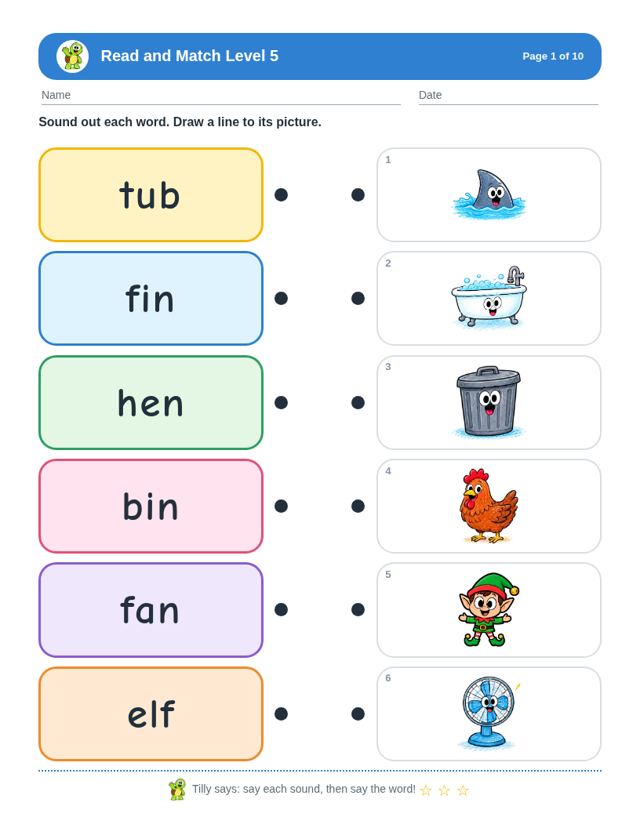
If your child still looks at the picture before answering, even with the page covered, cover the picture completely with a sheet of paper. Do this for a few days. Only remove the cover once your child reads the word correctly first.
If your child gets upset or refuses when a favorite book is covered up, start with a brand new book instead. There is no memory to fight there. Keep the new book short, just one or two lines a page, so your child feels successful fast.
If your child can sound out single words but still guesses in a full sentence, slow down and point to one word at a time. Cover the rest of the sentence with your hand so only one word shows at a time.
Five to ten minutes a day works better than one long session. A normal week might include two days with the covered favorite book and two days with a brand new book. Add one day of word family practice, like the -at and -ap words.
Children differ in how long this takes, so do not expect every book to be read perfectly right away. Keep some memorized book time for fun and bonding, and keep separate time for the sounding-out practice described here.
Your child is ready to move on when they can open a brand new book, one they have never seen. They should be able to sound out most of the words without looking at the pictures for the answer. Mistakes are still normal at this stage.
Once that happens, keep offering new books often, not just the same favorites, so your child keeps using letter sounds instead of slipping back into memory. From here, your child can move on to reading short, unfamiliar sentences and simple word families with more letters.
 Keep a stack of brand new, never-read books on hand for practice.
 Praise your child for sounding out a word, not for getting it right fast.
 Do not let your child see the picture before they have tried the word.
 Read favorite books together for fun, separate from sounding-out practice time.
 Use a blank index card to cover text and reveal only one word at a time.
 Mix in word families like -at, -ap, and -ot to build flexible reading, not memorized reading.
 If progress stalls for a long time, tell your child’s teacher what you have tried.
 Listen and Say the WordYou say the sounds slowly, your child says the whole word. No letters to look at, so it trains the ear first.Play freeBuild the WordYour child hears a word and taps the letter tiles in the right order to build it.Play free
 Read the WordOne short word at a time, such as sat, pin or dog. Every word uses only the sounds of the level you choose.Play free
Short a words worksheets, CVC word family practice.
Get the free pages FREE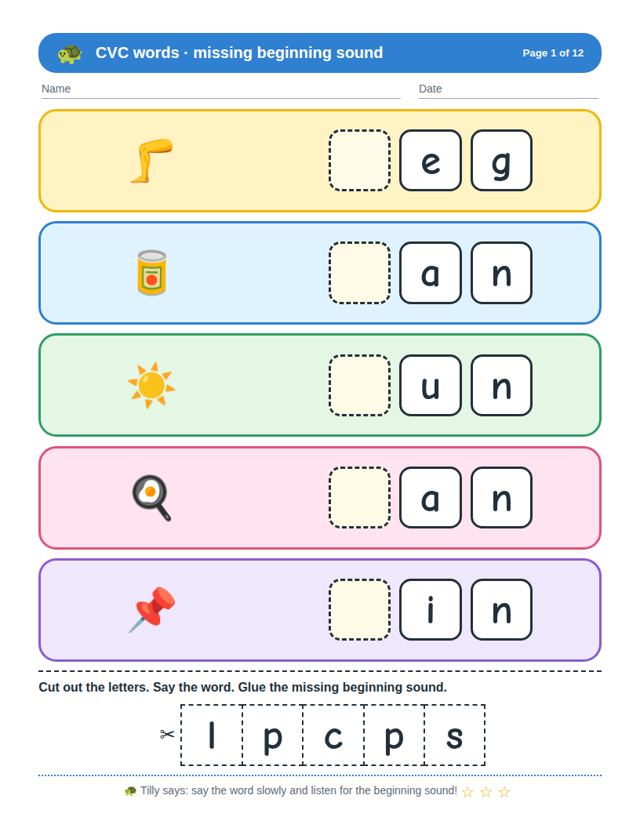
CVC cut and paste worksheets for beginning, middle and ending sounds.
Get the free pages $3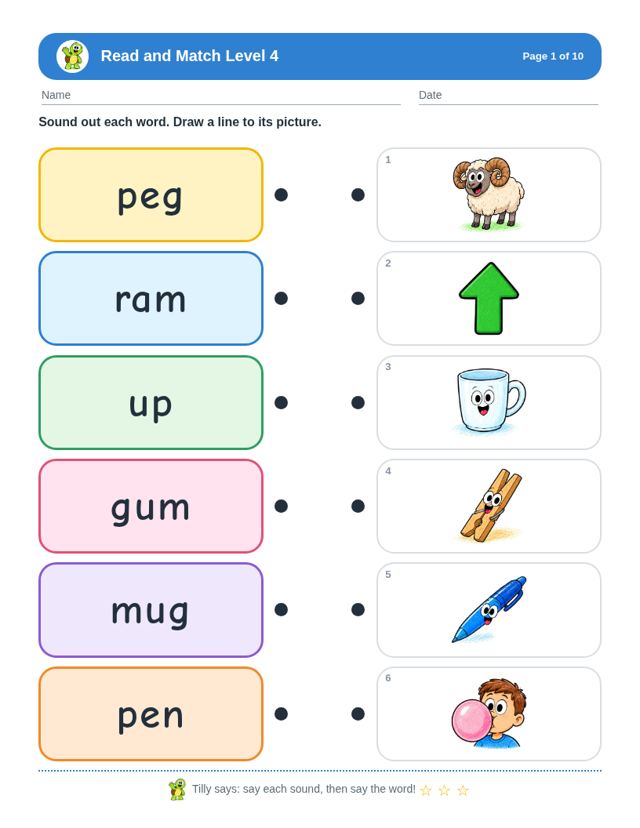
All 5 read and match level worksheet packs in one download.
See inside $3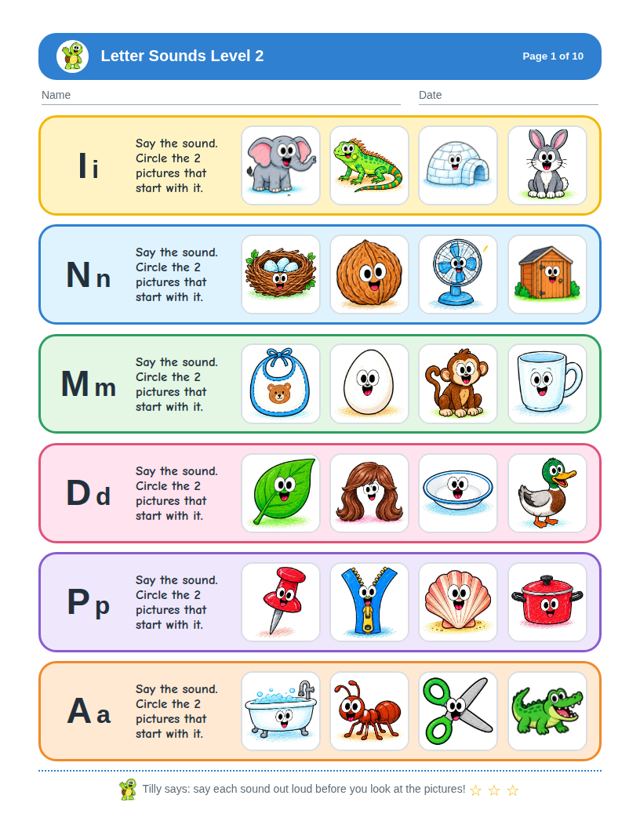
All 7 letter sounds level worksheet packs in one download.
See insideNo, memorizing a favorite book is common and shows a child loves reading. It becomes a concern only if your child never practices sounding out new, unfamiliar books. Mix memorized favorites with new books so both skills grow.
Cover the pictures and some of the text, leaving one word showing. If your child reads the word correctly without seeing the picture or the rest of the page, they are reading the letters, not remembering the story.
No, keep reading favorite books for enjoyment and bonding. Just add separate practice time with new books and covered pages, so your child also builds the skill of sounding out unfamiliar words.
Start with a brand new book instead of a covered favorite, since there is no memory to fight against. Keep the first few tries short and easy, with simple words, so your child feels successful quickly.
Children differ, so there is no set age. What matters is whether your child can sound out words in a new book using letter sounds. If this does not happen after steady practice, tell the teacher.
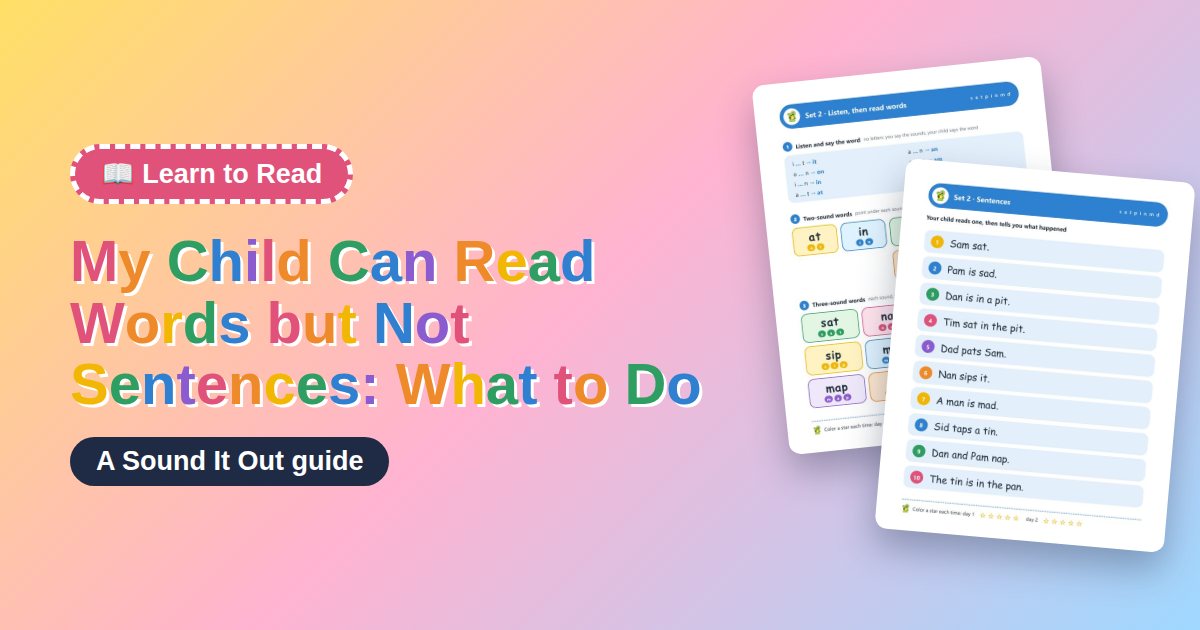 Learn to ReadMy Child Can Read Words but Not Sentences: What to DoLearn why your child reads single words but struggles with full sentences, and the exact steps to build smooth, meaningful sentence reading.Read the guide
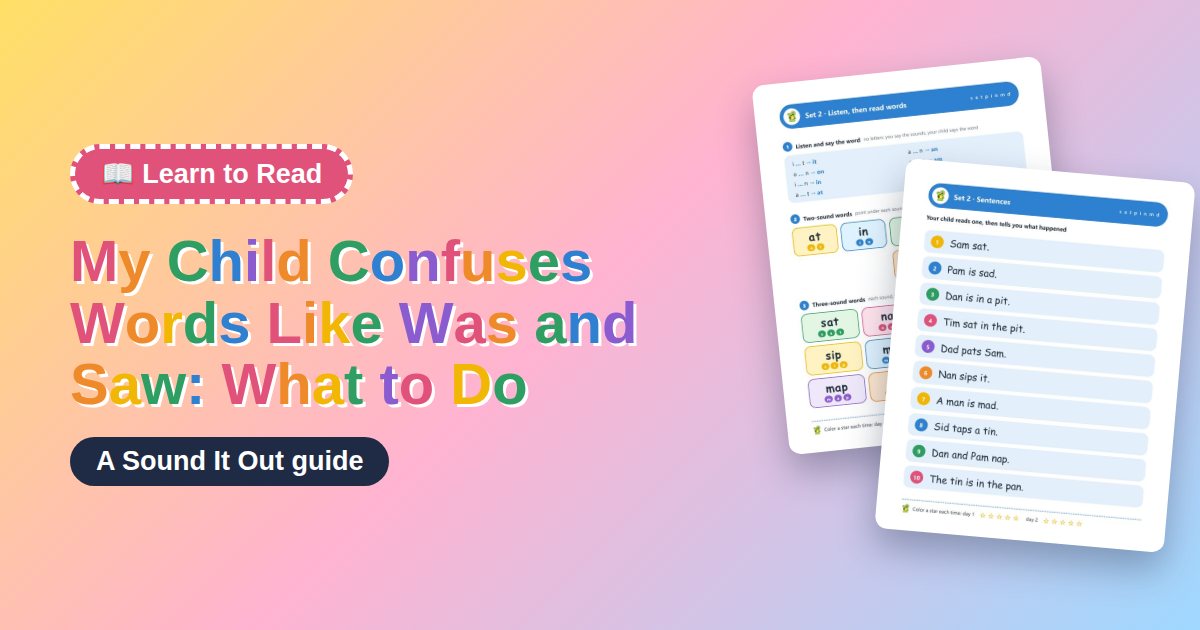 Learn to ReadMy Child Confuses Words Like Was and Saw: What to DoLearn why your child mixes up similar words like was and saw, and the exact steps to teach letter-by-letter checking instead of guessing.Read the guide
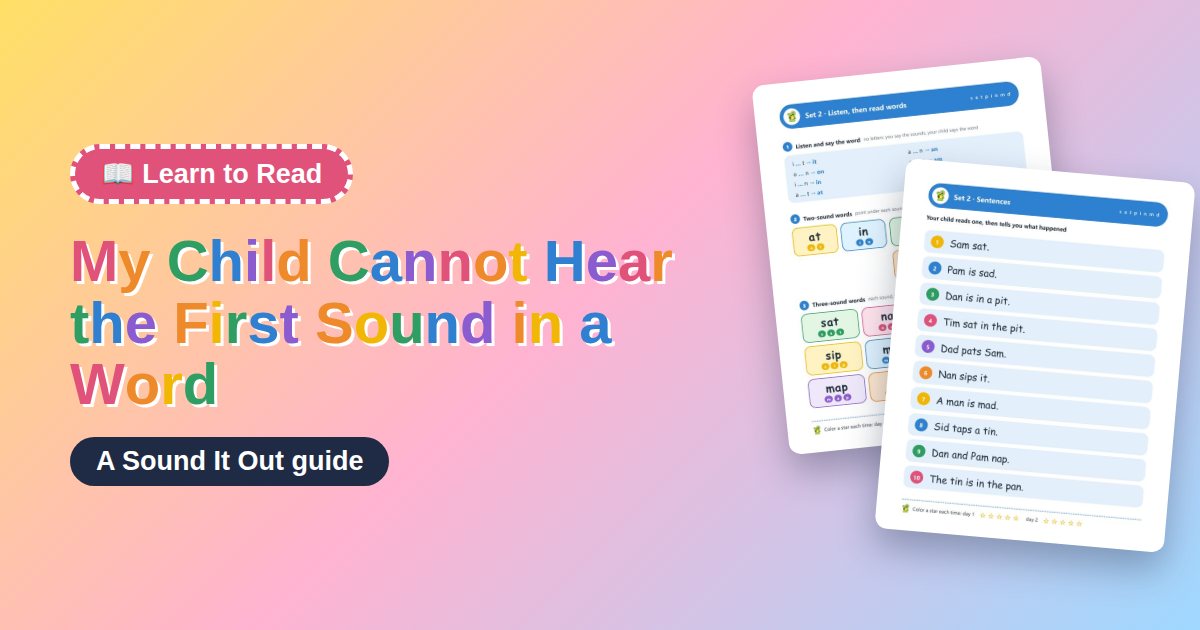 Learn to ReadMy Child Cannot Hear the First Sound in a WordWhy your child cannot hear the first sound in a word, and four short daily steps that build this early listening skill.Read the guide
The packs on this site are free. The One Sheet goes further: one sheet a day, made for your child from what you tell us happened.
See The One Sheet · $9.99 a month
Or try the 10-day plan: Look at Every Letter, $19 one timeOr do the free 3-minute check first