Rhyming is treated as an easier, earlier kind of sound work. A U.S. practice guide says to start with larger pieces of speech and move to smaller ones. The teaching the National Reading Panel found most helpful for reading worked on single sounds: blending them and pulling them apart.
The National Reading Panel report treats rhyming as part of a wider awareness of sounds that covers bigger units than single sounds.
In the source’s own words“not only PA but also awareness of larger spoken units such as syllables and rhyming words.”
The report says tasks with bigger chunks of sound are easier for beginners than tasks with single sounds.
In the source’s own words“Tasks that require students to manipulate spoken units larger than phonemes are simpler for beginners than tasks requiring phoneme manipulation”
The teaching the panel found most helpful for reading was at the level of single sounds: blending them and pulling them apart.
In the source’s own words“From these findings, the Panel concludes that blend-and-segment training benefited children’s reading more than multiple skills training did.”
The foundational reading guide says to start with larger pieces of speech and move step by step to smaller ones.
In the source’s own words“Begin by introducing students to larger segments of speech (words) with which they will be more familiar, and gradually draw their attention to smaller and smaller sound segments.”
The guide has children work with the two parts of a syllable, the opening sound and the rhyming part, and swap them to make new words.
In the source’s own words“having students segment familiar one-syllable words into their onsets and rimes and manipulate the onsets or rimes to create new words.”
The guide says this sound work is a preparation for learning the single sounds that letters stand for.
In the source’s own words“This will prepare them to learn about the individual sounds that letters represent”
The National Early Literacy Panel reported that the effective early code-teaching programs mostly had children work with small units of sound, and few used rhyming as the main approach.
In the source’s own words“These PA activities generally required children to detect or manipulate (e.g., delete or blend) small units of sounds in words. Few of the interventions used rhyming activities as the primary teaching approach.”
We read each of these ourselves on October 9, 2026. Follow the links to read them too.
“Cannot tell me the first sound of a word, or cannot rhyme”
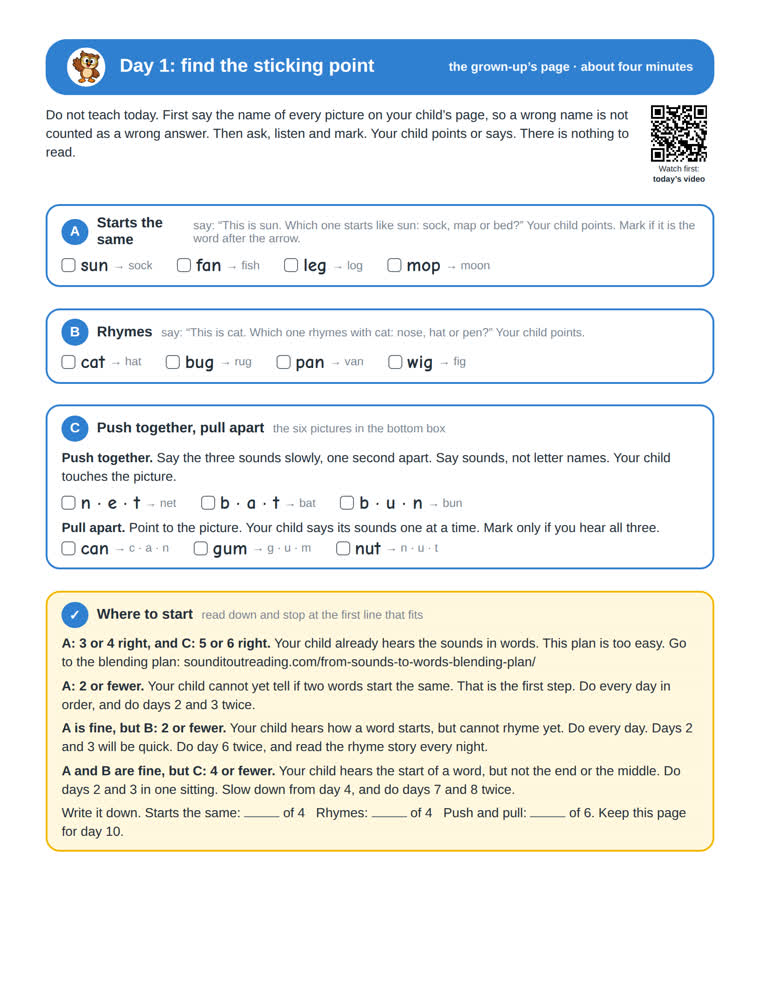
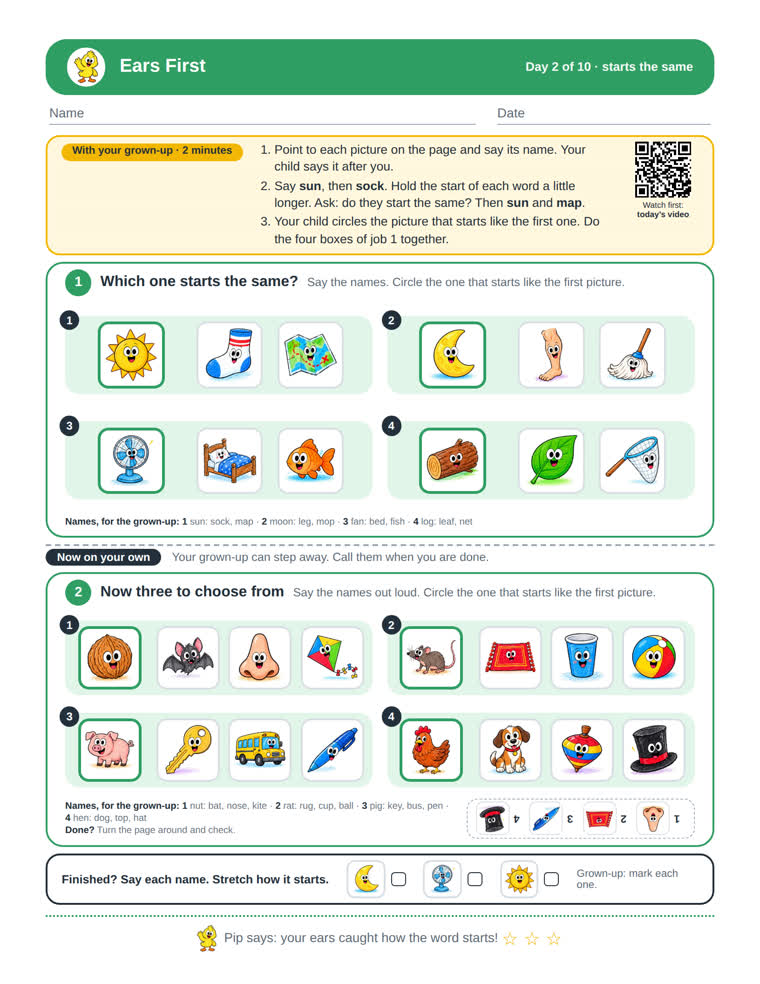
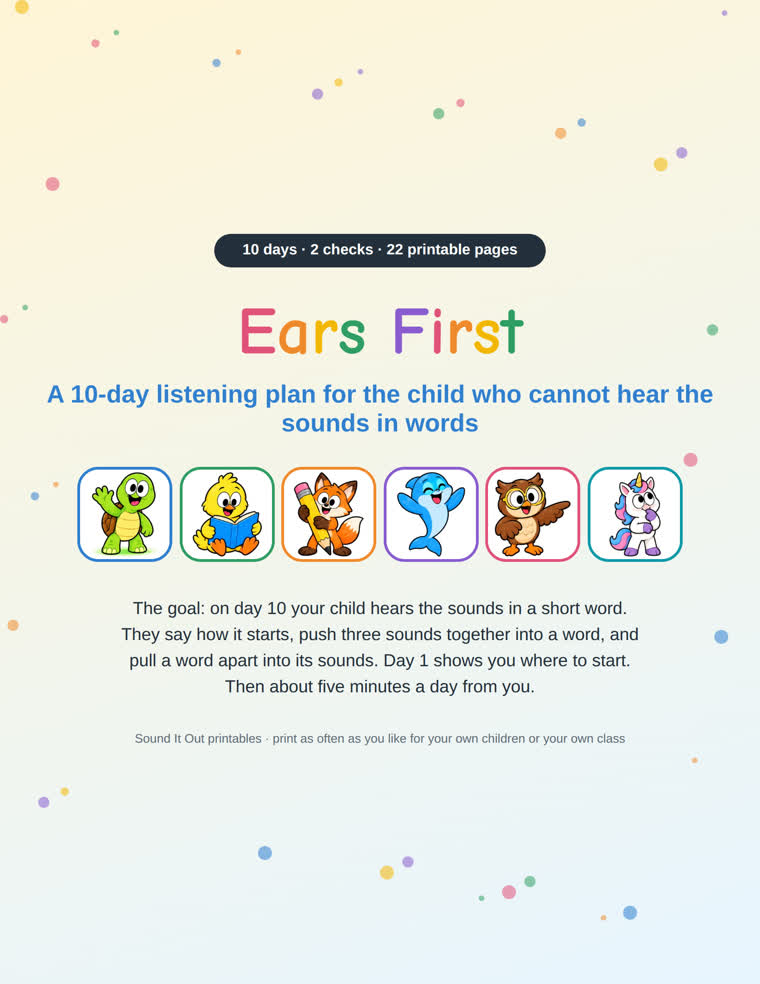
Ears First is a full 10-day plan, with a short video that shows you every step. The goal: on day 10 your child hears the sounds in a short word. They say how it starts, push three sounds together into a word, and pull a word apart into its sounds. It is the goal, not a promise.